Fazlur Rahman
How much should you budget for a cat tree in 2026?
The price of a cat tree changes with three things: how tall it is, what it is made of, and how many levels it has. Wirecutter tested 17 cat trees for its 2026 guide and found prices from $25 up past $1,000 for the fanciest hardwood designs. Most households land between $60 and $200 on a mid-size tower. By the end of this guide you will know how tall to go, which surfaces hold up, and what your money actually buys.
Cheap trees use particle board, thin carpet, and low grade sisal rope. They are fine for a kitten, but they often lose a perch or wobble apart within a year. Mid-range trees add solid wood posts, thicker rope, and a wider base. Premium trees use hardwood and sometimes sell replacement parts, which is why Wirecutter highlights the Purrsona Heritage Treehouse, a maple wood model built in Ohio Amish country that carries a lifetime warranty. If you only remember one rule, the best cat trees share three traits: solid wood posts, a wide base, and a scratching post tall enough for a full stretch.
Add the small extras to your budget too. Wall anchors, a spare sisal pad, or a second tree for a second cat run $20 to $60. Fur ends up on every surface your cat owns, so a good vacuum for pet hair helps more than people expect.
| Price band | What you get | Best for |
|---|---|---|
| Under $60 | Particle board, carpet, one or two sisal posts | Kittens, single cat homes, a first tree |
| $60 to $150 | Solid wood posts, thicker sisal, three or four levels | Most adult cats, the best value band |
| $150 to $350 | Wider bases, wood platforms, hammock or condo | Large cats and multi-cat homes |
| Over $350 | Hardwood frames, designer shapes, some lifetime warranties | Hard scratchers and homes that want furniture |
Anchor hardware is worth the money because a tall tree can tip. The US Consumer Product Safety Commission recalled about 55,170 plastic tip restraint kits in October 2025 after the straps could break and let furniture fall. A metal strap and two wall screws cost far less than a damaged floor.
How tall should a cat tree be for your cat?
Height is the biggest factor in whether a cat uses a tree. Cats are natural climbers who like to watch from above, and International Cat Care notes that they need high resting places to survey a room safely. A tree that towers over your cat works. One where the top perch sits below the back of your sofa does not.
The second factor is your cat's size and weight. Wirecutter lists a 20 pound weight limit on its New Cat Condos Large tree, which is a 65 inch model with a maximum capacity of 80 pounds. Its budget Feandrea tower is 33.1 inches tall and rated for 16 pounds. Cats.com lists the HOOBRO small cat tree at 15.7 by 11.8 by 31.5 inches with a solid wood frame.
Here is a simple height guide. It follows the same weight ranges that PetSmart and the AKC publish for crates and carriers, which line up well with cat furniture sizing.
| Tree height | Cat it suits | Notes |
|---|---|---|
| 24 to 32 inches | Kittens and cats up to 10 pounds | Good first tree, easy to climb, low cost |
| 33 to 45 inches | Most adult cats up to 15 pounds | The most common size on sale |
| 48 to 60 inches | Large cats and Maine Coons | Chewy's guide calls 60 inches and up extra large |
| Over 60 inches | Cats that want a climbing wall | Costs more and needs anchoring |
Chewy's cat tree guide puts large and extra-large trees at 60 inches and taller, and it tells shoppers to buy for the tallest cat in the house rather than the average one. Cats do not shrink, and a bigger cat will ignore a perch sized for a kitten. The best cat trees for large cats are tall, but they also need a footprint you can live with, so measure the spot before you click buy.
Which style of cat tree fits your cat's personality?
Style matters more than most shoppers expect. Different cats use different parts of a tree and ignore the rest. A cat that naps in boxes will ignore a bare perch, and a cat that watches birds from a window will ignore a cave.
Perch and window shelf style
A simple perch is a small platform, usually under 20 inches tall, that lets a cat sit and look out. It suits cats that already sit on windowsills. It is also the cheapest type and takes up the least floor space, which makes it a good fit for a small apartment.
Tower style
A tower stacks platforms, caves, and sisal posts into one column. It is the most common shape and the easiest to shop for. Business Insider picked the 65 inch Armarkat Classic Cat Tree A6501 as its best overall pick for its hammock, cubby, and two beds. Chewy sells the Frisco 72 inch Faux Fur Cat Tree and Condo for $96.59, which Cats.com rated 10.0 out of 10.
Condo and cave style
A condo is an enclosed cubby inside a tower. Cats that hide get a private room, and multi-cat homes gain one more resting spot. Cats.com lists the New Cat Condos Deluxe Cat Tower at $134.05, with dimensions of 20 by 20 by 51 inches and a weight of 47 pounds. Cats.com also warns that some cat trees come with platforms that are too small for the cats that need them.
Hammock and bed style
A hammock is a sling of fabric that holds a cat in a stretched curve. It is cheap to add to any tower and many budget models include one. It is also the first thing to fray if your cat claws, so check the seams and the stitching before you buy.
For a home with more than one cat, the rule from International Cat Care is to give every perch two ways in, so a confident cat cannot trap a nervous one. Buy one tall tower and one low cave, and put them in different rooms. That setup gives you the best cat trees for a multi-cat home without spending twice as much.
What makes the best cat trees hold up to real cats?
Four materials show up on cat trees: particle board, solid wood, engineered wood, and cardboard. Particle board is the cheapest and the most likely to fail. Solid wood holds the most weight and resists scratching, which is why Wirecutter noted that the support posts on its top pick are solid wood while many cheaper trees use cardboard. Engineered wood sits in the middle and is fine for a cat under 15 pounds.
Second, look at the scratch surfaces. Cats.com notes that flat material coverings last longer than plush carpet, and that solid wood beats engineered wood for strength. International Cat Care recommends posts tall enough for a full vertical stretch, rigid frames that do not move when scratched, and a mix of materials so each cat can pick a surface it likes.
Third, check the weight limit and the base. Wirecutter found that even its 65 inch top pick can tip when a cat jumps off, and that tree does not ship wall straps. A wide base, a low center of gravity, and one metal anchor fix most wobble. Use metal anchors rather than plastic zip ties, because of the CPSC recall described earlier.
Fourth, plan for replacement parts. Chewy sells replacement sisal pads and boards for common models. A tree with replaceable parts can be repaired for about $10 instead of replaced for $150. That is the difference between the best rated cat trees in the $150 band and a disposable one.
Where do cat trees cost the least?
Price varies a lot by seller, and the same model can be $30 apart between stores. Chewy lists the Frisco 42 inch Heavy Duty Faux Fur Cat Tree and Condo at $56.89, while Petco starts its cat tree with two condos at $62.99. Petco also sells the Two By Two Maple 2 Level tree at $179.99, which is a fair price for a solid wood build.
Buying direct from the maker sometimes wins for hardwood models. Wirecutter found the New Cat Condos Large tree at $160 when bought direct, and the Mau Cento at $299 on both Chewy and Amazon. Direct orders from small workshops also let you add features, such as extra sisal rope on a tall post, for a small fee.
Marketplaces undercut the big retailers, but listing quality is uneven, and cheap knockoffs often arrive with warped boards and missing hardware. Read the reviews for the exact model rather than the brand, and check whether replacement parts exist before you buy. Read the reviews for the best rated cat trees the same way, and you will not regret the extra ten minutes.
What else does an indoor cat need alongside a tree?
A tree handles climbing and scratching. The rest of the setup decides how the rest of the day goes. Food matters, because cats that eat well groom more and use the tree more. Our guide to the best cat food for indoor cats covers how to read a label and why variety helps.
Waste handling is the other half of an indoor setup. The best cat litter box for odor control guide explains which box designs cut smell, and the best litter for automatic litter boxes guide covers what actually works inside an automatic unit.
Cleaning is the last piece. Fur on carpets and upholstery is the fastest way to lose patience with a cat tree, and a best vacuum for pet hair setup makes the weekly job quick. With those three pieces in place, the tree gets used and the house stays clean.
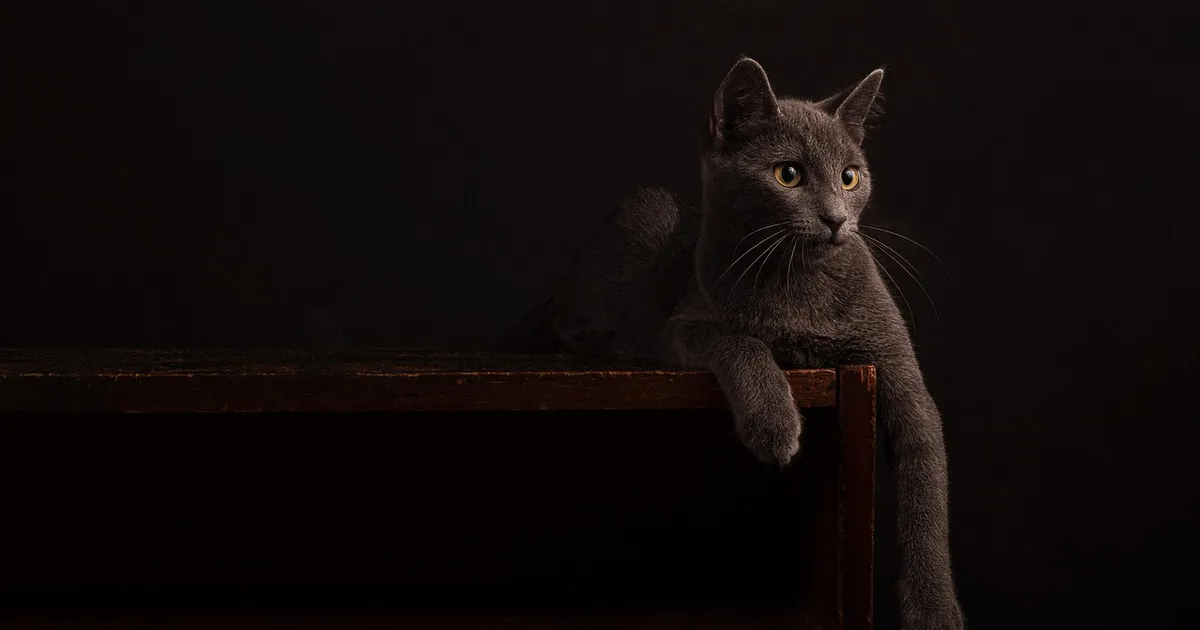
Photo: alex_dorohov, Pixabay Content License, via Pixabay (https://pixabay.com/photos/cat-feline-whiskers-pet-dark-7552840/)