Use finely granulated, low-dust clumping clay litter. It is the only type that rakes cleanly in an automatic drum.
Tracking is caused by large round granules plus no exit mat. Finer granules plus a mat fixes roughly 80% of the problem.
Cost runs $6-$14 a month on conventional clumping clay for one cat, $12-$22 on low-dust formulations.
Wood and paper litter clumps too softly for automatic boxes. They work in manual boxes and fail in automatic ones.
Never use clumping litter for kittens under 4 months — ingestion risk.
Prices last verified October 2026. Litter prices move with bag sizes and regional freight — check current pricing before buying in bulk.
What an automatic litter box actually needs
An automatic box works by cycling a drum. It sifts waste through a screen, rotates so clean litter falls back into the bed, and rakes the remaining clumps toward a sealed waste drawer. Every design decision follows from that mechanism, and every litter requirement falls out of it.
The requirement is a litter that clumps firmly when wet, then breaks apart easily when dry. It must not create dust that gets into the motor, must not stick to the drum wall from moisture, and must not be so fine that it falls through the screen into the waste drawer. That is a narrower set of demands than a manual box has, which is why some excellent manual litter fails completely in an automatic one.
Litter type
Clump strength
Dust level
Tracking
Automatic box performance
Cost per pound
Conventional clumping clay
Good
Moderate
High
Works well — the standard choice
$0.55-$1.10
Low-dust clumping clay
Good to very good
Low
Moderate-high
Works well; better for respiratory cats
$0.80-$1.40
Fine-grain clumping clay
Very good
Moderate
Low
Works well; least tracking
$0.75-$1.30
Paper pellets
Weak
Very low
Very low
Fails — falls through screen, poor raking
$1.20-$1.80
Wood or pine pellets
Weak to moderate
Very low
Very low
Fails — clumps too soft for the rake
$1.10-$1.70
Corn or plant-based
Moderate
Very low
Low
Mixed — varies by brand
$1.30-$2.00
Crystal or silica gel
None — non-clumping
Low
Low
Fails — no clumping means no sifting
$1.10-$1.70
Activated bentonite
Very strong
Moderate
Moderate
Works; clumps may be too large for the drawer
$0.90-$1.50
The five properties that matter, ranked
For an automatic box specifically, the ranking is unusual. Most cat litter buying guides lead with odour control, which is a genuine priority but not the one that decides whether the machine works.
Get more product guides & reviews reads in your inbox
One email a day — only posts tagged Product Guides & Reviews. No spam, unsubscribe anytime.
Clump integrity. The clump has to survive the drum cycle intact and stay small enough to pass through the waste drawer opening. Too weak and it shatters back into loose litter; too strong and it wedges in the drum.
Grain size. 1-2 mm granules rake well. Large pellets and round granules roll out of the box and track across the floor.
Dust level. Dust settles on the mechanism and on the cat's respiratory tract. Low-dust formulations are worth the premium for any cat with any respiratory history.
Absorption speed. Fast-setting litter means less scatter during the set, which matters most for the first minute after a void.
Odour control. Genuinely important, but a scent added by fragrance chemicals only masks odour temporarily and can be aversive to cats that dislike strong smells.
The Five Litters That Work in Machines
The litter decides whether the machine works. Rake-style self-cleaners need clumps that survive the rake, tray-style machines need crystals that do not clump at all, and both need low dust or the mechanism gums up. These five cover every machine type and budget.
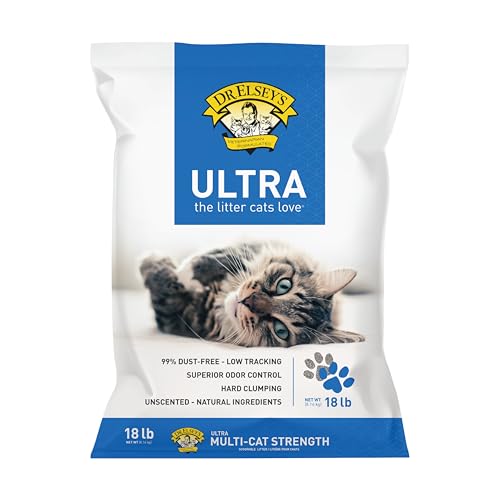
If a machine manual says use a hard-clumping litter, this is the safe default. The clay forms dense, tight clumps that a rake can push without breaking them apart, dust is low for a clay product, and it comes in a 40 pound bag at a price per pound that undercuts the specialty options. It is heavy to carry and it tracks a little, which is the honest cost of the default.
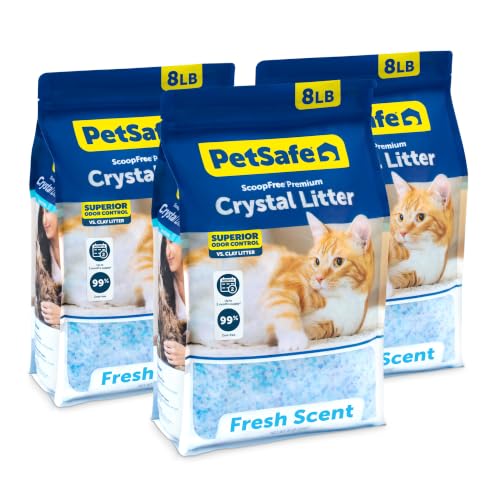
Tray-style self-cleaners like the ScoopFree line are built around silica crystal litter, and this is the crystal designed for them. The crystals absorb urine and dehydrate solids instead of clumping, tracking is about as low as litter gets, and a tray lasts weeks rather than days. It is wrong for rake machines, because there is nothing to rake. Change frequency matters more than brand here.
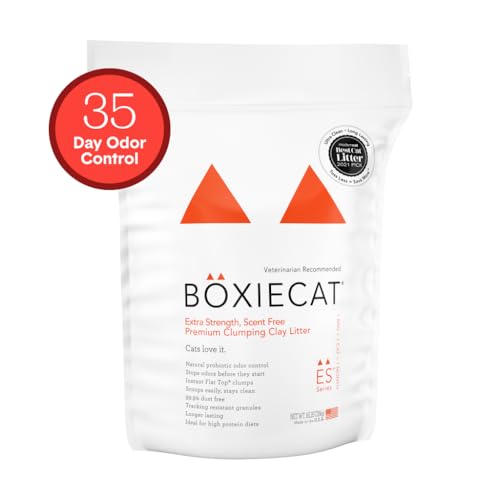
Boxiecat Extra Strength Clumping: when clumps break apart
The failure mode in rake machines is the clump crumbling mid-cycle and the pieces falling back through the grate. Boxiecat forms hard, flat-top clumps specifically engineered to stay whole, and the extra strength version adds odor control for multi-cat homes. It costs more per pound than Dr. Elsey's, and if your current machine leaves crumbles behind, that premium solves a real problem.
World's Best Cat Litter Clumping: the lightweight option
Corn-based clumping litter weighs a fraction of clay, which matters when you are carrying it home and lifting it into a machine hopper. It clumps firmly enough for most rake-style boxes, though the clumps are softer than hard clay and very heavy cats can flatten them. Some cats take to it instantly and some need a transition mix, as with any litter change.
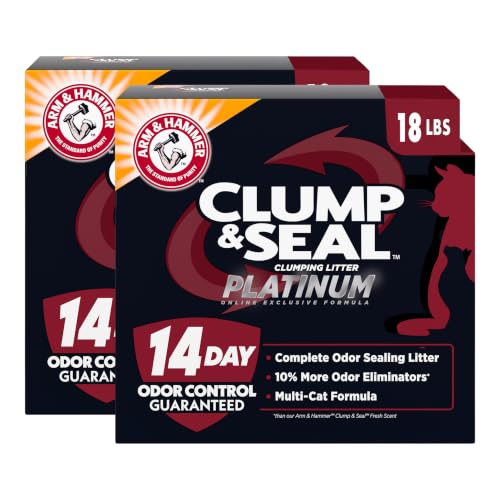
Arm and Hammer Clump and Seal litter: the odor-control value
The baking-soda pedigree shows up as sealed clumps that lock odor in rather than just covering it, and the price per pound sits between basic clay and the specialty picks. Clump integrity is good rather than exceptional, so in a rake machine it is the budget-friendly choice rather than the strongest one. For odor per dollar, it is the one to beat.
Cost, per pound and per month
Litter is a low-cost item, which makes it easy to over-engineer the purchase. The honest monthly numbers for a one- or two-cat household show that the premium formulations are affordable, and that the difference is small enough that it should be decided by the cat rather than the budget.
Product class
Bag size
Price per bag
Cost per pound
Monthly, 1 cat
Monthly, 2 cats
Value clumping clay
40 lb
$22-$32
$0.55-$0.80
$6-$9
$11-$16
Standard clumping clay
40 lb
$32-$42
$0.80-$1.05
$9-$13
$16-$23
Low-dust clumping clay
35-40 lb
$40-$55
$1.00-$1.40
$12-$17
$22-$30
Premium unscented
30-40 lb
$50-$68
$1.25-$1.70
$16-$22
$28-$40
Paper pellets
20-30 lb
$28-$45
$1.20-$1.80
$18-$26
Not recommended for automatic boxes
Wood pellets
25-40 lb
$30-$50
$1.10-$1.70
$20-$28
Not recommended for automatic boxes
Corn or plant-based
15-25 lb
$22-$38
$1.30-$2.00
$20-$30
Mixed results in automatic boxes
Note the two bottom rows. Paper and wood litter is roughly twice the monthly cost of conventional clumping clay and performs worse in an automatic box. That is the clearest cost-versus-performance argument in this category.
Getting the machine to work properly
More automatic box problems are caused by setup than by litter. Four adjustments fix the majority of complaints, and all of them are free.
Problem
Cause
Fix
Cost
Litter in the waste drawer
Grains too fine, or a weak clump
Switch to 1-2 mm clumping clay, test a coarser grade
$0
Litter tracked across the floor
Large round granules, no exit mat
Finer grade plus a litter mat at the exit
$10-$25
Urine clumps not detected
Litter bed too deep, clump forms under the screen
Keep the bed at the box fill line, not above it
$0
Strong odour persists
Waste drawer full, or box not cycling
Empty 2-3 times a week, wash monthly
$0
Cat stops using the box
Box too small, or the drum noise is frightening
Bigger box, place away from the washer, use a softer cycle model
Sometimes a new box
Litter sticks to the drum wall
Too much moisture, too little litter, poor rake
Add a quarter inch of litter, scoop solid waste sooner
$0
The single highest-value adjustment is the litter mat. A mat at the box exit catches what rolls out before it reaches the floor, and it costs less than two months of low-dust litter. The second is not overfilling the bed, because an automatic box calibrated for a specific depth performs worse when packed to the rim.
Cats that need something different
A few populations cannot use the standard recommendation, and forcing the standard on them causes litter-box avoidance, which causes urinary problems, which is a far more expensive outcome than any litter decision.
Kittens under 4 months. Use a non-clumping pellet or paper litter. Clumping litter ingested while playing can obstruct the intestine.
Cats with respiratory sensitivity. Low-dust or unscented formulations only. Dusty clumping clay aggravates feline asthma and bronchitis.
Cats with a urinary history. Ask your vet before switching grain size, since fine or clay-heavy litter can deter cats from the box entirely. Availability matters more than preference here.
Cats with mobility limits. Litter depth and box height matter more than litter type. A shallower bed in a low-sided box is easier on an arthritic cat.
Cats that prefer texture. Some cats refuse fine clumping clay and will only use coarser pellets. A cat that uses the box is worth more than the theoretically optimal litter.
The short version
Buy a finely granulated, low-dust, unscented clumping clay litter in the 35-40 pound bag at $35-$50, which works out to $9-$17 a month for one cat. Add a litter mat at the box exit and keep the bed at the fill line. Skip paper, wood, and crystal entirely for an automatic box — they clump too weakly to sift and cost more per month besides.
As an Amazon Associate, Tutorsbot earns from qualifying purchases. Disclosure.
Fazlur Rahman is the founder of Tutorsbot, building AI-powered tools for learning and career growth. He writes about applying AI in real products and the practi… Read moreShow less
Fazlur Rahman is the founder of Tutorsbot, building AI-powered tools for learning and career growth. He writes about applying AI in real products and the practical side of building an ed-tech startup.

 Fazlur Rahman