Fazlur Rahman

Jobs at risk from AI in Canada are not the same as jobs that will vanish. To judge one role you need three things: an exposure label from a named Canadian study, the wage in Canadian dollars, and the hiring outlook for the role. This guide joins three Canadian datasets so you can check your own work. Our guide on Uber layoffs and AI automation in customer support covers one sector.
Median pay for the roles below runs from $45,760 a year for receptionists to $100,006 for secondary school teachers. Below you get an exposure label, the Job Bank outlook through 2027, and a plain next step.
Which jobs at risk from AI in Canada should you watch?
The Bank of Canada's August 2026 study names the most exposed occupations on Canada's job code system. That system is the National Occupational Classification, or NOC. The list includes data entry clerks, receptionists, travel agents, payroll administrators and accounting clerks, and banking, insurance and other financial clerks. It also names records management technicians, customer service representatives and office support workers.
Exposure means a task AI can help with. It does not mean a job that disappears. The Bank adapted the GENOE index to Canadian job codes. GENOE scores how much of a job's task list AI could handle. Canada's average score in 2025 was 0.29. The authors read that as close to one third of jobs seeing substantial change. They do not read it as one third of jobs disappearing.
Statistics Canada's own study says about 60% of Canadian workers are in jobs exposed to AI-related change. About 31% sit in high-exposure, low-complementarity jobs, where AI can do key functions. About 29% sit in high-exposure, high-complementarity jobs, where people use AI to support their tasks. Complementarity means AI works with the person. The Labour Market Information Council summarizes the study.
Two limits sit under every label. The Bank of Canada converts a US index onto Canadian job codes, so its ranking is a translation, not a Canadian measurement. Statistics Canada's researchers say exposure points to job transformation, not job loss.
What do workers in those exposed Canadian jobs earn?
The Job Bank 2026 wage data gives Canada medians for the 2024-2025 reference period. Data entry clerks earn $24.84 an hour. Receptionists earn $22.00. A full-time year is 2,080 hours, so that is $51,667 and $45,760 a year.
Median pay a year for roles on the Bank of Canada lists, Job Bank 2026 data.
| Role | Median pay a year | Source year |
|---|---|---|
| Data entry clerks | $51,667 | 2026 |
| Receptionists | $45,760 | 2026 |
| Travel counsellors | $52,000 | 2026 |
| Payroll administrators | $66,477 | 2026 |
| Banking, insurance and other financial clerks | $53,331 | 2026 |
| Records management technicians | $66,123 | 2026 |
| Customer service representatives, financial institutions | $49,296 | 2026 |
| General office support workers | $51,896 | 2026 |
| Carpenters | $68,640 | 2026 |
| Electricians | $76,960 | 2026 |
| Registered nurses | $93,600 | 2026 |
| Secondary school teachers | $100,006 | 2026 |
Checked November 2026 on the Employment and Social Development Canada Job Bank 2026 Wages open data. These are Canada medians for the 2024-2025 reference period. Yearly amounts multiply the hourly median by 2,080 hours.
Sources: Employment and Social Development Canada, Job Bank 2026 Wages open data. Exposure lists: Bank of Canada, Sparks at Bank article 2026-19, August 2026.
Which jobs in Canada are safe from AI, and do they pay more?
The Bank of Canada's least exposed list reads like work you cannot do from a screen. It names professional athletes, judges, nursing professionals, carpenters, teachers, electricians, dentists, dancers, massage and physiotherapists, and roofers.
Four of these can be priced from the wage file. Carpenters earn $33.00 an hour and electricians earn $37.00. Registered nurses earn $45.00 and secondary school teachers earn $48.08. Over 2,080 hours, the four average about $84,802 a year. The eight most exposed roles in the table average about $54,569.
Read that gap with care. The safe group has only four priced roles, and nurses and secondary teachers stand in for wider groups. Medians are not what every worker earns.
Does high AI exposure mean a shrinking career in Canada?
Not always. The Job Bank outlook for 2025-2027 rates data entry clerks Limited in Ontario. It rates records management technicians Good in Ontario. Both roles are on the Bank of Canada's exposed list. Exposure and hiring signals do not move together.
The scale runs from Very good to Good, Moderate, Limited and Undetermined. The Job Bank publishes outlooks by province and economic region, so no role has one national rating. The counts below are for the 13 provinces and territories.
| Role | AI risk | Why | Hiring outlook to 2027 |
|---|---|---|---|
| Data entry clerks | Higher | Typing and digitizing repeat | Limited in Ontario. Of 13 provinces and territories: Moderate in 8, Limited in 4, Good in 1 |
| Receptionists | Higher | Scheduling and calls are routine | Moderate in Ontario. Moderate in 10, Good in 1, Limited in 1, Very limited in 1 |
| Payroll administrators | Higher | Pay runs follow fixed rules | Moderate in Ontario. Moderate in 6, Good in 4, Limited in 2, Undetermined in 1 |
| Banking, insurance and other financial clerks | Higher | Account tasks are standard | Moderate in Ontario. Moderate in 7, Undetermined in 4, Good in 1, Limited in 1 |
| Customer service representatives, financial institutions | Higher | Account answers are standard | Limited in Ontario. Moderate in 5, Limited in 5, Undetermined in 3 |
| Records management technicians | Higher | Filing and indexing repeat | Good in Ontario. Undetermined in 7, Moderate in 3, Good in 2, Very good in 1 |
| Registered nurses | Lower | Care needs a person present | Very good in Ontario. Very good in 7, Good in 5, Moderate in 1 |
| Electricians | Lower | Wiring needs hands on site | Moderate in Ontario. Moderate in 5, Good in 4, Limited in 4 |
| Carpenters | Lower | Cutting wood needs hands | Moderate in Ontario. Moderate in 5, Good in 4, Limited in 3, Very good in 1 |
| Secondary school teachers | Lower | Teaching needs a person present | Moderate in Ontario. Moderate in 8, Very good in 3, Good in 2 |
Sources: Bank of Canada, Sparks at Bank article 2026-19, August 2026, for the risk labels. Outlook data: Job Bank 2025-2027 Employment Outlooks, NOC 2021, December 2025.
The Job Bank gives its reasons in words. For data entry clerks in Ontario, it says employment decline will lead to the loss of some positions. For registered nurses in Ontario, it says employment growth will lead to several new positions. Those lines come from the 2025-2027 outlook file.
Which jobs will AI replace in Canada first?
Slower hiring, not mass layoffs, is what Canadian data shows so far. The Bank of Canada says AI has not yet led to broad changes in the structure of the labour market. The evidence points to slower hiring in highly exposed occupations. Young workers are more likely to work in those occupations.
The gap between the most and least exposed occupations has widened. The Bank compares workers in fully exposed occupations with workers in unexposed ones. Unemployment risk rose from 1.9 percentage points to 2.8, a change of plus 0.9. The job finding rate fell from minus 2.2 to minus 13.9, a change of minus 11.7. The job separation rate barely moved, from 0.0 to 0.1.
Statistics Canada's 2026 study covers November 2022 to December 2025. Employment kept growing regardless of exposure. Growth was weaker for younger and less-educated workers. In coding jobs, most growth was among workers aged 30 to 49. The authors say it is still too early to know how much AI contributed.
What should you do if your job is on the at-risk list in Canada?
Read the exposure label and the outlook label together. Jobs at risk from AI in Canada carry two labels, not one verdict. Data entry clerks are on the exposed list, and the Job Bank rates them Limited in Ontario. Records management technicians are also on the list, and it rates them Good in Ontario.
One practical move is to add an AI-assisted workflow to your CV. An AI Business Analyst course adds a skill that sits on top of an admin or finance background. The Azure AI Fundamentals certification is a shorter option. It gives you one credential that shows AI skills.
Next steps
Find your occupation in the risk table. Read the outlook for your own province. If the risk is Higher and the outlook is Limited, plan a change within a year. If the outlook is Good or Very good, stay in the role and add AI tools to your work.
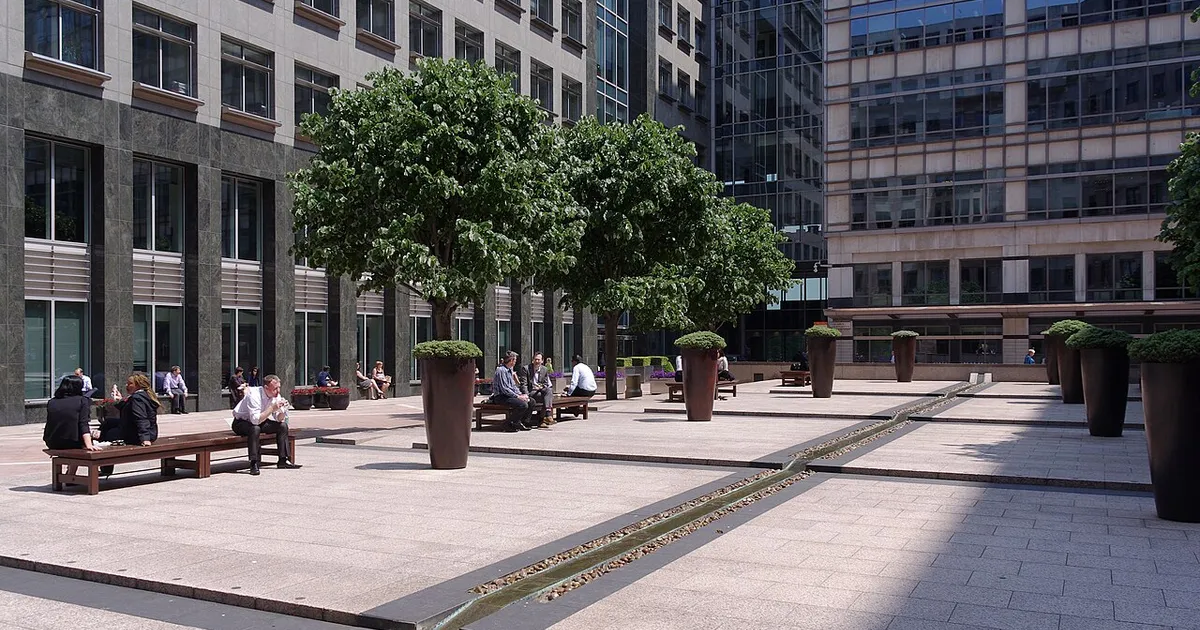
Photo: Wladyslaw, CC BY-SA 3.0, via Wikimedia Commons (https://commons.wikimedia.org/wiki/File:Ottawa_-_ON_-_Bank_of_Canada.jpg)