Gross earnings for a Northrop Grumman technician at four rates| Hours a week | At $26 an hour | At $32 an hour | At $39 an hour | At $46.95 an hour |
|---|
| 30 hours | $780 | $960 | $1,170 | $1,409 |
| 40 hours | $1,040 | $1,280 | $1,560 | $1,878 |
| 45 hours with overtime | $1,267 | $1,560 | $1,950 | $2,344 |
| 40 hours, annualized over 52 weeks | $54,080 | $66,560 | $81,120 | $97,656 |
The benefits package is strong and mostly national. Health plans vary by region with dental, vision, mental health resources and a fertility benefit on top, and most employees say they can afford the coverage.
Retirement is where the package differentiates. The Northrop Grumman Savings Plan is administered through Fidelity, covers substantially all hourly and salaried US employees, and matches 100 percent of the first 4 percent of contributions plus 50 percent of the next 4 percent.
Time off is generous in a way that hourly plant work rarely is. Nine 80 schedules are widely available, paid holidays and paid parental and caregiver leave are standard, and the employee stock fund and stock purchase plan give hourly staff a piece of the company too.
What benefits do Northrop Grumman technicians receive?
Technicians get the full corporate package: health coverage, paid holidays, generous paid time off, and paid parental and caregiver leave. Medical plan options vary by region, with dental, vision, mental health resources and a fertility benefit alongside them.
The schedule is the perk aerospace workers mention most. 9/80 schedules are widely available, which means nine days of work spread across 80 hours, and that pattern reduces the commuting and overtime stress that comes with five long days.
Employee surveys also point to practical details. Breakroom reports that most people get paid when they are sick and most receive paid time off, while only some roles get paid breaks and schedules can change with less than four weeks notice.
The pension detail is the part most applicants miss. Employees hired after July 1, 2008 are generally not eligible for the pension, and instead may receive an additional automatic company contribution on top of the savings plan match.
The match improves with tenure. It steps up to 7 percent after five years, and company matching vests after three years, so an early departure costs real money in the plan.
The scale of the funding behind it shows in the filings. Northrop Grumman put $229 million into defined contribution plans in the first quarter of 2026, alongside $22 million into the defined benefit pension and $11 million into postretirement benefits.
What does the pension detail mean for a new Northrop Grumman hire?
Employees hired after July 1, 2008 are generally not eligible for the Northrop Grumman pension, so the savings plan match is the retirement anchor for new technicians. The Northrop Grumman Savings Plan is administered through Fidelity and covers substantially all hourly and salaried US employees.
The match starts at 100 percent of the first 4 percent of contributions and 50 percent of the next 4 percent. The formula improves with tenure, company matching vests after three years, and a separate automatic company contribution may be credited on top.
The scale of that funding is visible in the filings. First quarter 2026 employer contributions were $229 million to defined contribution plans, $22 million to the defined benefit pension, and $11 million to postretirement plans, with a pension service cost of $53 million.
The employee stock fund is the other long-term lever. The Northrop Grumman Stock Fund held 7.1 million shares worth about $4.0 billion at the end of 2025 and earned $66 million in dividends that year, with total net assets of the defined contribution plan trust near $500.2 million.
Hourly pay compared across aerospace and industrial employers| Employer | Typical hourly range | What sits behind the number |
|---|
| Northrop Grumman | $18.00 to $46.95 | Posted bands by level and site, with overtime and shift differential on top |
| General Motors | $21.00 to $41.70 | Temporary posting start, union production grid of $29.41 to $33.33 |
| Ford | $21.00 to $44.77 | Posted start plus shift premiums, union assembler scale averaging $38.41 |
| GE Aerospace | $17.51 to $49.30 | Assembly technician band, pension closed to new participants |
| Caterpillar | $18.00 to $38.52 | Shift premiums of 6 to 8 percent on top of the base rate |
| 3M | $20.48 to $30.52 | Certification step, benefits from the first day |
| John Deere | $27.54 to $27.79 | Plant postings, trackers average near $20.65 |
Against the wider industrial group, Northrop Grumman sits in the middle of the pack on the hourly rate and near the top on retirement funding. GE Aerospace pays a similar band but froze its pension to new participants in 2012.
Caterpillar and 3M publish shift premiums that lift the effective rate above the base, while Ford and General Motors start hourly postings lower and pay higher union-scale rates to tenured workers.
John Deere posts the highest starting figure among these employers at $27.54 to $27.79 an hour, and its agency contract workers earn $20.20 to $22.20, a gap that shows how much the employer name is worth.
How does Northrop Grumman technician pay compare with other employers?
Northrop Grumman sits in the upper middle of the market, above GE Aerospace's production work and below the highest-paid defence engineering grades. GE Aerospace production technicians average $27.49 an hour on Indeed, while its assembly technicians average $37.24.
The difference is not a single company rate. It is clearance, site and shift work layered on top of a grade, which is why a posted band is the only fair comparison between employers.
Against national benchmarks the picture is clearer. The BLS May 2025 median for aircraft structure and surfaces assemblers is $31.43 an hour, and for electrical and electronic engineering technologists and technicians it is $37.59.
Hourly pay compared across aerospace and defence employers| Employer | Typical hourly pay | Notes |
|---|
| Northrop Grumman | $18.00 to $46.95 | By grade, site and shift |
| GE Aerospace | $17.51 to $49.30 | Assembler to assembly technician |
| Rolls-Royce and GE Aerospace union rates | $43.70 and $43.79 | Union production and assembly rates |
| Lockheed Martin | $28.25 for machinists | BLS occupation benchmark |
| Boeing | $21.47 for assemblers | BLS occupation benchmark |
Work at Northrop Grumman is on-site, and the postings are clear about it. Engineering roles list 100 percent on-site work, no relocation assistance, and a clearance requirement, plus an application window of around twenty days.
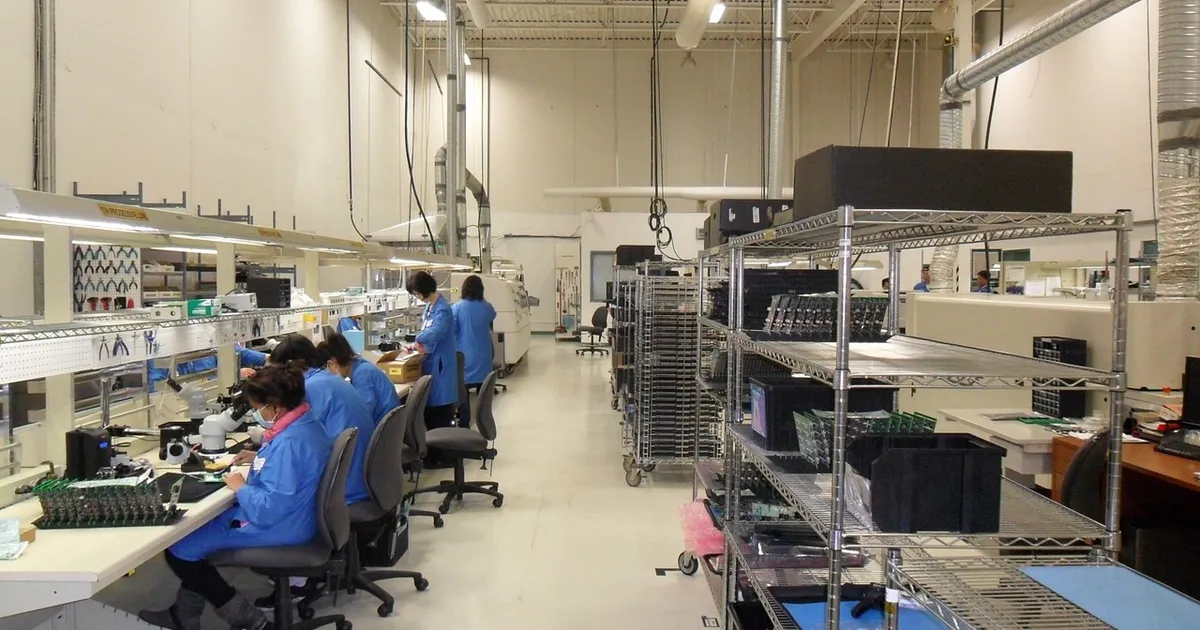
Schedules in the field run in long blocks rather than short shifts, and employees report less than four weeks notice of a new schedule. Overtime is available in some positions, and a shift differential may apply on top of base pay.
The reward side is a discretionary bonus tied to individual contribution and company results, which means the annual outcome depends on the program year as much as on performance.
What is the shift and work reality at Northrop Grumman?
Most technician roles are fully on-site at a cleared facility, and the schedule drives as much of the earnings as the rate does. Many postings are 100 percent on-site with no relocation assistance, and the Vandenberg role gave applicants about a 20 day window before it closed.
That clearance requirement narrows who can apply and shifts work toward people who can pass a background check. It also means the job is a full-time commitment with the site, not a hybrid arrangement.
Employee sentiment is mixed on management but positive on the day-to-day. A former post coat operator described plenty of opportunity to move around and gain experience in different areas, with pay and benefits rated as very good.
The next few years come down to two things. The first is volume: Northrop Grumman has said nothing that would change the bands, so posted ranges stay the anchor for applicants.
The second is the pension question, which is settled for now. New hires are not getting a traditional pension, so the savings plan match and the automatic company contribution are the retirement story worth understanding before you start.
What happens to Northrop Grumman pay next?
Expect the savings plan match to keep improving with tenure while the hourly bands keep moving with specialist demand. The match formula is designed to rise as you stay, and the 7 percent match level after five years is the number most applicants should plan around.
Cleared, specialist work stays in short supply, which is why levels like master technician and flight test technician hold their premiums. Lower-skill production work competes more directly with other local employers.
Two numbers to watch are the annual company results, which drive the discretionary bonus pool, and the automatic company contribution, which is where most of the retirement value now sits for newer hires.
Next steps
Read the posted band for the exact role and site, and ask what the shift differential and bonus target look like for that grade.
Photo: ArtTower, Pixabay Content License, via Pixabay (https://pixabay.com/photos/airplane-jet-fighter-f-16-659687/)

 Fazlur Rahman