Fazlur Rahman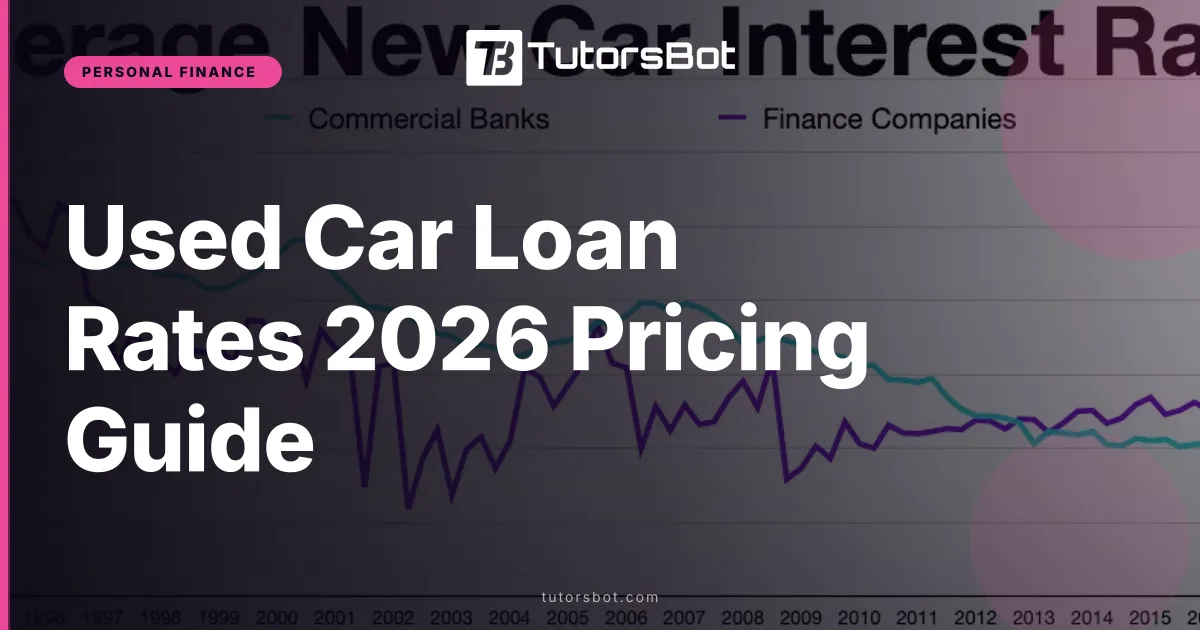
How Used Car Loan Rates Are Set
Used car loan rates are set by each lender based on a combination of factors. The most important factor is the credit score, which is the strongest predictor of whether the borrower will repay the loan. The next factors are the loan amount, the loan term, the vehicle age and mileage, the down payment, and the debt to income ratio. Lenders also consider the borrower's employment history, housing payment history, and the loan to value ratio of the vehicle. Used car loan rates are typically 1 to 3 percent higher than new car loan rates, since used cars have a higher risk of mechanical failure and a lower resale value.
2026 Average Rates by Credit Score
The average used car loan rate in 2026 is 7.5 to 9.0 percent for borrowers with good credit (FICO 700 to 779), 10 to 13 percent for borrowers with fair credit (FICO 620 to 699), and 14 to 20 percent for borrowers with poor credit (FICO below 620). Borrowers with excellent credit (FICO 780+) typically get rates 0.5 to 2 percent below the national average. Borrowers with subprime credit (FICO below 580) often need a co signer, a larger down payment, or a buy here pay here dealer. The credit score can be improved by paying down credit card balances, disputing errors on the credit report, and avoiding new credit applications in the 6 months before applying for the auto loan.
Where to Get the Best Rates
Credit unions typically offer the lowest used car loan rates, often 0.5 to 1.5 percent below banks, since credit unions are not for profit and pass the savings on to members. Navy Federal Credit Union, Pentagon Federal Credit Union, and State Employees Credit Union are among the largest credit unions in the country. Online lenders such as LightStream, Capital One Auto Finance, and CarMax Auto Finance offer competitive rates for borrowers with strong credit, and the application can be completed online in 10 to 20 minutes. Banks such as Chase, Bank of America, and Wells Fargo offer competitive rates for existing customers, especially those with a checking account and a credit card with the bank.
Dealer Financing vs Bank Financing
Dealer financing is offered through the dealership's finance office, and the dealer typically marks up the rate by 0.5 to 2 percent over the buy rate that the lender offers. The dealer keeps the difference as commission, and the rate is often negotiable. Bank or credit union financing is the most transparent option, since the rate is set by the lender and the borrower knows exactly what they will pay. Get pre approved for a loan from a bank or credit union before visiting the dealer, then use the pre approval as leverage to negotiate a lower rate from the dealer. If the dealer can beat the bank rate, take the dealer financing. If not, use the bank loan and pay off the dealer financing immediately.
How to Read the Loan Terms
The loan terms include the interest rate, the loan term, the monthly payment, the total interest paid, and the total cost of the loan. The annual percentage rate, or APR, is the most important number, since it includes the interest rate plus any fees charged by the lender. The loan term is the length of the loan in months, and the monthly payment is the amount due each month. The total interest paid is the difference between the amount financed and the total of all the monthly payments. The total cost of the loan is the amount financed plus the total interest paid. A 25,000 dollar used car loan at 8 percent for 60 months has a monthly payment of 507 dollars, total interest of 5,420 dollars, and a total cost of 30,420 dollars.
What Affects the Final Rate
Several variables can push the rate above or below the national average. The loan to value ratio, which is the loan amount divided by the vehicle value, is a key factor. Lenders prefer a loan to value ratio under 90 percent, so a larger down payment results in a lower rate. The vehicle age and mileage are also important, with newer vehicles and lower mileage getting the best rates. The loan term affects the rate, with shorter terms getting the best rates. The debt to income ratio is another factor, with lenders preferring a ratio under 36 percent. The borrower's employment history, with at least 2 years at the same employer or in the same field, helps the rate.
How to Get the Best Deal
Improve the credit score before applying, since a 50 to 100 point improvement can save 1,000 to 3,000 dollars in interest. Put down at least 10 to 20 percent of the purchase price. Choose a 36 to 60 month loan term. Apply with a co signer who has strong credit if needed. Shop multiple lenders within a 14 day window so the credit inquiries count as a single hit on the credit score. Use a credit union if eligible. Purchase a certified pre owned vehicle from a franchised dealer to get the manufacturer backed warranty. Set up automatic payments to get a rate discount if offered. Negotiate the rate with the dealer by bringing a pre approval from a bank or credit union. Read the loan contract carefully before signing.
Common Mistakes to Avoid
The most common mistake is focusing on the monthly payment instead of the total cost of the loan, which can lead to a longer term and more interest. A second mistake is skipping the pre approval and using dealer financing without a comparison, which can result in a 1 to 2 percent markup. A third mistake is adding extras such as extended warranties, GAP insurance, and service plans to the loan, which increases the balance and the interest. A fourth mistake is choosing a loan term longer than 60 months, which can result in being underwater on the loan. A fifth mistake is not shopping multiple lenders, which can result in a 0.5 to 2 percent higher rate. A sixth mistake is lying on the loan application, which is fraud and can result in the loan being called.
Photo: Wikideas1, CC BY, via Wikimedia Commons (https://upload.wikimedia.org/wikipedia/commons/e/ec/Average_New_Car_Interest_Rates.webp?utm_source=commons.wikimedia.org&utm_campaign=imageinfo&utm_content=original)