| Fund | Estimated net flow | Direction |
|---|
| QQQ, Nasdaq-100 tracker | -$1.64 billion | Outflow, largest of the day |
| SPY, S&P 500 tracker | +$1.35 billion | Inflow, largest of the day |
| IVV, S&P 500 tracker | +$549.3 million | Inflow |
| DIA, Dow tracker | +$481.4 million | Inflow |
| XLP, consumer staples | -$429.9 million | Outflow |
| TECL, tech-heavy fund | -$329.0 million | Outflow |
| All 348 funds covered | +$882.3 million | Net inflow |
Checked November 2026 on Yahoo Finance, using GuruFocus estimates.
VOO is not among the three largest inflows, so SPY and IVV are the comparable readings. These are estimates for one day, three sessions before the selloff, not a trend.
What the Fed rate path says
The Federal Open Market Committee, or FOMC, is the Fed's rate-setting group. It held the target range for the federal funds rate at 3-3/4 to 4 percent on October 28, 2026. The vote was 10-2. Lisa D. Cook and Beth M. Hammack dissented in favour of a 1/4 percentage point increase. The statement said inflation "remains elevated." The next meeting is December 8 and 9, 2026. It comes with a Summary of Economic Projections.
The 10-year yield fell 13 basis points on November 20 while stocks fell. Two of the 12 voters preferred a rate increase in October. December 8 and 9 is the next meeting. Earlier work on the September 2026 Fed rate decision and the US 10-year Treasury yield sets out the path.
Next steps
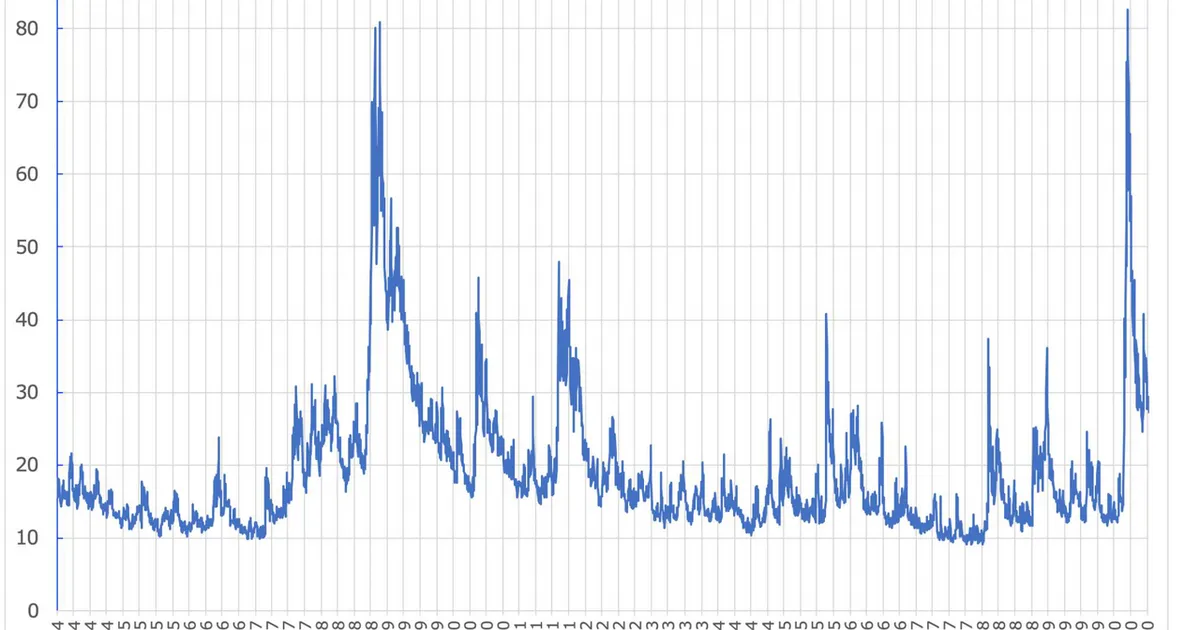
The VIX and Fear and Greed Index readings above describe one Friday, so use them as context, not a trigger. Three points follow. First, at a VIX of 35.89 the options market priced a one-standard-deviation move of about 10 percent over 30 days. Some investors spread a large purchase over several weeks instead of trading on one quote. That is a general approach, not advice for your situation. Second, a Fear and Greed reading of 14 describes the mood that day. It is not an instruction to sell. Third, fund flows show where money moved on November 17: QQQ lost $1.64 billion while SPY took in $1.35 billion.
Fidelity's own history sets the context. Since 1980, the S&P 500 has dropped at least 5 percent at some point in 93 percent of calendar years. It has dropped at least 10 percent in 48 percent of them, as of the end of 2025.
To check the figures yourself, use the Cboe VIX page for the live quote. The Federal Reserve FOMC calendar lists the next policy meeting. The Fear and Greed reading moves during the day, so check its timestamp before quoting it. Third-party mirrors can print a different number for the same day.
Photo: McKnight Buchanan, CC BY-SA 4.0, via Wikimedia Commons (https://commons.wikimedia.org/wiki/File:CBOE_Volatlity_Index,_VIX.png)