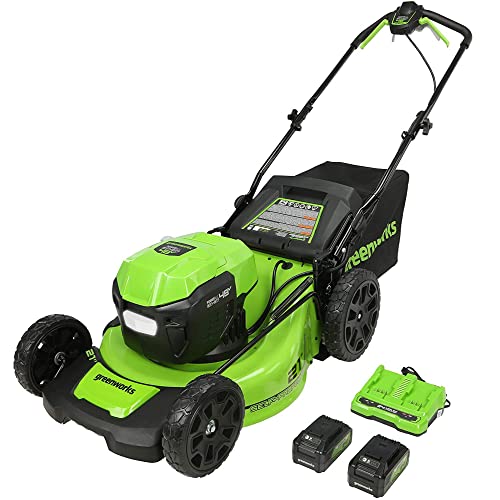
A great electric lawn mower has four key features. First, enough battery capacity to cut the entire lawn on a single charge, with a spare battery or a rapid charger as a backup. Second, a brushless motor that delivers high torque and a long motor life. Third, a sturdy steel or composite deck that holds up to years of use without rusting or cracking. Fourth, a self propelled drive system for yards with slopes, since pushing a heavy mower uphill is exhausting. A bagging or mulching option, a side discharge, and a quiet operation under 75 decibels are also worth prioritizing.
Top Cordless Push Mowers
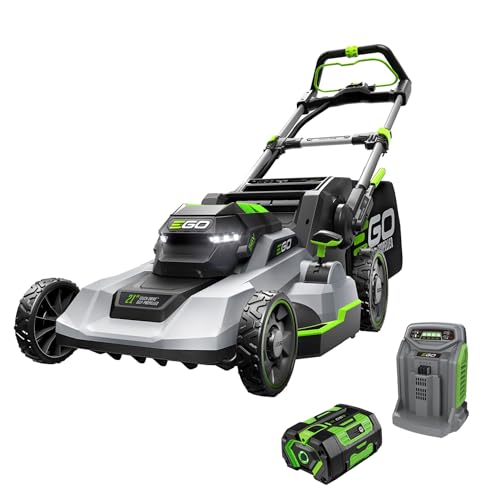
The EGO Power+ LM2135SP is the strongest cordless push mower in 2026, with a 56V 7.5 Ah battery that runs 60 minutes, a 21 inch steel deck, a brushless motor, a self propelled drive, and a 6 in 1 cutting system. The Greenworks 80V 21 inch self propelled mower is close behind, with a steel deck, a brushless motor, and a self propelled drive on an 80V platform. The Ryobi 40V HP 21 inch crosscut is the best value, with a crosscut blade that mulches clumps properly, a self propelled drive, and a lower price. All three are compatible with a wider battery platform, so the same battery can power a string trimmer, a leaf blower, and a chainsaw.
Top Cordless Self Propelled Mowers
The EGO LM2125SP is the strongest cordless self propelled mower in 2026, with a 56V 7.5 Ah battery, a 21 inch steel deck, a brushless motor, a self propelled drive with variable speed, and a 6 in 1 cutting system. The Greenworks Commercial 82V is the strongest commercial grade option, with a 22 inch steel deck, a 5.0 Ah battery, and a self propelled drive. The Snapper XD 82V is a strong value, with a 21 inch steel deck, a self propelled drive, and a 3 in 1 cutting system. All three are designed for yards over 0.5 acres and have run times of 45 to 90 minutes.
The Picks, and What Each One Is Actually Good For
Four cordless mowers cover the range most people need, and the choice comes down to deck size, how long the battery lasts, and how big the lawn is. All four are self propelled, all four use a brushless motor, and all four sit on a battery platform that covers other yard tools, so the deciding question is usually how much lawn there is and whether it has a slope.
Get more product guides & reviews reads in your inbox
One email a day — only posts tagged Product Guides & Reviews. No spam, unsubscribe anytime.
This is the strongest cordless push mower of the group and the one most people should end up with. The 21 inch steel deck is the right size for a lawn of roughly a quarter acre to half an acre, the brushless motor gives it the torque to cut wet grass without bogging down, and the 6 in 1 cutting system lets you mulch, bag, side discharge, or collect leaves depending on the season. The 56V 7.5 Ah battery is what makes the difference between finishing on one charge and finishing on two, and the platform is wide enough that the same pack will drive a trimmer, a leaf blower, and a hedge trimmer later.
EGO LM2125SP: the cheaper way into the same platform
The LM2125SP shares the deck size, the brushless motor, and the 56V 7.5 Ah battery with the LM2135SP, which is the point: if you buy one of these and later add the other, they share the same packs and the same charger. It lands at a lower price than the LM2135SP and it carries a variable speed self propelled drive, which lets you slow down on slopes and speed up on the straight run back. For a first electric mower, or for anyone who does not need the widest set of cutting modes, it is the sensible way in.
Greenworks 80V 21" self propelled: when the lawn decides your battery count
Where the EGO machines run 56V, this one runs 80V, and the difference shows up in how long you can stay out. Higher voltage packs carry more energy for a given current, so an 80V mower tends to hold its output longer on a big property, and that is the number that decides whether you finish in one session or come back out after a battery charge. The 21 inch steel deck and brushless motor are standard at this price. If your lawn is more than half an acre, or if it has a slope that a 56V pack struggles with, the extra headroom is worth paying for.
Ryobi 40V HP 21" crosscut: the value pick and the best mulcher
The reason this mower is different from the others is the blade. A crosscut blade has two cutting edges angled against each other, so it shreds the grass into fine pieces that fall back onto the lawn instead of clumping. That means you can mulch without collecting, and it means less material to carry to the compost pile, which is the single biggest complaint people have about battery mowers. The 40V HP platform also has more compatible tools than any other in this article, so if you own nothing else, this is the cheapest entry point into a large tool ecosystem.
What to Buy at Which Budget
Budget
Buy
Why
Skip
Under 500 dollars
Ryobi 40V HP 21" crosscut
Best mulching, cheapest entry to a wide platform
Bare tools without a battery and charger
500 to 800 dollars
EGO LM2125SP
Steel deck, brushless motor, variable speed drive
Paying for the 6 in 1 system if you will not use it
800 to 1,200 dollars
EGO Power+ LM2135SP
Best all-round mower, one charge on most lawns
A second battery before you have measured your lawn
1,200 dollars and up
Greenworks 80V 21" self propelled
Longest runtime on large or sloped lawns
80V if your lawn is under a quarter acre
The Running Costs, Which Are Mostly Battery and Blade
Product
Energy cost
What wears out
Annual maintenance
EGO Power+ LM2135SP
Grid electricity
Battery after 3 to 5 years, blade yearly
Clean the deck, sharpen the blade, check the battery
EGO LM2125SP
Grid electricity
Battery after 3 to 5 years, blade yearly
Clean the deck, sharpen the blade, check the battery
Greenworks 80V 21" self propelled
Grid electricity
Battery after 3 to 5 years, blade yearly
Clean the deck, sharpen the blade, check the battery
Ryobi 40V HP 21" crosscut
Grid electricity
Battery after 3 to 5 years, blade yearly
Clean the deck, sharpen the blade, check the battery
Compared with a petrol mower, the running cost of any of these is a fraction of what fuel and servicing cost over a season. A petrol mower also produces far more noise, and in many neighbourhoods a noisy machine is a practical problem rather than just an annoyance. The one thing worth budgeting for beyond the machine is a second battery. Mowing in the evening is when the noise matters least, and a second pack turns a 40 minute job into a 40 minute job with no charging stop.
Top Robot Mowers
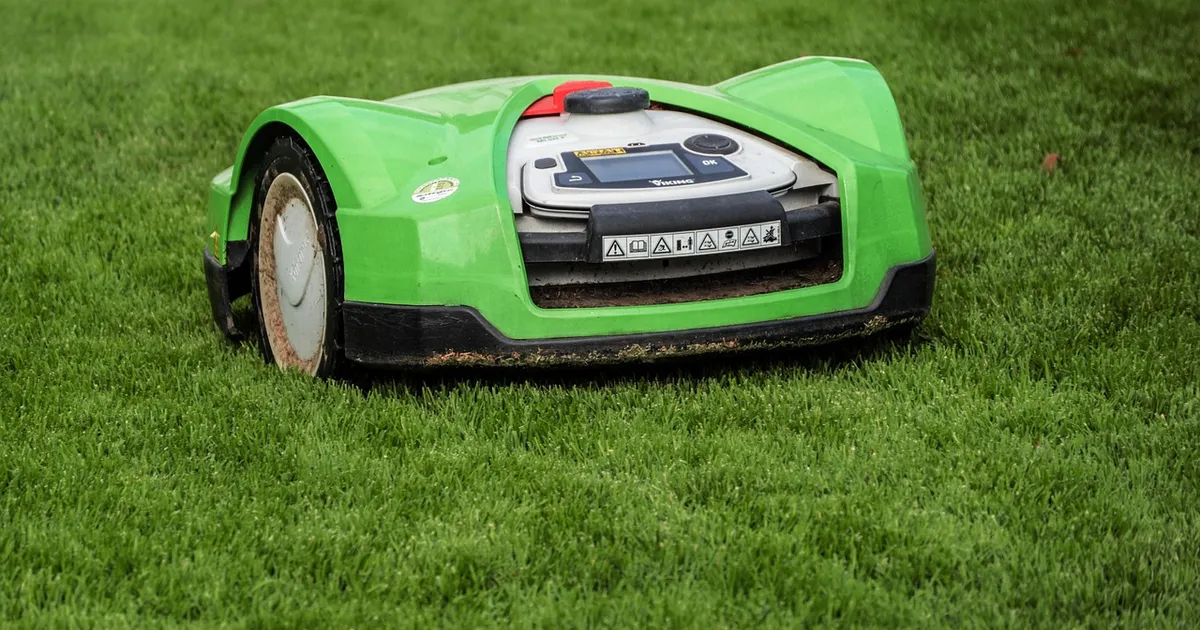
The Husqvarna Automower 430X is the strongest robot mower in 2026, with GPS assisted navigation, a weather timer, a smartphone app, and a 0.8 acre coverage area. The Husqvarna Automower 450X covers up to 1.25 acres, which is the largest coverage area on the market. The Worx Landroid M is a more affordable option at 800 to 1,200 dollars, with a 0.25 acre coverage area, a smartphone app, and a rain sensor. The Robomow RS630 is a strong choice for lawns with rough terrain, with a 0.75 acre coverage area, a floating deck, and a smartphone app. All robot mowers require a boundary wire, which the installer buries in the lawn or pins to the surface.
Top Battery Powered Riding Mowers
The Ryobi 80V 42 inch riding mower is the strongest battery powered riding mower in 2026, with 4 brushless motors, a 42 inch steel deck, a 1.5 acre coverage area, and a quiet operation under 70 decibels. The Cub Cadet LT42E is a close second, with a 56V battery, a 42 inch deck, and a 1 acre coverage area. The Greenworks Commercial 82V is the strongest commercial grade option, with a 60 inch deck, a 4 acre coverage area, and a side discharge. The trade off versus a gas riding mower is a higher upfront cost and a shorter run time, but the savings on fuel, oil, and maintenance are significant.
How to Pick the Right Electric Mower
For a yard under 0.25 acres, a 20 to 21 inch cordless push mower with a 5.0 Ah battery is enough. For a yard between 0.25 and 0.5 acres, a 21 inch cordless self propelled mower with a 7.5 Ah battery is the right choice. For a yard between 0.5 and 1 acre, a 22 inch cordless self propelled mower with a 10.0 Ah battery or a second battery is the right choice. For a yard over 1 acre, a robot mower or a battery powered riding mower is the right choice. For a yard with slopes over 15 percent, a self propelled drive or a riding mower is essential. For a yard with a complex shape, a robot mower is the easiest option.
How to Care for an Electric Mower
Clean the underside of the deck after every 2 to 3 mowings to prevent grass buildup from corroding the metal. Sharpen the blade once a year or every 25 hours of use, since a dull blade tears the grass and leaves it vulnerable to disease. Store the battery indoors during the winter, since extreme cold reduces battery capacity. Charge the battery to 50 percent before long term storage, since a fully depleted or fully charged battery can degrade over time. Replace the blade every 2 to 3 years, or sooner if it is bent or chipped. Follow the manufacturer maintenance schedule, which is usually a blade change, an air filter change, and a battery check once a year.
Are Electric Mowers Better for the Environment
Yes, electric mowers are significantly better for the environment than gas mowers. A typical gas mower emits the same amount of hydrocarbons and nitrogen oxides in one hour as a car driven 100 miles, according to the EPA. Electric mowers have zero direct emissions, and the indirect emissions from charging the battery are lower if the home uses renewable energy. Electric mowers are also quieter, with a typical operating volume of 65 to 75 decibels versus 85 to 95 decibels for a gas mower. The lower noise is better for the homeowner, for the neighbors, and for wildlife in the area.
As an Amazon Associate, Tutorsbot earns from qualifying purchases. Disclosure.
#best electric lawn mowers#electric mower#cordless lawn mower#robot mower#riding mower
Fazlur Rahman is the founder of Tutorsbot, building AI-powered tools for learning and career growth. He writes about applying AI in real products and the practi… Read moreShow less
Fazlur Rahman is the founder of Tutorsbot, building AI-powered tools for learning and career growth. He writes about applying AI in real products and the practical side of building an ed-tech startup.

 Fazlur Rahman