 Fazlur Rahman
The Over-Ear Question, Answered Head-to-Head
Walk into any thread about the best headphones with noise cancelling and you will find the same three names fighting it out: Sony, Bose and Apple. Around them sit two challengers — Sennheiser, the endurance specialist, and Anker's Soundcore, the budget disruptor. In 2026 the gap between these five has narrowed to the point where spec sheets alone cannot settle the argument, because every one of them is genuinely good at the headline job of silencing an airplane cabin or an open-plan office. What separates them is how they handle everything around that job: the third hour of wear, the tenth hour of travel, the phone call you actually need to take, and the codec your phone speaks.
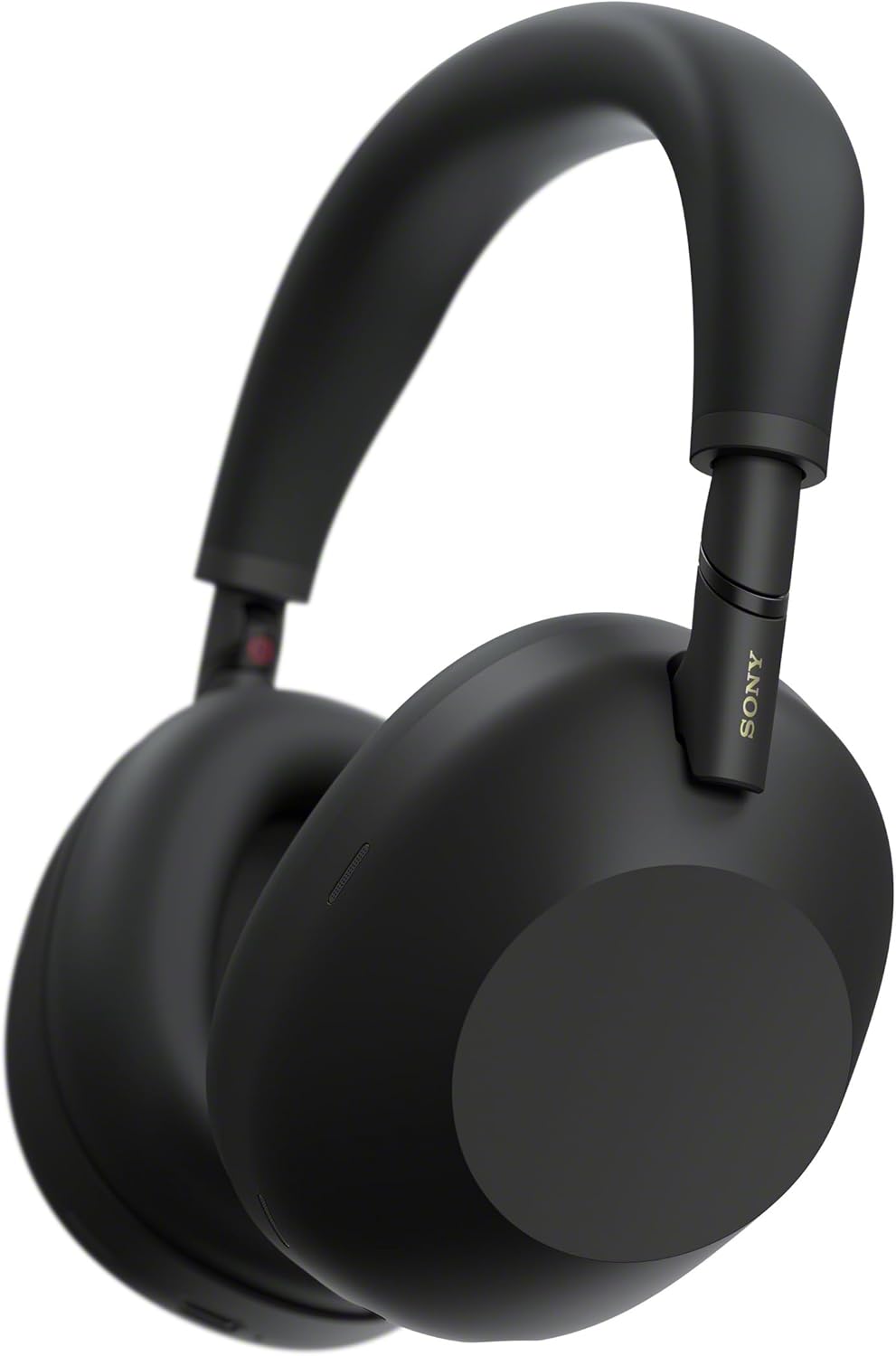
This guide settles it the only way that is fair — round by round. Five categories, one winner each, and a scorecard at the end that produces a single overall champion. If you want the short version: Sony's WH-1000XM6 takes the crown on balance, but there are three very specific situations where you should buy something else, and we will tell you exactly when.
How We Judged the Best Headphones With Noise Cancelling
Every contender was evaluated on five rounds: active noise cancellation strength, comfort over long wear, battery life and charging, call quality, and codecs with multipoint connectivity. Measurements and lab data were cross-checked against RTINGS' published headphone test methodology, and the day-to-day claims were sanity-checked against patterns in verified owner feedback across major retailers. No single spec wins a round by itself — a 60-hour battery means little if the headset clamps like a vice — so each round weighs real-world usage first and spec sheets second.
Two ground rules keep this honest. First, ANC is measured in the environments people actually inhabit: subway platforms, open-plan offices, and long-haul cabins — not just a 100 Hz test tone. Second, ecosystem lock-in is scored as a cost, not a feature; a headphone that only shines inside one brand's walled garden has to earn back those points everywhere else.
The Contenders
Five headphones, five personalities. Sony's WH-1000XM6 is the all-rounder defending its crown. Bose's QuietComfort Ultra Headphones are the noise-killing specialist with Immersive Audio. Apple's AirPods Max are the ecosystem play, rebuilt around USB-C. Sennheiser's Momentum 4 Wireless is the battery-and-sound purity pick. And Anker's Soundcore Q45 is the value grenade that undercuts everyone by hundreds of dollars. Pricing cited was live at the time of publication — click through to confirm current pricing.
| Contender | Standout | Battery (claimed) | Weight class | Our rating | Check price |
|---|---|---|---|---|---|
| Sony WH-1000XM6 | Best balance | ~30h (ANC on) | Light | 9.4/10 | Check price |
| Bose QC Ultra Headphones | Deepest ANC | ~24h (less with Immersive) | Light | 9.3/10 | Check price |
| Sennheiser Momentum 4 | Battery + sound | ~60h | Mid | 8.9/10 | Check price |
| Apple AirPods Max | Apple ecosystem | ~20h (ANC on) | Heavy | 8.6/10 | Check price |
| Anker Soundcore Q45 | Best budget pick$150 | ~50h+ (ANC on) | Mid | 8.2/10 | Check price |
Round 1 — ANC Strength: Bose Takes the Crown by a Nose
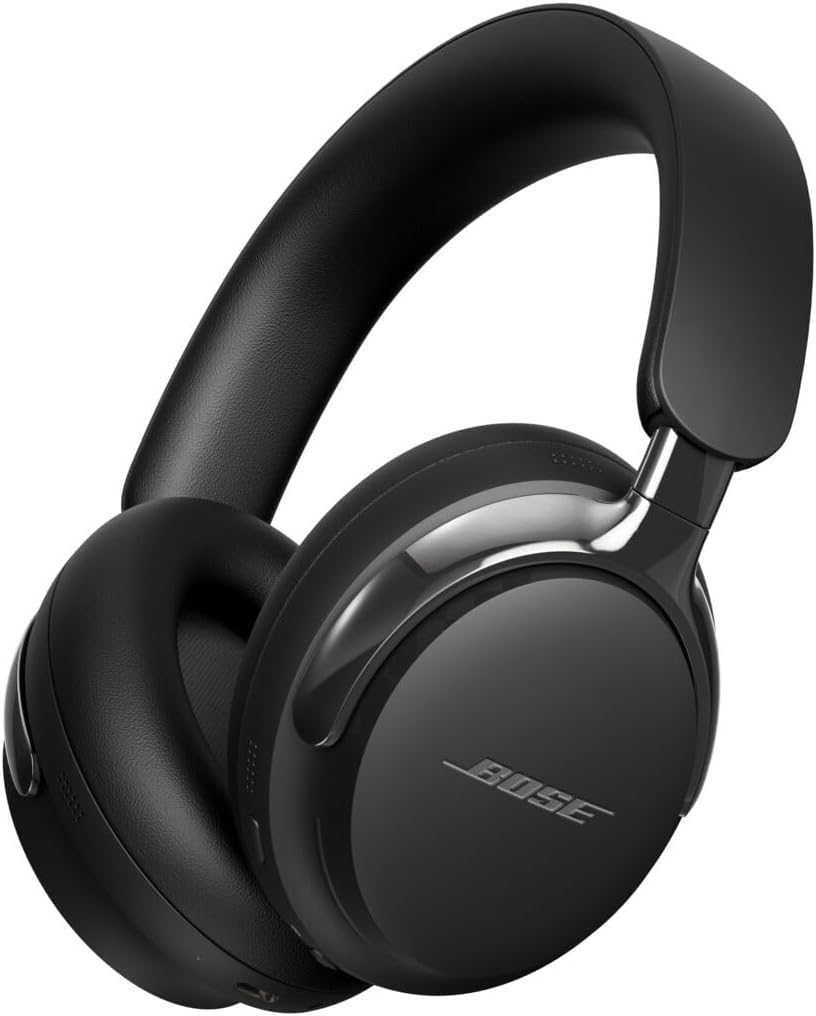
This is Bose's home turf, and in 2026 it still holds it. The QuietComfort Ultra Headphones produce the deepest and most even silence of the group, particularly in the mid-range frequencies that cheap active cancellation always leaks — chattering coworkers, the droning HVAC hum, the half-heard television in the next room. Immersive Audio, Bose's spatial mode, remains the most convincing implementation in any headphone at any price, and it works with any source, not just one company's devices. Sony's WH-1000XM6 closes most of the gap with its newer processor; in pure low-frequency rumble terms the two are effectively tied, and some owners report the Sony actually handles engine drone a touch longer on ultra-long flights. But across the full frequency spread — the stuff that actually fatigues you on a workday — Bose keeps a measurable edge.
That edge costs around $429 at the time of writing, and it is the single best reason to buy this headphone.
Round verdict: Bose takes it. Sony is within a whisker, and neither Apple nor Sennheiser nor Anker seriously contests this round — though the Q45's adaptive ANC embarrasses its own price point.
Round 2 — Comfort for Long Wear: Sony Wins the Third Hour
Noise cancellation only matters if you keep the headphones on, and this is where weight and clamp force quietly decide purchases. The WH-1000XM6 sits comfortably under the 300-gram mark with a wide, softly padded headband and earcups that swallow glasses arms without pressing them into your temples — the detail that matters most to the roughly half of users who wear corrective lenses. Bose runs neck and neck here with a similarly plush fit. The AirPods Max, by contrast, carry a famously heavy aluminum build — well over 380 grams — and their mesh canopy, while breathable, concentrates pressure differently; owners either love it or return it, and on flights longer than four hours the weight becomes a genuine factor.
Comfort is also the round where the Momentum 4's larger, rounder cups divide opinion: excellent for big ears, less secure for smaller heads. The verdict favors the headphone you are most likely to forget you are wearing after hour three, and that is Sony — around $449 at the time of writing, with a folding hinge that Bose abandoned and Apple never offered.
Round verdict: Sony takes it. Bose is a very close second; AirPods Max finish last purely on mass.
Round 3 — Battery and Charging: Sennheiser Demolishes the Field
There is no drama in this round. The Momentum 4 Wireless carries a claimed ~60 hours of playback — a figure that is not marketing inflation, as verified owner reports of multi-week commuting on a single charge consistently confirm. That is roughly double the Sony and Bose, and triple the AirPods Max, whose ~20-hour figure and Smart Case auto-sleep design at least forgive forgetful users. Anker's Q45 posts an absurd number for its class — around 50 hours with ANC active — and supports the same USB-C fast-charge pattern as the rest: a few minutes plugged in buys hours of playback on every contender here.
Battery is also the round where buying smart saves the most money: the Momentum 4 launched near $349 and has repeatedly dipped well under $300 on sale, making it the endurance-and-fidelity double crown at a mid-tier price.
Round verdict: Sennheiser takes it, and it is not close.
Round 4 — Calls and Mic: Sony Owns the Open-Plan Office
For hybrid workers, the microphone array is not a footnote — it is the product. Sony's AI-assisted voice pickup remains the most consistent performer in noisy conditions, stripping keyboard clatter, café noise and street interference while keeping voices natural rather than over-processed. Bose follows closely, with the best wind rejection of the group for walking calls. The AirPods Max beam-forming mics are superb in quiet offices and inside Apple's ecosystem, where call handoff between devices just works, but they lose their advantage on Android. The Momentum 4 and Q45 are acceptable for the occasional meeting, with the Q45's budget-tier mics the clear last place.
Round verdict: Sony takes it. Bose is the pick if your calls happen outdoors; AirPods Max if your entire company runs on FaceTime.
Round 5 — Codecs and Multipoint: Sennheiser Speaks Every Language
This is the least glamorous round and the one that quietly determines daily frustration. The Momentum 4 supports aptX Adaptive alongside the universal SBC and AAC, pairs with two devices at once reliably, and switches without the theatre of re-pairing. Sony answers with LDAC for hi-res streaming and mature two-device multipoint that now extends across laptops and phones without dropping frames of audio. Bose ships aptX Adaptive and has cleaned up its multipoint story, though Immersive Audio still taxes battery when left on. The AirPods Max remain locked to AAC — fine on Apple hardware, a ceiling anywhere else — and their multi-device behavior depends entirely on how deep you live in Apple's ecosystem. The Q45 quietly offers LDAC at a budget price, which remains mildly ridiculous in the best way.
Round verdict: Sennheiser takes it on codec spread and no-nonsense multipoint, with Sony a very close second for LDAC quality.
The Scorecard
Three rounds to Sony, two to Bose's specialist depth, two rounds swept by Sennheiser on its two specialties, and honest showings from Apple and Anker outside their lanes. Tallied across all five rounds with ecosystem cost factored in:
| Headphone | Rounds won | Our rating |
|---|---|---|
| Sony WH-1000XM6 | 2 (Comfort, Calls) + 2 close seconds | 9.4/10 |
| Bose QC Ultra Headphones | 1 (ANC) + seconds everywhere | 9.3/10 |
| Sennheiser Momentum 4 | 2 (Battery, Codecs) | 8.9/10 |
| Apple AirPods Max | 0 (ecosystem dividend not counted) | 8.6/10 |
| Anker Soundcore Q45 | 0 (price-adjusted: exceptional) | 8.2/10 |
Champion: the Best Headphones With Noise Cancelling in 2026
The Sony WH-1000XM6 wins the overall crown not because it wins every round, but because it loses none of them badly. It takes the two rounds you feel every single day — comfort on long sessions and call clarity in real conditions — runs Bose to a photo finish in ANC, and delivers LDAC with dependable multipoint besides. It is the over-ear headphone with no dealbreaker, which after a decade of this category is still the rarest thing in it. Also worth remembering: it already won our combined ranking across both form factors, so this result keeps the two guides in agreement.
Deviate from the champion in exactly three cases. If silencing the world is the entire point — you fly weekly and value the deepest cabin hush plus Immersive Audio — buy the Bose QC Ultra Headphones. If your devices are all Apple and auto-switching plus spatial audio outweigh codec ceilings, the AirPods Max fit that life perfectly, price aside. If you want flagship-adjacent sound with absurd battery for under $350, the Momentum 4 is the intelligent purchase.
Do Not Forget the Budget Lane
A final word on the Anker Soundcore Q45, because dismissing it would be a disservice. Adaptive ANC that genuinely blunts office noise, LDAC, around 50 hours of playback, and an app with parametric EQ — for roughly a third of flagship money. It gives up refinement: the finish feels cheaper, the mics are merely fine, and the tuning benefits from ten minutes in the app. Alongside it, the Beats Studio Pro and Bowers & Wilkins PX7 S2 hover in the mid-premium space — the former leaning on Apple-adjacent convenience, the latter on build and musicality — but neither undercuts the value math the Q45 writes. For students, first pairs, and anyone who loses headphones, it is the smart money. It is also the easiest recommendation on this page to make without checking your bank balance first.
Whichever camp you land in, the full in-ear counterparts to these picks live in our dedicated earbuds ranking, and the combined over-ear-and-earbuds list is there if you have not chosen a form factor yet.
Top Picks for This Topic
-
1

-
2

-
3

As an Amazon Associate, Tutorsbot earns from qualifying purchases. Disclosure.