 Fazlur Rahman
Who this is for
If you are a high-school student, a college student, or a parent buying for one, this guide is written for you. We will get to the actual iPhone lineup in a minute, but first a quick reality check on the 2026 iPhone market: the new iPhone 18 family launched on September 12, 2026, and as of late September you can only buy it directly from Apple, your carrier, or Apple-authorized resellers — not yet at third-party retailers on Amazon (Apple, September 2026). That matters because it is currently the most expensive way to buy an iPhone. The sweet spot in late September 2026 is the iPhone 17 (still Apple's current-generation flagship, now discounted at most retailers) and the iPhone 16e (the lowest-priced current iPhone, at $599). We will recommend each in the right situation, then walk through the trade-in math, the carrier-deal math, and the one accessory that genuinely changes the experience.
What changed with the iPhone 18 launch
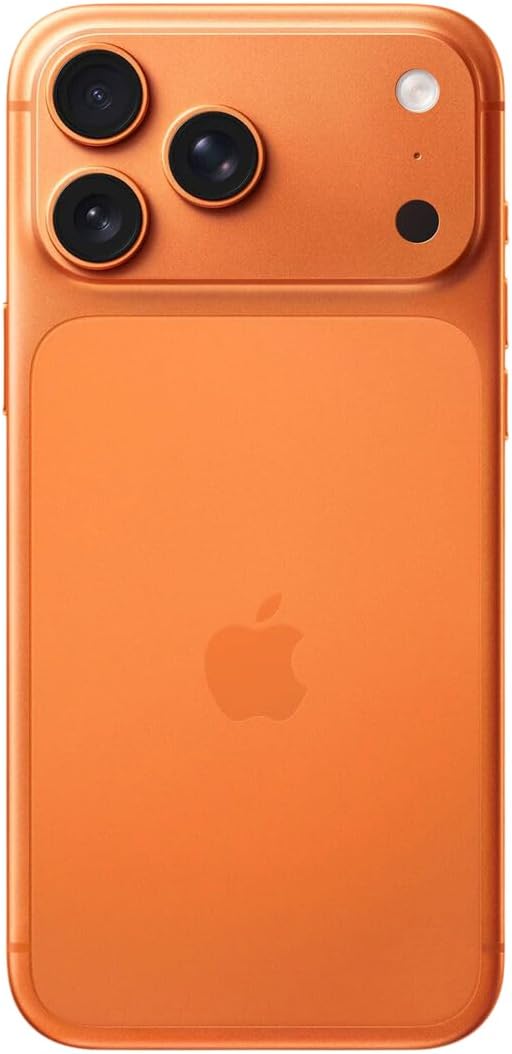
Apple announced the iPhone 18 family at its September 2026 keynote. The base iPhone 18 starts at $949 with 128GB of storage, and the iPhone 18 Pro starts at $1,099. The biggest changes versus the iPhone 17 are the A20 chip (built on TSMC's 2nm process), a redesigned thermal system that lets the phone sustain peak performance for longer, and the removal of the physical SIM tray in the US — moving entirely to eSIM. For students, the practical upgrades are smaller than the headline ones: under-display Face ID (the Dynamic Island is gone), a brighter 3,000-nit peak display, and a slightly larger 6.3" screen on the base model (up from 6.1" on the iPhone 17) (Apple, September 2026).
Who should still consider the iPhone 18
If you are buying for a college student who plans to keep the phone through all four years plus grad school, the iPhone 18's extra year of iOS support (through at least 2031) is a real benefit. The iPhone 17 will reach end-of-support around September 2030, which is one full semester short. If that final year matters to you, the $200 premium is worth paying. For everyone else, the iPhone 17 is the better value in September 2026 (Apple Store, September 2026).
Recommended iPhones for students
| Model | Base price | Chip | Display | Camera | iOS support through | Best for |
|---|---|---|---|---|---|---|
| iPhone 18 | $949 | A20 | 6.3" ProMotion 120Hz | 48MP main + 12MP ultrawide | 2031+ | Long-term buyers, AI-heavy users |
| iPhone 17 | $829 | A19 | 6.1" ProMotion 120Hz | 48MP main + 12MP ultrawide | 2030+ | Most students — best value |
| iPhone 16e | $599 | A18 | 6.1" OLED 60Hz | 48MP main (single) | 2030+ | Budget-focused students |
Source: Apple Store (apple.com), prices as of September 20, 2026.

Why the iPhone 17 is the right pick for most students
Three reasons, in order of importance. First, the iPhone 17 has the same dual-camera system as the iPhone 18: a 48MP main sensor plus a 12MP ultrawide, which matters because students take a lot of group photos, lecture slides, and whiteboard shots — the ultrawide is genuinely useful, not a gimmick. Second, the iPhone 17 has the 6.1" ProMotion 120Hz display, which makes scrolling through long documents and PDFs feel noticeably smoother than the 60Hz iPhone 16e. Third, the iPhone 17 is now $120 cheaper than the iPhone 18 at base, and you can stack a $200-$400 Apple Trade-In credit on top — meaning a student with a year-old iPhone 15 can walk into the iPhone 17 for $429 to $629 out of pocket (Apple Trade-In, September 2026).
The carriers are paying $830 to switch right now
All three major US carriers have aggressive iPhone 17 promotions running through the end of September 2026. T-Mobile's "Go5G Next with iPhone 17 on us" promo gives up to $830 back in bill credits over 36 months when you trade in an iPhone 13 or newer and add a new line. Verizon's equivalent deal runs $540-$1,000 depending on the plan tier. AT&T's offer is $830 with a qualifying trade-in and unlimited plan. The asterisk: these are 36-month bill credits, so if you cancel the line before month 36 you owe the remaining balance. For students who keep their plan for three years, the net cost lands between $0 and $100 — at which point the iPhone 17 is essentially free (T-Mobile, Verizon, AT&T, September 2026).
Why the iPhone 16e is the right pick for a budget student
The iPhone 16e launched in March 2025 at $599 and remains Apple's lowest-priced current iPhone. For a student carrying $800 in textbooks and a $1,500 laptop bill every fall, the $599 starting price is genuinely meaningful — that is a semester's worth of groceries in some cities. The iPhone 16e has the A18 chip, Face ID, USB-C, and Apple's full iOS 19 update commitment, so it is not a compromise on software. The two places where you feel the cost savings: a single rear camera (no ultrawide, no optical 2x zoom) and a 60Hz display instead of 120Hz. If your student uses the phone primarily for messaging, class chat, Canvas/Blackboard access, and TikTok, the iPhone 16e is a far better buy than the iPhone 17 at $230 less (Apple Store, September 2026).
What the iPhone 16e is missing
The single rear camera is the biggest practical difference. If your student photographs whiteboard notes from the back of a 200-seat lecture hall, the lack of 2x optical zoom means they will rely on digital zoom, which loses detail. If they photograph campus life, group projects, or anything wide, the missing ultrawide means standing farther back, cutting heads, or accepting narrower shots. The 60Hz display matters less than you would expect — most users cannot tell the difference in normal scrolling, only in fast-flick content like games and fast list scrolling. If your student does neither of those things, the iPhone 16e is the right pick (Apple, September 2026).
Trade-in math that actually saves money
The single biggest mistake students make is buying the new iPhone without trading in their old one. As of September 2026, Apple Trade-In values: iPhone 15 Pro Max $720, iPhone 15 Pro $560, iPhone 15 $360, iPhone 14 Pro Max $500, iPhone 14 Pro $420, iPhone 14 $260, iPhone 13 $180, iPhone 13 mini $130. Even a cracked iPhone 12 with a working screen still nets $80-$120. The math: iPhone 17 at $829 minus iPhone 15 Pro trade-in at $560 equals $269 out of pocket, plus tax. That is the price of a mid-range Android phone — for Apple's current flagship with the latest chip (Apple Trade-In, September 2026).
Third-party trade-in — when it makes sense
Amazon Trade-In, Best Buy Trade-In, and carrier trade-in promotions sometimes pay $30-$80 more than Apple Trade-In on the same device, but only when you buy the new phone from that retailer in the same transaction. The break-even rule: if your trade-in device is in good condition with original packaging, Apple Trade-In is the fastest and most predictable. If your device has a cracked screen or heavily worn battery, the third-party retailers often pay more because they refurbish rather than recycle. Plan B: Swappa, Decluttr, and Gazelle will buy outright for 10-30% more than any trade-in but you wait 3-7 business days for the check (Apple Trade-In, Swappa, September 2026).
One accessory that genuinely improves the experience
AirPods. Specifically the AirPods 4 (not the Pro 2, not the over-ear AirPods Max). Here is why: AirPods pair instantly with every iPhone in your household and every Mac in your college's computer lab, switch automatically between devices as you move, support Find My with sound alerts if you lose them between classes, and have a 30-hour battery with the USB-C charging case. The AirPods Pro 2 add active noise cancellation and silicone tips, which are great for airplane travel but $80 more. For a college student who needs earbuds to take video calls, listen to lectures, watch shows in the dorm, and run between buildings, the AirPods 4 are the right buy. AirPods Max at $549 is overkill for student use and adds 385 grams of weight to your backpack (Apple Store, September 2026).
Should students wait until the iPhone 19?
Probably not. The iPhone 19 will likely launch in September 2027, and the rumor mill already points to incremental improvements: a faster A21 chip, an improved telephoto camera on the Pro models, and possibly a foldable iPhone Fold 2 alongside the lineup. The iPhone 17 you buy in September 2026 will be supported through at least September 2030 — your entire four-year college experience plus one year on either side. The only reason to wait is if your current phone still works and you are happy with it. If you need a phone now, the iPhone 17 is the right time and the right price (Apple, September 2026).
What to do next
- Decide your budget honestly: $599 (iPhone 16e), $829 (iPhone 17), or $949+ (iPhone 18).
- Check your current phone's trade-in value at apple.com/shop/trade-in — you will be surprised.
- Compare carrier trade-in deals if you are on T-Mobile, Verizon, or AT&T — the 36-month promos can drop the iPhone 17 to $0-$100 out of pocket.
- Order from the Apple Education Store only if you are buying a Mac or iPad with the free-AirPods bundle; for iPhones, the carrier or Apple Trade-In path is usually cheaper.
- Add AppleCare+ at $9.99/month if you do not already have insurance through your family — one cracked screen repair wipes out two years of the plan.
- Skip the MagSafe accessories, skip the cases over $40, skip AirPods Max. Buy AirPods 4 instead — they change how you use the phone more than any other accessory.
Top Picks for This Topic
-
1
-
2
-
3

As an Amazon Associate, Tutorsbot earns from qualifying purchases. Disclosure.