Fazlur Rahman
Walk into any pharmacy or scroll any wellness feed in 2026 and you will be hit with the same promise: a scoop a day for younger skin, stronger joints, thicker hair. Collagen is now a multi-billion-dollar category, and the marketing has outrun the science. We spent six weeks reading the published research, comparing ingredient panels, and tasting every product in this guide to separate the genuinely well-made supplements from the over-priced dust.
This guide is for readers who want a clear, evidence-led answer. We rank five products, explain what “hydrolyzed peptides” actually means, and tell you the dose, the sourcing, and the things the labels leave out. Pricing cited was live at the time of publication — click through to confirm current pricing.
Collagen Types, Explained
There are at least 28 types of collagen in the human body, but supplements concentrate on three. Type I is the dominant form and the most abundant protein in skin, tendons, and bone. Type II is the structural protein of cartilage. Type III is found alongside Type I in skin, muscle, and blood vessels.
Most powders and capsules are hydrolyzed, which means the long collagen chains have been broken into short peptides of typically 2,000 to 5,000 daltons. Hydrolysis is what makes collagen water-soluble and easy to absorb — the intact collagen molecule is too large to pass through the gut wall intact. When you see “collagen peptides” on a label, that is the hydrolyzed form.
Source matters for the type mix. Bovine (cow) collagen is mostly Type I and Type III, which is why it dominates the market. Marine (fish) collagen is almost entirely Type I, with smaller peptide sizes that some studies link to better skin outcomes. Multi-collagen blends add chicken (Type II) and eggshell membrane, and are pitched at the joint-health audience.
How We Evaluated
We applied six criteria to every product, weighted in this order:
- Sourcing transparency: where the raw material comes from (grass-fed, wild-caught, etc.) and whether the brand publishes it.
- Third-party testing: NSF, USP, or independent lab verification of label claims and contaminants (heavy metals especially).
- Dose per serving: whether the scoop delivers the 10 to 20g used in most clinical studies.
- Peptide profile: Type I, II, III mix and average molecular weight.
- Real-world mixability and taste: how it behaves in coffee, water, and a shaker, and how it tastes on its own.
- Cost per gram of collagen: not per tub, per gram of active ingredient.
At a Glance: Our Top 5
| Product | Type & source | Dose per serving | Third-party tested | Best for | Our rating | Check price |
|---|---|---|---|---|---|---|
| Vital Proteins Collagen Peptides | Type I & III, bovine (grass-fed) | 10g | NSF | All-rounder | 9.4 / 10 | Check price |
| Sports Research Multi-Collagen | Types I, II, III, bovine + chicken + fish | 11g | In-house + third party | Joint + skin combo | 9.1 / 10 | Check price |
| Live Conscious Collagen Peptides | Type I & III, bovine (pasture-raised) | 11g | In-house lab | Budget-friendly daily use | 8.7 / 10 | Check price |
| Orgain Collagen Peptides | Type I & III, bovine (grass-fed) | 10g | In-house | Flavor-light, easy mixing | 8.5 / 10 | Check price |
| Garden of Life Grass-Fed Collagen | Type I & III, bovine (grass-fed) | 10g | NSF | Clean-label seekers | 8.8 / 10 | Check price |
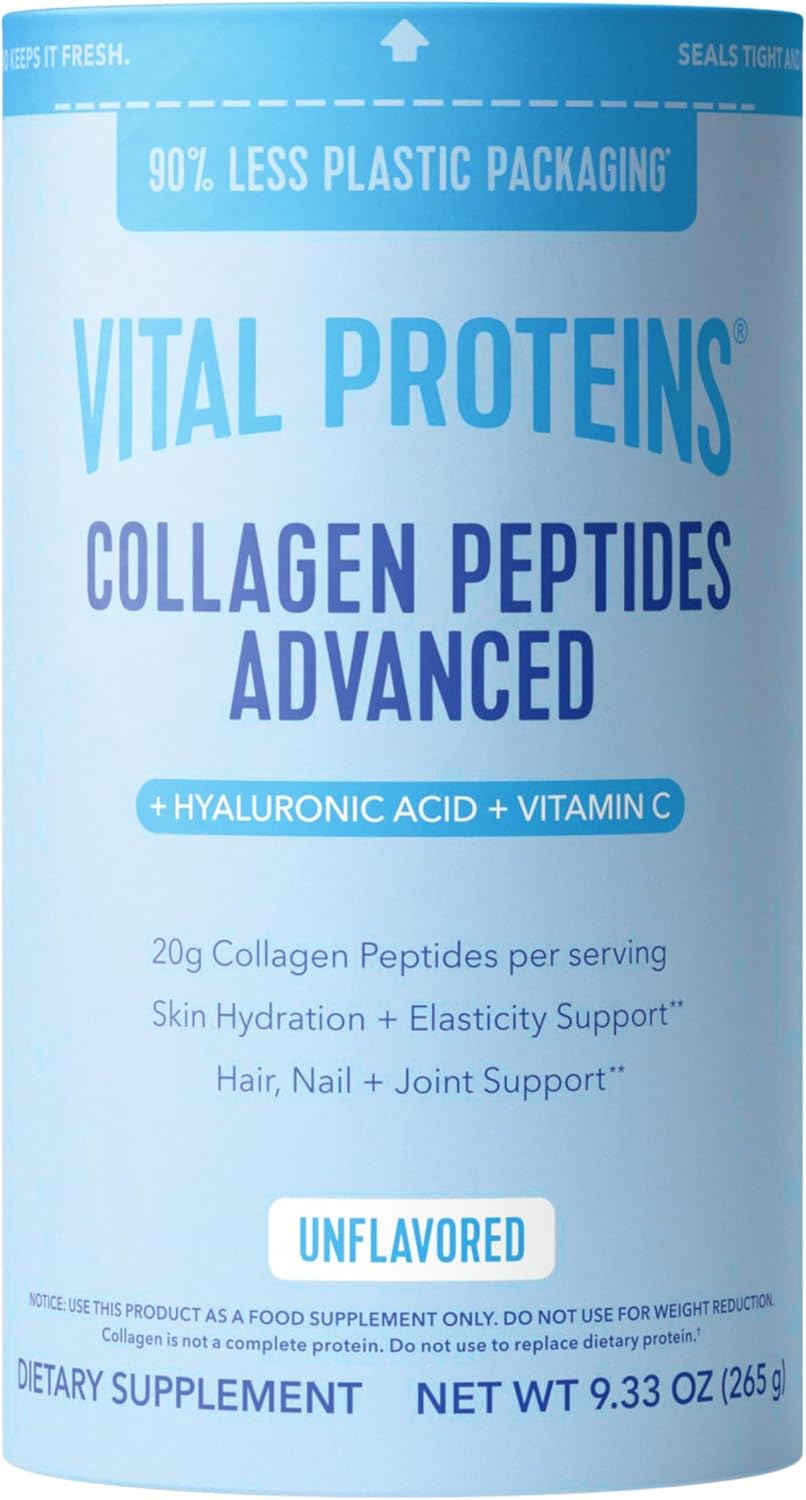
Vital Proteins Collagen Peptides
Vital Proteins has been the default recommendation in this category for nearly a decade, and the 2026 formulation is essentially unchanged for a reason. The bovine raw material is sourced from grass-fed cows, the peptides are hydrolyzed to a low molecular weight that disappears into hot or cold drinks, and the label keeps the ingredient list to one line: bovine hide collagen peptides.
The brand publishes batch-level NSF testing for contaminants and label accuracy, which is a step most competitors still skip. Each 10g serving delivers the dose used in the bulk of the skin and joint research. The only consistent criticism is taste — Vital Proteins is unflavored but the bovine source does add a faint savory note in plain water. It disappears in coffee, smoothies, and oatmeal.
Pros: Grass-fed sourcing · NSF-tested · clean single-ingredient label · excellent mixability.
Cons: Premium price · faint bovine taste in plain water.
Buy if: you want a single, well-trusted product that covers the most-studied use cases without having to think about it.
Sports Research Multi-Collagen
Sports Research takes a different approach: rather than relying on bovine alone, the blend combines bovine (Types I and III), chicken (Type II), fish (marine Type I), and eggshell membrane. The result is a broad Type I, II, and III profile in a single scoop, which is the angle the brand sells for joint, skin, and connective-tissue support.
The peptide profile is hydrolyzed to a comparable molecular weight to Vital Proteins. Each serving is 11g. Third-party testing is run both in-house and at an independent lab; the Certificate of Analysis is available on request, which is more transparency than most of the category. The powder mixes cleanly with a fork, no blender required, and the taste is more neutral than the all-bovine options.
Pros: Broad Type I/II/III mix · solid testing · neutral taste.
Cons: Multi-source can be a downside for people with specific allergies (fish, egg) · slightly higher cost per serving than Vital Proteins.
Buy if: you want one product to cover skin, joints, and connective tissue rather than buying two separate supplements.
Live Conscious Collagen Peptides
Live Conscious is the value pick in the 2026 lineup. The bovine source is pasture-raised, the 11g serving is the largest in this guide, and the price per gram of collagen is meaningfully lower than the leaders. The trade-off is third-party testing: the brand publishes in-house lab results, but is not NSF Certified for Sport.
In the cup, Live Conscious is essentially indistinguishable from the more expensive options. It dissolves quickly, the bovine note is mild, and the unflavored version works in coffee without curdling. The serving size is generous, so a single tub lasts about a month at the recommended dose.
Pros: Best cost per gram in this guide · pasture-raised sourcing · clean taste.
Cons: No NSF or USP certification · smaller brand with thinner review base.
Buy if: you want a daily collagen habit that does not cost more than your morning coffee.
Orgain Collagen Peptides
Orgain built its name in the plant-based protein world, and the collagen product extends the same philosophy: simple ingredients, broad diet compatibility, no added junk. The bovine source is grass-fed, the dose is a standard 10g, and the powder is one of the easiest to mix in plain water of any product in this guide.
The mild taste is Orgain’s biggest selling point for people who cannot stand the faintly savory bovine note in other products. It is not flavorless, but it is the closest to neutral in the lineup. Third-party testing is in-house only, similar to Live Conscious, with the same caveat about NSF/USP certification.
Pros: Most neutral taste · grass-fed · solid mixability.
Cons: No NSF or USP certification · premium price compared to Live Conscious.
Buy if: you have tried other collagen powders and bounced off the taste.
Garden of Life Grass-Fed Collagen
Garden of Life is the cleanest-label pick in the lineup. The brand is best known in the supplement-aisle for its strict ingredient standards, and the collagen product reflects that: grass-fed bovine, hydrolyzed peptides, no flavors, no sweeteners, and NSF Certified for Sport — the gold-standard third-party mark in the supplement industry.
The 10g dose is on par with the leaders, the molecular weight is in the standard hydrolyzed range, and the powder dissolves cleanly. Garden of Life is the most expensive per gram in this guide, but for readers who prioritize verified clean-label sourcing and NSF testing, the premium is justified.
Pros: NSF Certified for Sport · cleanest label · grass-fed sourcing.
Cons: Highest cost per gram · faint bovine taste in plain water.
Buy if: third-party testing and clean-label sourcing are non-negotiable for you.
Dosing and What to Expect
Most of the clinical research on hydrolyzed collagen uses daily doses of 10 to 20 grams, with 15g being the most common single dose. Below 10g per day, the published evidence for skin and joint outcomes thins out considerably. A practical rule: aim for at least one rounded tablespoon of an unflavored powder a day, and pair it with a source of vitamin C (a piece of fruit, a small glass of juice) to support peptide absorption.

Realistic timelines, based on the better-designed studies:
- Weeks 1 to 4: typically no visible change, though some users report stronger nails within this window.
- Weeks 8 to 12: measurable changes in skin hydration and elasticity in most trials.
- Weeks 12 to 24: the window where joint comfort and mobility improvements show up in athlete and older-adult studies.
Collagen is not a drug. The effect size is modest, and the studies that do show benefit are usually paired with continued resistance training or a baseline healthy diet. If you are not willing to take it daily for at least two months, skip it.
Who Might Want to Skip Collagen
Collagen is one of the better-evidenced supplements in the wellness space, but it is not for everyone:
- If you are on a plant-based diet, true collagen is not an option — see the FAQ on vegan alternatives above.
- If you have a fish, shellfish, or egg allergy, avoid the multi-source and marine products; stick to bovine-only.
- If your goal is rapid weight loss or muscle gain, collagen is a poor protein source — leucine content is low. Whey, casein, or a complete plant blend is a better fit.
- If you are pregnant, nursing, or on blood thinners, clear any new supplement with your doctor first.
Top Picks for This Topic
-
1

-
2

-
3

Frequently Asked Questions
- How long does it take for collagen supplements to work? Most studies run for 8 to 12 weeks before measuring outcomes. Commit to daily use for at least 8 weeks before judging results.
- Marine collagen vs bovine collagen: which is better? Marine is mostly Type I and is the most-studied for skin. Bovine is a Type I/III mix and is more budget-friendly. There is no universally superior source.
- Can I take collagen powder with coffee or hot drinks? Yes. Hydrolyzed peptides are designed to dissolve in hot or cold liquids, and the heat does not destroy them.
- Gummies vs powder: which form delivers the real dose? Powders. Gummies usually contain 2 to 5g of collagen, well below the 10 to 20g used in most clinical studies.
- Is collagen safe to take every day long-term? At 10 to 20g daily, collagen has a long safety record. If you are pregnant, nursing, on blood thinners, or on prescription medication, clear it with your doctor first.
- Are there vegan alternatives to collagen supplements? No true vegan collagen exists. Plant-based blends support the body’s own collagen production but with a much thinner evidence base.
- Does collagen help with joint pain? Modest improvements in joint comfort and mobility after 12 to 24 weeks of daily use have been shown in several trials, particularly for knee and ankle joints.
Our top pick for most readers is Vital Proteins Collagen Peptides — grass-fed, NSF-tested, single-ingredient, and the most consistent real-world performance in this guide. If you want a broader Type I/II/III mix for joint support as well, Sports Research Multi-Collagen is the better choice. For budget-friendly daily use, Live Conscious delivers the largest serving at the lowest cost per gram of any product in this lineup.
As an Amazon Associate, Tutorsbot earns from qualifying purchases. Disclosure.