Fazlur Rahman
What makes a travel stroller worth buying
The best travel stroller in 2026 is the one that fits your airline's overhead bin, folds one-handed, weighs under 15 pounds, and survives gate-check. Most travel strollers use the same 22 x 14 x 9 inch dimensions as a carry-on bag. The differences come down to: fold mechanism (one-hand vs two-hand), recline (flat for newborns vs upright only for 6+ months), wheel type (4-wheel for airport floors, 3-wheel for rougher terrain), and accessories (car-seat compatibility, snack tray, rain cover).
For most families, the right answer is a single travel stroller that works for ages 6 months to 4 years. Newborns (under 6 months) need either a travel system with an infant car seat or a stroller that reclines fully flat. Some travel strollers (UPPAbaby MINU, Babyzen YOYO, GB Pockit) recline flat for newborns, but most don't.
Top travel strollers at a glance
| Stroller | Weight | Fold | Car seat compatible | Best for |
|---|---|---|---|---|
| UPPAbaby MINU V3 | 14.5 lb | One-hand | Yes (MESA, plus adapters) | Frequent flyers, full-feature |
| Babyzen YOYO2 | 13.6 lb | One-hand | Yes (multiple brands) | Newborn-ready, EU standard |
| GB Pockit Air | 9.5 lb | Two-hand (smallest fold) | No | Ultra-compact, 6+ months |
| Bugaboo Butterfly | 16.1 lb | One-hand | Yes | Comfort + travel, premium |
| Ergobaby Metro+ | 16.5 lb | One-hand | Yes | Newborn-ready, budget mid |
UPPAbaby MINU V3: the all-round travel pick
The MINU V3 is UPPAbaby's third-generation travel stroller and the one most US frequent-flyer families end up with. The 14.5 lb weight is competitive, the one-hand fold is reliable, and the carry strap makes the airport-to-gate walk easier. The car-seat compatibility with UPPAbaby's MESA and adapters for Cybex, Nuna, and Chicco covers most US newborn setups. The spring suspension handles airport floors and uneven sidewalks without rattling the baby.
The trade-off: the MINU doesn't recline fully flat, so it's not newborn-ready without a car seat. The basket is small (under 5 lb capacity), and the canopy doesn't extend as far as the full-size UPPAbaby VISTA. For travel-only use, the trade-offs are usually worth it.
Babyzen YOYO2: best for newborns and EU travelers

The YOYO2 is the European standard for travel strollers. The frame is the only one certified as a 22 x 14 x 9 inch carry-on across most major airlines, including Lufthansa, British Airways, and Air France. The newborn pack (sold separately, $200) reclines the seat fully flat, and the 0+ car seat adapters work with Clek, Nuna, and Cybex infant seats. The one-hand fold is fast and the stroller stands when folded.
The trade-off: at $400 for the frame alone, plus another $200 for the newborn pack, the YOYO2 is one of the more expensive setups. It's also the only one that fits some smaller European overhead bins. The right buyer is one who travels internationally with a newborn, or who values the small fold over the lower price.
GB Pockit Air: best ultra-compact

The Pockit Air is the smallest folding stroller on the market, at 9.5 lb and a folded size of 12 x 14 x 6 inches (smaller than most backpacks). It fits in the airplane overhead bin and rolls under the seat in front of you on most regional jets. The 6+ month recline is limited to upright, so it's not for newborns. The two-hand fold is a real downside, but the size is the trade-off.
The right buyer is one who travels by air more than 10 times a year with a 6-month to 3-year-old and wants the smallest possible fold. The Pockit is also a strong second stroller to keep in the trunk of a sedan.
Bugaboo Butterfly: best comfort and travel combo

The Butterfly is Bugaboo's answer to the MINU, with a 16.1 lb weight and a one-hand fold. The canopy is full-coverage and the seat is more padded than the MINU, which makes a difference on long travel days. The basket is 8 lb capacity, double the MINU. The trade-off: heavier, which adds up on the third airport walk of the day.
The right buyer is one who values ride comfort and full features over the lightest possible weight. The Butterfly is also a strong single-stroller choice for families that use it as their everyday stroller, not just travel.
Ergobaby Metro+: best newborn-ready mid-budget
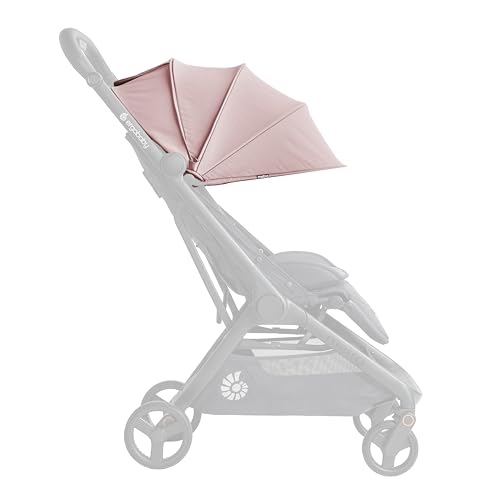
The Metro+ is a 16.5 lb stroller that reclines fully flat for newborns without a separate newborn pack, supports car seats with adapters, and has a one-hand fold. The price is $200 to $300 less than the YOYO2 with similar newborn capability. The trade-off: the fold is bigger than the YOYO2, so it gate-checks more often on smaller regional jets.
The right buyer is one with a newborn who wants a single travel stroller that grows to 4 years and doesn't need the absolute smallest fold. The Metro+ is also compatible with the Ergobaby infant carrier, which is a less expensive add-on than UPPAbaby's MESA.
Airline rules for strollers
US domestic airlines gate-check strollers for free, regardless of size. The stroller is tagged at the gate, returned at the jet bridge on arrival, and not counted as a carry-on or checked bag. International airlines vary: most gate-check free, but a few (Ryanair, easyJet, some Asian low-cost carriers) require you to check the stroller at the counter for a fee, or refuse it entirely.
Gate-checked strollers get banged up. The hard-shell stroller bags (UPPAbaby, Bugaboo, Babyzen all sell their own) protect the stroller but add 4 to 7 lb to the carry weight. The right move is to gate-check in a stroller bag if you check the stroller more than 4 times a year. For occasional travel, the airline's plastic bag at the gate is enough.
Car seat compatibility and travel systems
A travel system pairs a stroller with an infant car seat. The car seat clicks into the stroller frame, and the same seat clicks into the car. Travel systems work for newborns and remove the need to wake a sleeping baby on airport transitions. The major brand pairs: UPPAbaby MINU + MESA, Babyzen YOYO2 + Clek/Nuna/Cybex, Bugaboo Butterfly + Bugaboo Turtle Air, Ergobaby Metro+ + Ergobaby Embrace.
The right time to buy a travel system: when the baby is due, not after. Most brands offer bundle pricing for the stroller + car seat + adapters, and the bundle is $100 to $200 less than buying separately. The wrong time: after the baby is 6 months, when a reclining stroller alone is the right answer.
What you don't need to pay for
Built-in Bluetooth speakers on the stroller: marketing, not safety. Skip them. A snack tray with a cup holder that detaches: useful for 1-year-olds, useless for 4-year-olds. The cup holder alone is enough. A 5-point harness on a 3-year-old: the child is too big, and the harness becomes a fight. Switch to a 3-point lap belt or a back-pack-style harness at 3 to 4 years. Rain covers from the brand: usually $40 to $60 extra. A universal rain cover from a third-party brand is $20 and works as well.
Skip the stroller organizer with phone holder, bottle holder, and key clip for the parent: it's the first thing that breaks and the third thing the parent forgets. Use a small backpack or the diaper bag for the parent's stuff.
Common mistakes to avoid
Buying the lightest stroller without checking the fold size. The Pockit Air is the lightest, but the two-hand fold is awkward when you're holding a baby and a carry-on. One-hand fold matters more than 2 pounds of weight for most parents. Buying a stroller that's not newborn-ready when the baby is due in 2 months: you'll use the stroller in the first 6 weeks for walks, not travel, and a non-reclining stroller is wrong for a newborn's neck. Buying a stroller brand that doesn't have a US service network: warranty claims on a stroller with a broken wheel need a US-based repair center or a 30-day return window. Stick to UPPAbaby, Bugaboo, Babyzen, GB, Ergobaby, and the major US brands.
The right time to upgrade from a travel stroller: when the child is over 4 years or 45 pounds, whichever comes first. Beyond that, the stroller is too small and the child is too heavy for the frame. Sell the travel stroller, put the proceeds toward a lightweight everyday stroller or a backpack carrier for hiking.
As an Amazon Associate, Tutorsbot earns from qualifying purchases. Disclosure.