That is how the largest food delivery platform describes its pay model. Under the earn by time option, a driver receives a minimum guaranteed active hourly rate for the time spent engaged in an order, from acceptance to completion.
A published test of the model recorded $86 of gross pay across dashes totalling 6.5 hours, with $67 left after expenses, which works out to $10.31 an hour.
The gap between the gross hourly rate and the realised hourly rate is the waiting, and it is the number most new drivers underestimate.
Our guide to part time customer service jobs remote covers the same principle from the other side, where a contract rate has to be priced higher to match an employee wage.
What costs come out of a delivery rate?
Fuel, insurance, maintenance and wear are real costs, and they decide whether app driving beats a company route.
Fuel is the visible one. Insurance is the expensive one, because a driver using their own vehicle for delivery needs commercial cover rather than a personal policy, and that premium runs well above a standard personal rate.
Two costs are easy to miss. Maintenance and tyres, which wear faster on a delivery schedule than on ordinary commuting. And depreciation, which is the largest cost of all when the vehicle is bought on a loan and has to be replaced eventually.
The arithmetic to run before starting is simple. Take the published hourly rate, subtract the cost of an hour of driving on your own vehicle, and compare the result with the $21.57 company median.
Our guide to ups package handler part time wage covers the warehouse route where the employer absorbs those costs.
The costs that sit under an app delivery rate| Cost | Who carries it | Why it matters |
|---|
| Fuel | The driver | Scales directly with miles |
| Insurance | The driver | Needs commercial cover |
| Maintenance and tyres | The driver | Rises with delivery mileage |
| Depreciation | The driver | Spread across the loan term |
Vehicles and fuel | The employer | Already inside the $21.57 median |
Which delivery work pays the most?
Specialist delivery pays the most, because the driver carries something the customer values.
Medical courier work sits at the top of the gig range, moving samples, prescriptions and equipment that cannot wait.
The rate is higher because the timing is promised, the vehicle and equipment are specified, and the customer is paying for reliability rather than for a fast pizza.
Grocery delivery pays more than restaurant delivery in most markets, because a batch is a larger job with a longer route and fewer stops per mile.
Restaurant delivery pays less because the food has to be hot, which compresses the schedule and adds waiting at the restaurant.
Two questions decide which route suits a driver. How long the vehicle sits idle, and how much of the rate is consumed by the cost of moving. Our guide to weekend part time jobs near me covers the demand pattern behind those answers.
How do delivery hours work in practice?
Demand runs in short peaks, so a flexible driver works the peaks rather than the whole day.
Three windows carry most of the volume. The dinner run runs from late afternoon into the evening. The weekend daytime carries grocery and shopping deliveries. And Monday morning carries a smaller but reliable wave of scheduled work.
That shape is good for a part-time driver, because the peaks are short and they can be picked up around another job. It is also the reason the average hourly figure is lower than the headline rate, since the hours between peaks earn nothing.
Company routes do not work that way. A driver on a fixed rota has a start time and a shift length, and the volume comes from the dispatch system rather than from the market.
How does delivery pay compare with warehouse pay?
The company route matches the warehouse rate, and the flex route wins only when the vehicle is paid for.
A unionised parcel carrier runs $21.00 an hour under the Teamsters contract, with $1.00 added to every current worker from August 1, 2026, and part-time staff there receive health coverage with zero premiums plus a pension.
Warehouse work at a national retailer starts at $20.00 an hour for full-time roles, with average pay close to $24 across core operations, night and weekend differentials of $0.50 to $3.00, and raises every six months on the Step Plan.
Our guide to amazon warehouse part time job application covers that route in full, and the comparison is the cleanest one available for anyone weighing driving against picking.
What changes about delivery hiring next?
Expect employment to keep growing and the pay gap between company and app work to stay where it is.
The occupation data gives the direction. Light truck driver employment is projected to rise from 1,068,500 in 2025 to 1,136,400 by 2035, an increase of 6 percent, with about 67,800 new jobs a year.
Two forces shape the pay. Retail delivery volume keeps growing with same-day and grocery programmes, and labour supply stays tight enough to keep drivers on the road. Against that, platforms keep adding drivers, which caps what an app rate can be sustained at.
The practical effect is that the company route remains the better financial deal for anyone who can commit hours, and the app route stays the better deal for anyone whose schedule cannot be fixed.
Next steps
Decide which side of the vehicle cost you are on, then price the route properly.
- Compare the rate with the $21.57 light truck driver median
- Subtract your own vehicle costs before comparing an app rate with a wage
- Check the published active-time rate and the waiting policy
- Ask whether the platform covers fuel and maintenance on the route you want
- Work out how many hours you can drive around your other commitments
- Check the insurance requirements before you accept any delivery work
One final thought. The pay figures here are occupation medians and published platform rates, which is the best guide available before you sign up.
htm">Bureau of Labor Statistics occupation profile gives the entry requirements and the training picture for driving work, which is the quickest way to check what a company route will ask for.
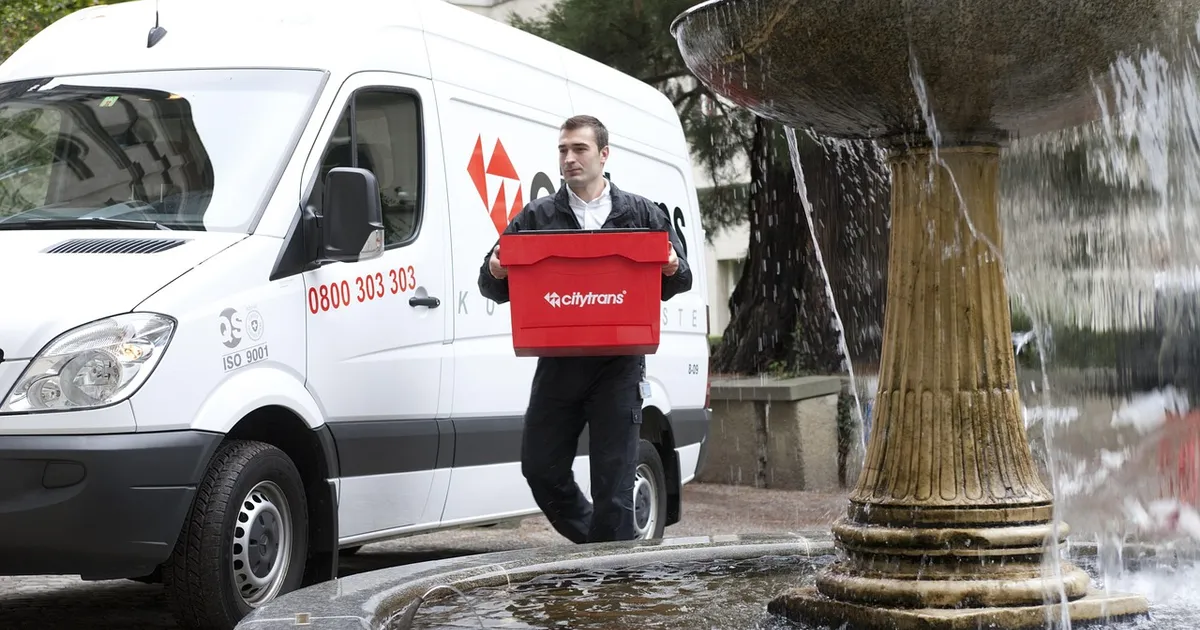
Photo: cdz, Pixabay Content License, via Pixabay (https://pixabay.com/photos/city-trans-courier-courier-driver-3332623/)

 Fazlur Rahman