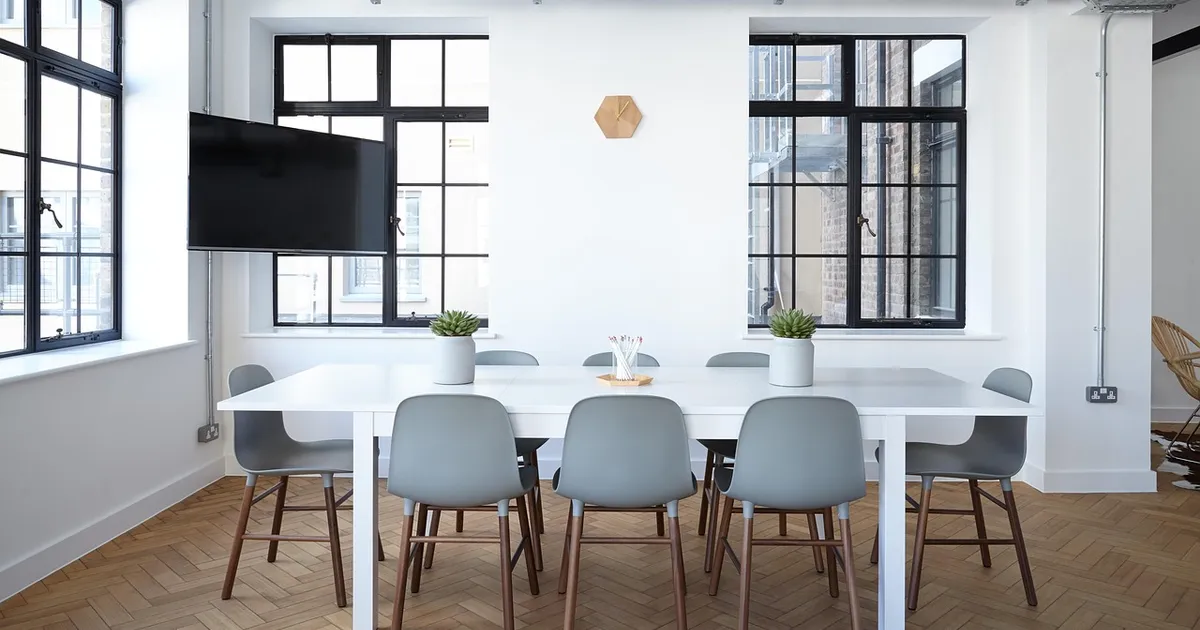
That means a student can pick up a Friday evening in the first week of term without asking anybody.
Swap systems are less uniform. Some let two colleagues trade directly, others route every request through a manager who approves it for coverage reasons. A student with a fixed exam week should find out which system their employer uses before they need it.
Two rules protect the arrangement. Availability windows are usually honoured for a quarter at a time, so an honest answer about your timetable is worth more than a wide one you cannot keep.
And notice periods matter, because a missed shift in a shift-picking system costs goodwill faster than in a fixed rota.
How do you ask about schedule flexibility in an interview?
Ask who builds the rota and when, because the answer tells you whether the schedule can actually move around your classes.
Four questions get to the point. Who schedules the shifts, how far ahead, can you pick from open shifts, and what happens to your hours when a class timetable changes.
An employer that answers all four plainly is an employer that will work with a student.
Two details are worth confirming in writing. The minimum hours you are guaranteed, because a posted 20 hours can drop when volume falls. And the availability window length, because a 12 week window locks you in longer than a 4 week one.
Our guide to part time customer service jobs remote covers the same questions for remote desk roles, where schedule control is the main reason people apply.
What changes about student work next?
Expect employers to compete harder on schedule flexibility, because it is now the main thing students choose between offers.
Pay at the low end is constrained by state minimum wage rules, so a $15.00 hour floor is unlikely to move much. Flexibility is where employers can differentiate, and the shift-picking app is now the standard tool rather than the exception.
Three trends are worth watching. Retail staffing has stabilised after two years of contraction, which puts more hours on the board. Warehouse volumes keep peaking in the autumn, which brings sign-on bonuses of $1,000 to $2,000 back into reach.
And remote customer service work keeps growing, which removes the commute from the equation for students who live on a bus route.
What does the availability window mean in practice?
An availability window is the block of time you tell an employer you can work, and it is usually agreed for a quarter at a time. That is the mechanism that makes a student job flexible, because the rota is built around it rather than around a fixed shift.
Two things follow from that. An honest, narrow window is more useful than a wide one you cannot keep, because employers plan coverage around what they can rely on. And a change in your timetable usually needs a conversation, not a text message.
Ask for the window length in the interview, and ask what happens when it changes. An employer with a 4 week window can adjust faster than one with a 12 week window, and for a student that difference matters every term.
Our guide to weekend part time jobs near me covers the shift patterns these windows produce, and the pay ladder behind each one.
Next steps
Apply for the role that fits your timetable, then ask the four questions that decide whether it stays flexible.
- Compare the occupation median with the rate in the posting, not with the ad headline
- Ask who schedules the shifts and how far ahead the schedule runs
- Confirm the minimum hours a week you are guaranteed
- Check the benefits threshold, which often starts at 20 or 25 hours
- Look for a published step plan or raise schedule rather than a flat rate
- Keep one flexible role open, because student hours are seasonal
One final thought. The hourly figures here are occupation medians and published employer rates, which is the best guide available before an interview.
htm">Bureau of Labor Statistics occupation profile confirms that customer service needs no prior experience, which is why it is the highest paying role a student can walk into without a qualification.
Photo: JhonDL, Pixabay Content License, via Pixabay (https://pixabay.com/photos/education-student-boy-classroom-3670453/)

 Fazlur Rahman