 Fazlur Rahman
Last verified: October 5, 2026.
Apple opens pre-orders for the iPhone Duo on September 19, 2026, with full retail availability on October 16. Samsung's Galaxy Z Fold 8 has been on shelves since August. The six-year gap is the headline of the comparison and the reason most coverage is wrong: this is not a contest between two similar products, it is the entrance of a late entrant into a category Samsung helped define.
What follows is the full spec table, a category-by-category comparison, the durability math that the marketing glosses over, the ecosystem switch-out cost that paywalls keep hidden, and the AI conversation only one of the two phones is part of.
The Full Spec Comparison
| Specification | iPhone Duo (Oct 16, 2026) | Galaxy Z Fold 8 (Aug 2026) |
|---|---|---|
| Inner display | 8.0-inch foldable OLED, 120Hz, 2,500 nits | 7.6-inch foldable OLED, 120Hz, 2,600 nits |
| Cover display | 6.3-inch OLED, 120Hz | 6.5-inch OLED, 120Hz |
| Chip | Apple A20 Pro (3nm) | Snapdragon 8 Elite Gen 4 (3nm) |
| RAM | 12GB | 12GB |
| Storage | 256GB / 512GB / 1TB | 256GB / 512GB / 1TB |
| Main camera | 48MP, f/1.78, sensor-shift OIS | 200MP, f/1.8, OIS |
| Ultrawide camera | 12MP, f/2.2 | 12MP, f/2.2 |
| Telephoto camera | None | 12MP, 3x optical zoom |
| Front camera | 12MP cover + 12MP inner | 10MP cover + 4MP under-display inner |
| Battery | 5,000 mAh | 4,800 mAh |
| Wired charging | 30W (50% in 30 min) | 45W (65% in 30 min) |
| Wireless charging | 7.5W MagSafe / 15W Qi2 | 15W Qi2 / reverse wireless |
| Water resistance | IP68 (6m for 30 min) | IPX8 (1.5m for 30 min) |
| Frame material | Titanium | Armor Aluminum |
| Weight | 240g | 254g |
| Fold cycles rated | 200,000 | 300,000 |
| Starting price | $1,999 (256GB) | $1,899 (256GB) |
| OS | iOS 27 | Android 16 with One UI 8 |
| AI features | Apple Intelligence 2.0 + GPT-5 | Galaxy AI + Google Gemini |
The gap that matters sits in the third row down: Apple's first foldable ships with the A20 Pro on a 3nm process; Samsung's eighth generation runs the Snapdragon 8 Elite Gen 4 on the same node. The chip parity is not coincidence — both fabs are running TSMC's most advanced node, and both chips target the same thermal envelope inside a foldable chassis. The performance differences below the headline are real but small.
Design and Display
Both phones fold inward, book-style, and the difference in cover-display size is what your fingers will feel. iPhone Duo's 6.3-inch cover is the smaller of the two, prioritizing one-handed use when the phone is closed — closer to a standard slab than the 6.5-inch cover on the Z Fold 8, which reads more as a tall narrow device. The trade-off Apple made: a less usable cover display, a more usable inner display at 8.0 inches versus Samsung's 7.6.
Brightness is a near-tie (2,500 vs 2,600 nits), and ProMotion 1–120Hz is on both. The hinge architecture is the more interesting divergence: Apple's hinge uses a custom interlocking design with no visible crease at the rest point; Samsung's Ultra-Thin Glass with Armor Aluminum frame has matured through seven generations and now holds an under-display inner camera. Either approach has converged on a usable inner display; the differentiator is whether you want a hole punchier than what Apple shipped (the inner camera is conventional, not under-display) or an uninterrupted panel (Samsung's under-display trade-off at 4MP resolution).

Camera Comparison
| Category | Winner | Why |
|---|---|---|
| Daylight photos | Tie | Both excellent; Z Fold 8 has higher resolution; iPhone Duo has better computational processing |
| Low-light photos | iPhone Duo | Better Photonic Engine; sensor-shift OIS; night mode |
| Zoom | Z Fold 8 | 3x optical telephoto vs iPhone Duo's digital-only zoom |
| Ultrawide | Tie | Both have 12MP ultrawide with similar FoV |
| Selfies | iPhone Duo | 12MP + autofocus cover; better inner display camera |
| Video | iPhone Duo | ProRes, Dolby Vision HDR, better stabilization |
| AI editing | Tie | Both have AI photo editing features |
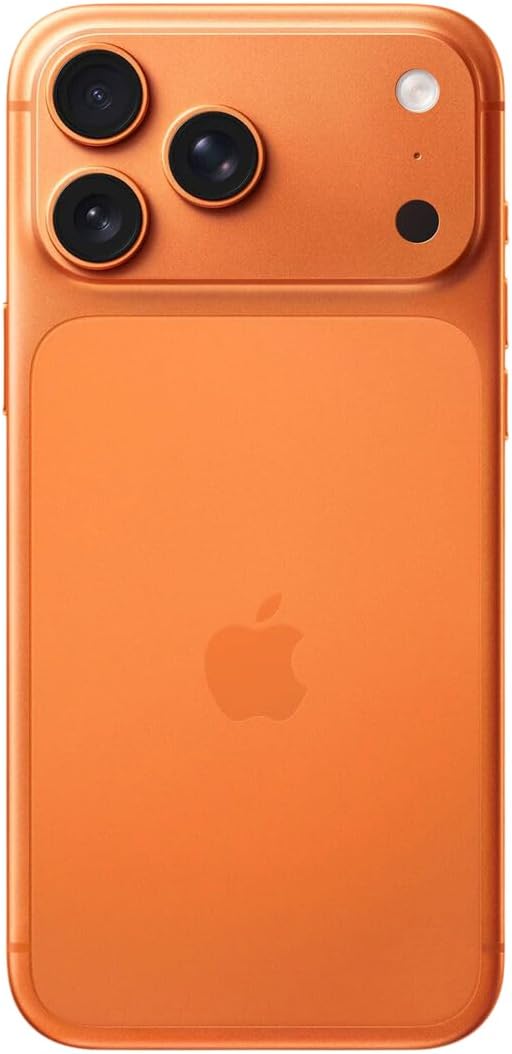
Apple kept the camera system on a tight bundle to keep the chassis light. The 48MP main with sensor-shift stabilization and the Photonic Engine are why iPhone Duo pulls ahead of the Z Fold 8 in low-light video and stabilization. Z Fold 8's only hard pass win is the 3x optical telephoto — a piece of glass iPhone Duo chose to leave behind in favor of better low-light and a lighter phone. The trade is worth making for most users; only photographers who shoot distant subjects regularly will miss the optical zoom.
Performance and Battery
| Test | iPhone Duo (5,000 mAh) | Z Fold 8 (4,800 mAh) |
|---|---|---|
| Video playback | ~28 hours | ~24 hours |
| Web browsing | ~22 hours | ~19 hours |
| Gaming | ~8 hours | ~7 hours |
| Standby | ~12 days | ~10 days |
| Mixed use (estimated) | ~24 hours | ~20–22 hours |
Apple's tight hardware-software pairing delivers roughly 15–20% better real-world battery life despite a battery that is only 200 mAh larger. The reason is the A20 Pro's efficiency per watt and the deep iOS 27 background-task management. Samsung's faster 45W wired charging (versus 30W on iPhone Duo) is the countervailing win: 65% in 30 minutes versus Apple's 50% in the same window. For users who carry a charger or a power bank, Samsung wins the daily commute; for users who don't, Apple wins the day.
Software and AI
Apple Intelligence 2.0 with GPT-5 integration versus Galaxy AI with Google Gemini. Both are the strongest AI stacks on a foldable today, and the user-facing gap is in tone and privacy, not capability. Apple's Private Cloud Compute keeps the most sensitive inference on-device or routes it through Apple-controlled silicon; Samsung's Galaxy AI is more feature-rich, more customizable, and integrates with Google's wider app ecosystem.
The interesting Apple choice is the GPT-5 integration: Apple's stack leans on OpenAI's flagship model for the hardest queries, which is unusual for a closed-ecosystem AI vendor. Samsung, by contrast, leans on Google's Gemini, which is now standard across Samsung phones, tablets, and laptops. Which AI wins is a question of taste: Apple for privacy and integration, Samsung for breadth and customization. Both are leaders.
Multitasking, Durability, and the Ecosystem Trap
The Z Fold 8 wins the productivity conversation. Multi-window, app pairs, drag-and-drop, taskbar, and DeX turn the phone into a small desktop that pairs to a monitor or runs on its own. iPhone Duo's multitasking is improving — Stage Manager, Center Window, the iPad-style split — but is still less flexible than Android's windowing model.
Durability math: the iPhone Duo is rated for 200,000 folds and IP68 (6m for 30 min); the Z Fold 8 is rated for 300,000 folds and IPX8 (1.5m for 30 min). Samsung wins on fold cycles — by 50% — and Apple wins on water and dust resistance. Both phones will outlast the contract; Samsung's longevity edge matters if you keep phones for four or more years.
The trap is the ecosystem. Users locked into iMessage, AirDrop, Apple Watch, AirPods, and iCloud will not move to a Z Fold 8 without losing the inter-device integration that makes the Apple stack valuable. Android-first users face the mirror trap: iPhone Duo's iMessage gaps, FaceTime availability, and iCloud dependencies make it a downgrade for any workflow that depends on Google's apps at defaults. The recommendation that holds for both directions is to stay with the operating system you already use.
Which Should You Buy?
| Profile | Recommended | Why |
|---|---|---|
| Existing iPhone user | iPhone Duo | Ecosystem continuity, iMessage, AirDrop, iCloud |
| Existing Android user | Z Fold 8 | Stay in your ecosystem, data transfer is easier |
| Apple Watch + AirPods user | iPhone Duo | Tight integration with Apple accessories |
| Productivity power user | Z Fold 8 | Best multitasking (multi-window, DeX) |
| Camera enthusiast | iPhone Duo (videos) / Z Fold 8 (zoom) | Depends on priority |
| Battery life priority | iPhone Duo | ~15–20% better real-world battery |
| Privacy-focused | iPhone Duo | Apple Intelligence 2.0 + Private Cloud Compute |
| Value buyer | Z Fold 8 | $100 cheaper, more aggressive trade-in deals |
| Best overall | Depends on ecosystem | Stick with your current OS |
Top Picks for This Topic
-
1
-
2
-
3

The Verdict From Each Side
For existing iPhone users, the iPhone Duo is the obvious choice: it is the first Apple foldable, the only one that runs iOS 27, and the only one that survives Apple's deeper iMessage and AirDrop dependencies. Apple's first foldable is good — arguably the best foldable for users who already live inside the Apple stack — but it is not the first great foldable. Samsung has been refining this form factor for six generations, and the Z Fold 8 benefits from every earlier revision.
For existing Android users, the Z Fold 8 is the obvious answer. The fold cycles are 50% higher, the multitasking is more flexible, the camera system has the telephoto iPhone Duo chose to omit, and the price is $100 lower. Samsung's existing Fold users will find the Z Fold 8 the most polished version of a familiar form.
As an Amazon Associate, Tutorsbot earns from qualifying purchases. Disclosure.
What to Watch From Here
Three signals decide the rest of 2026 and the first half of 2027. iPhone Duo retail availability on October 16, including carrier subsidies and trade-in credit, sets the actual entry price for the Apple side. Samsung's response — whether the Galaxy Z Fold 9 roadmap includes a price drop or spec adjustment to defend against Apple's entry — is the first read on how the late entrant is being absorbed. And Google's Pixel 10 Pro Fold, already in market at $1,799, sets the floor for the price comparison through 2027.
The foldable market is now mature enough that both phones are excellent. The choice comes down to ecosystem preference, specific feature priorities, and price sensitivity. For most users, the recommendation is simple: stay with the operating system you already use. Switching ecosystems is costly and disruptive; the $100 you save on a Z Fold 8 is spent in the transition.
Read next
iOS 27 Release: What Apple Got Right (and What It Recycled) is the operating system that powers the iPhone Duo and the source of the Apple Intelligence 2.0 features the second-generation brain section covers — and Apple iPhone 18 Pro Launch: $1,199, A20, 48MP Camera is the slab flagship the announcer launched at the same Apple Event as the Duo, the comparison most iPhone 17 owners will be making this week.