A retail chain hires for local delivery between branches and for the runs to a mechanic. A single independent parts store is the version that hires most flexibly, often for a few hours a day around a fixed window.
The fourth is an equipment dealer that services its own machines, which is the highest-paid version because the driver is also handling the customer.
Two details separate the versions. Whether the driver also picks, which decides whether the job is delivery or warehouse work, and whether the vehicle belongs to the employer.
Our guide to part time retail jobs hiring near you covers the counter side of the same business.
What training does a parts delivery driver need?
A licence, a clean record, and enough product knowledge to pick the right part first time.
There is no occupation-wide requirement for this role, because it is usually titled a delivery driver or a route driver. Most employers want a valid licence with the right class, a driving record that passes a check, and commercial insurance that covers delivery work.
Two things are added by the employer rather than the occupation. Product knowledge, because a driver who picks the wrong part creates a return and a second trip, which is exactly the cost the employer is paying the hourly rate to avoid.
And the parts ordering system, which a new driver learns on the route rather than in a classroom.
The third is a physical requirement that matters more here than in floral work. Parts are heavy and awkward, and a driver who cannot lift a box of brake components safely is not going to keep the route.
How does parts delivery pay compare with other driving work?
It pays more than courier work and about the same as a general driving route, because the stops are business rather than residential.
Couriers and messengers earn a median of $18.85 an hour with a mean annual wage of $40,970, which is the group that does residential and document delivery. A parts driver at $21.57 sits above that because the stops are fewer and the route is planned.
The counter role on the other end of the business sits at $21.76 an hour for shipping and inventory clerks, which is a useful comparison because it shows what the same company pays on the floor.
When the two rates are close, the driving job is the one with the vehicle costs included, and that is the point to check.
The app-based delivery route pays differently again, because it pays for active time only and leaves the waiting time unpaid. Our guide to delivery driver part time jobs flexible covers that arithmetic in detail.
What should you check before accepting a parts delivery job?
Five questions, and the first one decides whether the hourly figure is real.
The first is whether the driver also picks and loads, because a route that includes warehouse picking is paid for less per hour than a route that does not.
The second is how the route is built, whether it is a fixed sequence that repeats weekly or a daily list that changes.
The third is what the rate is for the return leg and the deadhead miles between stops.
The fourth is whether the employer covers the fuel and the maintenance, or whether it is a per-stop rate from which the driver has to take the vehicle costs out.
The fifth is the shift window. A parts route that starts at six in the morning to catch the mechanic trade opening is a different job from one that runs from ten to two.
Our guide to evening part time jobs hiring near you covers the shift-pattern question across the wider market.
Do parts delivery jobs come with benefits?
The distributor route carries a package and the owner-driver route carries none.
A distributor or a retail chain that employs its drivers runs the standard hourly employer model, with health coverage above an hours threshold and a vehicle provided.
A colleague working twenty-five hours across five shifts can clear a threshold that the same hours would not clear at a five-day employer.
An owner-driver carries none of it, because there is no employer, which is the trade for the higher per-stop rate.
That trade is the familiar one across hourly work, where benefits run at 30.1 percent of the employer hourly cost and a contractor rate has to sit 30 to 40 percent above the employee wage to match.
Two features are worth asking about in the employee route. Whether the vehicle, the fuel and the maintenance are covered, and whether the route is guaranteed for the whole year rather than for a season.
How do you find part time auto parts delivery driver work near you?
Search the supplier rather than the store, because the distributors hire the most drivers.
Three routes work. The first is the local parts distributor or the chain's own logistics page, which lists the routes and the shift windows. The second is the retail chain careers site, which posts store and driver roles for the same region.
The third is a general staffing agency that places warehouse and delivery workers, and it is the fastest route into a first route without a trial period.
Our guide to part time hotel front desk clerk covers the other sector where a local employer hires directly and often.
Two questions settle the rest. Whether the driver also picks and loads, and whether the vehicle and the fuel are covered.
What changes about parts delivery hiring next?
Expect the routes to stay local and the driver to do more than the driving.
Three forces shape the next two years. Same-day parts delivery has grown enough that most retailers now run an internal route, and the hours have shifted earlier because a mechanic wants a part before the workshop opens rather than at lunch.
The second is the vehicle. Light truck driver employment is large and stable at 983,300 workers, and the retailers have kept buying vans rather than hiring people to drive a car, which is why the employer-provided vehicle version of this job stays common.
The third is the consolidation of the counter and the route. A distributor that handles the picking for its own stores removes the picking from the driver job, which raises the hourly rate and narrows what the role involves.
Our guide to part time remote data annotation collector covers the other work where a consolidation changes the job description rather than removing it.
Next steps
Price the route properly, because a per-stop rate and an hourly rate are not the same offer.
- Compare the rate with the $21.57 light truck driver median and the $18.85 courier median
- Ask whether the driver also picks and loads the parts
- Find out whether the route is fixed or rebuilt each day
- Check whether the fuel, the maintenance and the vehicle are covered
- Ask what the shift window is, because early routes are common in this trade
- Work out the deadhead miles and whether they are paid
One final thought. The pay figures here are occupation medians and published employer rates, which is the best guide available before an interview.
htm">Bureau of Labor Statistics occupation profile gives the entry requirements and the training picture for driving work, which is the quickest way to check what a distributor will ask for on day one.
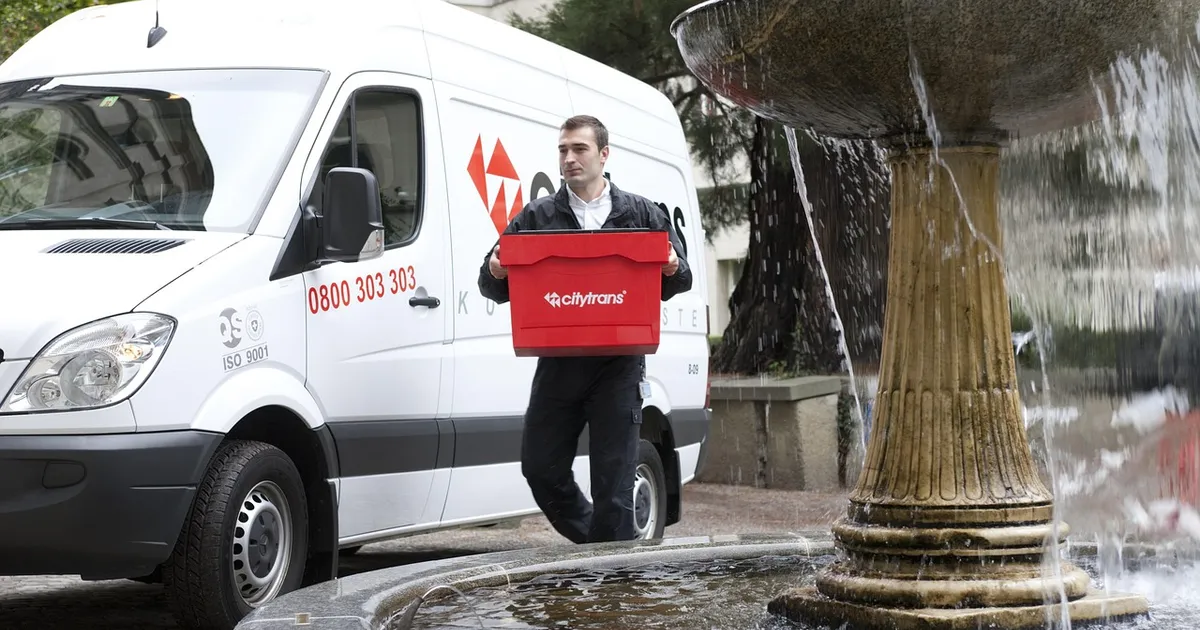
Photo: cdz, Pixabay Content License, via Pixabay (https://pixabay.com/photos/city-trans-courier-courier-driver-3332623/)

 Fazlur Rahman