Over a full academic year, 12 hours a week at the occupation median produces about $8,640 before tax.
A colleague who picks up the autumn and spring peaks can add a large block of hours in a short window, which is where most dining workers build their year.
Gross earnings for a part-time dining hall worker| Hours a week | At $15.00 an hour | At $16.50 an hour | At $21.50 an hour |
|---|
| 8 hours | $120 | $132 | $172 |
| 12 hours | $180 | $198 | $258 |
| 20 hours | $300 | $330 | $430 |
| 12 hours a week over 36 weeks | $6,480 | $7,128 | $9,288 |
Are there tips and meal benefits?
Tips depend on the venue, and the meal benefit is the more reliable extra.
Campus counters usually do not tip, because most service is tray service rather than table service. Any tip income comes from the rare cashier role or from a catered event, and it should be treated as a bonus rather than a budget line.
The meal benefit is the consistent one. Several campuses extend a meal plan to the student workers in their dining operation, and the published resident assistant policies show the same structure elsewhere, where a meal plan is part of the package rather than the wage.
Two details are worth confirming. Whether the meal benefit scales with the hours worked, and whether the same benefit applies to the closing shift.
Our guide to starbucks barista part time job hourly covers the off-campus food service comparison, where tips play the role the meal benefit plays here.
What are the shift patterns and how hard are they?
The closing shift is the hardest part of the job, and it is the one that pays the most attention.
A close involves cleaning the whole line down, breaking down the service area, securing the till and completing the food safety checks. That is two to three hours of work on top of the serving, and it is the part candidates should ask about.
The early shift is the least attractive. Starting before six in the morning on a campus with low footfall means serving a small number of people over a long window, and the pace is slow until the mid-morning rush.
Weekend hours are usually the best balance. The volume is high enough to keep the shift busy and short enough to finish before the day is over.
Our guide to weekend part time jobs near me covers how weekend scheduling works across the wider student job market.
Do campus dining jobs come with benefits?
Almost never through a medical plan, because the hours are below every threshold.
Health coverage at one national retailer starts at 25 hours a week and coffee shop benefits start at 20 hours, and a dining role of twelve hours a week clears neither.
What a campus does offer is its own version of a benefit. Meal plans, staff discounts, and sometimes tuition credits or a partial tuition remission for long service.
Our guide to part time remote job no experience covers the employee versus contract comparison, which matters because the dining role is usually employee work with a small package.
One practical check. If the role is funded through work study, the hours are capped by the aid package, usually around 10 to 15 a week, which is below the hours most dining workers would take in a busy week.
How do you find a campus dining job?
Go to the dining services department rather than the general student employment site, because the hiring is usually local and seasonal.
Three routes work. The dining services careers page lists the positions with the shifts attached. The central student employment site lists the work study eligible versions.
And the student employment office runs the hiring events at the start of the term, which is when most dining staff are recruited.
Two questions settle it. Ask what the closing shift involves and how long it takes, and ask whether the meal benefit scales with the hours worked.
Our guide to evening part time jobs hiring near you covers the shift patterns that decide whether the hours fit a course timetable.
What changes about campus dining hiring next?
Expect the same volume, fewer staff and more self service, which means the role is doing more closing work per shift.
Three forces shape the next two years. Fast food and counter employment is projected to grow by 6 percent to 2035, with about 223,300 new jobs a year, which keeps the sector healthy outside campus too.
On campus, self-service stations reduce the serving work per customer.
The pressure on the hourly rate is real. Campus wage scales move with state minimum wage rules, and the meal subsidy limits how far the scale can be pushed, so the rate grows slowly while the hours per serving line rise.
For a candidate the practical conclusion is that a dining job is worth taking when the meal benefit and the shift pattern work, rather than when the rate does, because the rate does not move much.
Next steps
Ask about the meal benefit and the close before you ask about the rate.
- Compare the rate with the $15.00 counter median and the $16.98 food preparation median
- Ask whether a meal plan is included and whether it scales with hours
- Ask how long the closing shift takes on top of the serving hours
- Work out which meal peak fits your timetable, and check the early shift
- Confirm whether the role is work study and what the hour cap is
- Ask about the term-by-term renewal, since dining hiring is seasonal
One final thought. The pay figures here are occupation medians and published campus rates, which is the best guide available before an interview.
htm">Bureau of Labor Statistics occupation profile gives the entry requirements and the training picture for food service work, which is the quickest way to confirm that no experience is needed before you apply.
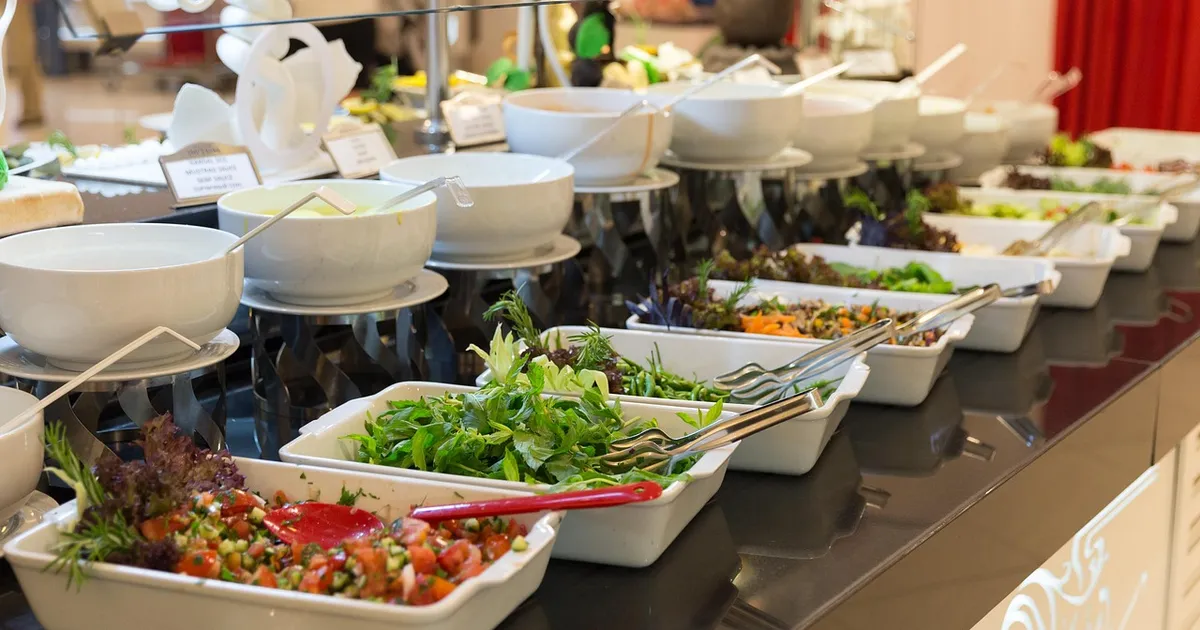
Photo: Mariakray, Pixabay Content License, via Pixabay (https://pixabay.com/photos/buffet-bakery-dinner-gourmet-6795419/)

 Fazlur Rahman