The second is per session with a package, where the client buys a block of sessions at a set price. That reduces the cancellation risk and it moves the job towards selling, because the trainer is the one who has to fill the block.
The third is commission on a percentage of the sale, usually paid on a session pack sold by the trainer. This is the highest earning model and the hardest one, because the income depends on the sales pipeline rather than on the training hours.
The fourth is a flat salary with a session cap, which is stable and which caps the upside.
Our guide to part time remote content writer jobs covers the same four models in a different sector, and the reasoning carries over exactly.
What should you check before you accept a training role?
Four questions, and the first one decides whether the income ceiling is yours or the gym's.
The first is who owns the client relationship. If the gym owns it and hands the trainer clients from its own sales team, the trainer earns a percentage of a pie the gym controls.
If the trainer owns it, the trainer keeps the whole pie and carries the selling.
The second is the cancellation and no-show policy, because a personal trainer with a 25 percent cancellation rate loses a quarter of the income in a year.
The third is whether there is a cap on the number of clients, and the fourth is what happens to the clients if the trainer leaves.
Two details are worth confirming in writing. Whether the employer covers the certification and continuing education, because the credential is what lets a trainer charge more.
And whether the trainer can work outside the facility, because a trainer locked to one building cannot build a roster that pays more.
What does a training day actually involve?
The sessions are the visible part, and the rest of the day is what makes the job sustainable.
The session itself is an hour of coaching, an assessment at the start of a block, and a programme update at the end. That is the part the client pays for and the part the client rates.
The second part is the admin. Writing the programme, logging the session, sending the follow-up message and keeping the notes. It is a small block per session but it repeats for every client.
The third part is the business development, which is where the income is actually built. A trainer with twenty clients does not need to sell, and a trainer with five clients is running a sales job.
Our guide to part time restaurant busser food runner covers the same shift from the bottom of the ladder, where the step up depends on being seen doing the work.
How a trainer's working day is spent| Task | Share of the working week | Billed |
|---|
| Client sessions | About half | Yes |
| Programming and client notes | About a quarter | No |
| Prospecting and follow-up | About a sixth | No |
| Facility time and admin | About a sixth | No |
Do personal trainer jobs come with benefits?
The employee route carries a package and the contractor route does not, and the gap is worth pricing.
Benefits at a commercial gym sit above an hours threshold, so a part-time trainer rarely clears it.
Two employers in this sector publish unusual packages, with one national coffee chain offering a quarterly bonus worth up to $300 and moving all US staff to weekly pay in 2026, which shows how far the hourly service sector has moved on extras.
The contractor route has no package, because there is no employer.
That is the trade against the higher rate, and it is the same trade that appears in every remote work arrangement, where benefits run at 30.1 percent of the employer hourly cost and a contract rate has to sit 30 to 40 percent above the employee wage to match.
One more feature of the employee route is worth checking. Whether the gym covers the certification and the continuing education credits, which is worth more than a small hourly raise because the credential is what raises the rate.
How do you find part time personal trainer work?
Approach the facility rather than the job board, because a gym hires a trainer more often than it posts one.
Three routes work. The first is the employer careers page, which for the larger chains publishes a band and sometimes the commission structure.
The second is a direct approach to an independent gym or a boutique studio, where the owner or the manager makes the hire and the rate is negotiable on the spot.
The third is the certification route. A recognised trainer certification is required by most employers, and the training providers themselves keep a job board of studios that are actively hiring.
Our guide to part time tutoring jobs online pay covers the other coaching job with a similar credential gate.
Two questions settle the rest. Who owns the client relationship, and what is the commission or the per-session rate rather than the headline.
What changes about personal training hiring next?
Expect the group formats to take the entry clients and the one-to-one work to hold its value.
Three forces shape the next two years. The boutique studio model has expanded fast, and those studios hire group instructors and sell small-group coaching, which competes for the entry-level client a new trainer would have built a roster from.
The second is the employment classification pressure in this occupation, which has pushed many gyms to restructure contracts and to publish clearer commission terms. The third is the credential, which is becoming the entry ticket as more employers ask for it.
The occupation data gives the direction. Employment is projected to rise from 388,400 in 2025 to 416,900 by 2035, which is 7 percent and about 28,500 new jobs, so the work is growing rather than shrinking.
Our guide to part time remote search engine evaluator covers the other role where automation is quietly taking the routine work.
Next steps
Get the credential, then ask who owns the client relationship before you ask about the rate.
- Compare the rate with the $22.67 occupation median and the $48,140 fitness centre median
- Ask who owns the client relationship, because that sets your income ceiling
- Check the cancellation and no-show policy in writing
- Ask whether the employer covers the certification and the continuing education
- Find out whether you can train outside the facility
- Price the unpaid programme writing and the follow-up into your rate
One final thought. The pay figures here are occupation medians and published salary guides, which is the best guide available before an interview.
htm">Bureau of Labor Statistics occupation profile gives the entry requirements and the outlook for the role, which is the quickest way to check what a gym will ask for on day one.
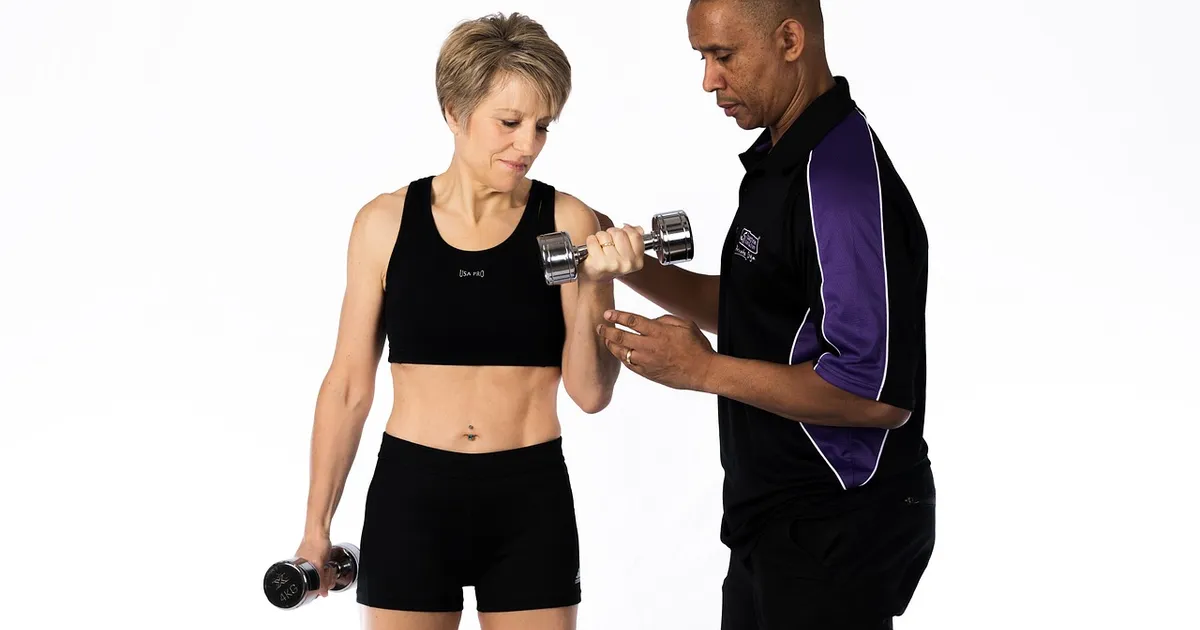
Photo: Erak007, Pixabay Content License, via Pixabay (https://pixabay.com/photos/woman-gym-exercise-workout-5807825/)

 Fazlur Rahman