Fazlur Rahman
Asking what is digital marketing usually gets a wall of buzzwords. The honest answer is that it is marketing carried out on searchable, measurable channels instead of borrowed audiences. The variable that decides what it costs is how much you must pay for attention, and 2026 benchmarks put search ad clicks between 1.63 and 9.87 dollars depending on the industry. By the end of this guide you will know which channel fits which job, which numbers to watch, and what a digital marketer does all day.
What is digital marketing in simple words
Search for what is digital marketing and you will find definitions, tool lists, and course catalogs. The honest version is shorter. It is promoting a product, a service, or a brand through channels you can target, track, and stop paying for. A billboard cannot tell you which driver looked at it, but a search ad can report the click and the signup.
The digital marketing definition most teams use splits the work into three parts. Getting found, which is search and social. Turning interest into action, which is landing pages, email, and marketplaces. Measuring what happened, which is analytics. Every channel below fits into one of those three parts.
Which digital marketing channels exist and what each one is good for
Six channels cover almost all the work. Search captures people who are already looking for you. Social creates demand and reaches people who are not searching yet. Email reaches people who already gave you their address. Display and video build awareness. Marketplaces put you next to people who are already shopping.
| Channel | What it is good for | Metric to watch |
|---|---|---|
| Search | Capturing existing demand from people typing a query | Cost per click and conversion rate |
| Social | Reaching cold audiences and creating demand | Cost per result and click through rate |
| Nurturing people who already know you | Open rate, click rate, and unsubscribe rate | |
| Display | Cheap reach across many websites | Cost per thousand impressions, called CPM |
| Video | Explaining a product and building trust | Watch time and cost per view |
| Marketplaces | Selling inside an existing shopping search | Referral fee and product ranking |
Search and social
Search is the clearest example of the model. WordStream and LocaliQ report an average cost per click of 5.42 dollars across all industries in 2026. The same study puts the average click through rate at 6.64 percent and the average conversion rate at 8.18 percent. Business services average 5.87 dollars per click, which is the closest comparison to a small professional firm, and education and instruction average 4.81 dollars.
Social sits on the demand side of the plan. HubSpot's State of Marketing report for 2025 found that paid social media content is one of the top three return on investment channels for both business to business and business to consumer brands. For consumer brands, email marketing ranked first, ahead of paid social and content marketing.
Email is the cheapest channel to run and the easiest to measure. Mailchimp reports an average open rate of 35.63 percent and an average click rate of 2.62 percent across all of its users, with an average unsubscribe rate of 0.22 percent. Ecommerce brands sit lower at 1.74 percent click rate, while education and training brands reach 3.02 percent. HubSpot puts the average email click rate across industries at 2.5 percent, which lines up with that number.
Display, video, and marketplaces
Display buys banner space across other websites, and video buys short spots on YouTube and social apps. Marketplaces are where a store sells inside someone else's shopping search. Amazon charges a referral fee on each item sold, and its own price list shows most categories between 8 and 15 percent, with consumer electronics at 8 percent and footwear at 15 percent. Sellers also pick a selling plan, either 0.99 dollars per item sold or 39.99 dollars a month for the professional plan.
What metrics do digital marketers actually track
Metrics come in two families. Output metrics count what you did, such as impressions, clicks, and emails sent. Outcome metrics count what changed, such as leads, sales, and revenue. HubSpot's marketing statistics for 2026 report that only about 8.4 percent of marketers treat email open rates and click rates as their most important success metrics, because output metrics say little about profit.
Six numbers come up more than any others. Cost per click, click through rate, conversion rate, cost per lead, customer acquisition cost, and return on ad spend. LocaliQ reports an average conversion rate of 8.18 percent for Google Ads in 2026, while HubSpot notes that the average conversion rate across ecommerce sites sits under 2 percent. The gap between those two numbers is the gap between paying for traffic and getting traffic that buys.
One measure matters more than the rest for a small business, and it is the number of customers you gained. HubSpot found that lead to customer conversion, which is the share of leads who become paying customers, is the second most important key performance indicator for marketers across businesses of all sizes.
What does a digital marketer do all day
A hiring manager asking what is digital marketing usually wants to know what the job involves. A typical day splits into three blocks. The morning goes to reporting and the inbox, where the marketer checks cost per lead, flags campaigns that went over budget, and answers the sales team. The middle of the day goes to making, which means writing ads, editing a short video, or fixing a landing page. The afternoon goes to testing, running two versions of a message side by side so the numbers can pick a winner.
Half of that work is not glamorous. Marketers set up tracking, check that campaigns record conversions correctly, and clean up lists that were never going to buy. HubSpot reports that conversion rate optimization is the second most used optimization technique among marketers, at 50 percent, and that 22 percent of marketers said moving from text only content to visual and audio content was their best diversification move in 2025.
The tools repeat every day. A spreadsheet or dashboard for reporting, an ad platform for buying, an email platform for sending, and an analytics tool for the web. HubSpot's marketing statistics page collects the current version of each, and its State of Marketing report for 2026 says over 80 percent of marketers now use AI for content creation, including email copy.
How is digital marketing different from traditional marketing
Three things differ: cost, targeting, and measurement. Traditional marketing buys a share of an audience with a billboard, a radio spot, or a print page, and the price is set by the size of that audience. Digital marketing buys a specific action, and the price is set by the market for that action. That is why one industry pays 1.63 dollars per click while another pays 9.87 dollars.
Targeting is the second difference. A print ad in one city reaches every reader in that city. A search ad can be shown only to people in one city who typed one phrase. HubSpot notes that Google alone accounts for over 93.9 percent of the global mobile search market, so most small businesses begin with one search campaign on one search engine.
Measurement is the third difference, and it is the one that changes budgets. A traditional campaign is judged on reach and on recall surveys. A digital campaign is judged on a cost per lead and a return on ad spend figure that the ad platform reports each day. About 27 percent of marketers use search and display ads in their strategy, and over 75 percent plan to increase or maintain that spending in 2026, according to HubSpot's State of Marketing report for 2026.
Which channel should a small business start with
Start with the one channel where your buyers already are. For most service businesses that means search, because a person typing your service name is already close to buying. For a visual product that people scroll past, social and short video work better. For anyone holding an old list, email is nearly free and the fastest win.
Pick one channel and one metric, then run it long enough to get at least 100 clicks, because small samples mislead. WordStream and LocaliQ report an average click through rate of 6.64 percent for search advertising, so if your ads land far below that, the offer or the wording is the problem rather than the budget.
What do digital marketers earn and where can they study
The Bureau of Labor Statistics Occupational Outlook Handbook puts median pay for advertising, promotions, and marketing managers at 165,780 dollars in May 2025, with 454,800 such jobs and 6 percent growth projected from 2025 to 2035. That adds about 27,900 jobs over the decade, and the typical entry requirement is a bachelor's degree.
If you want the formal route, several online degree paths are worth comparing. Our guide to the UK online MSc in digital marketing covers the specialist programs. Our reviews of the UK online MBA marketing and the online MBA marketing and digital track cover the business side. If you prefer another market, the Australia online MBA marketing guide and the Canada online MBA marketing guide both list tuition and career outcomes.
Pick whichever route matches your budget and your goals. An MSc teaches the channel craft, while an MBA adds the business judgment that moves you from running campaigns to running a marketing budget.
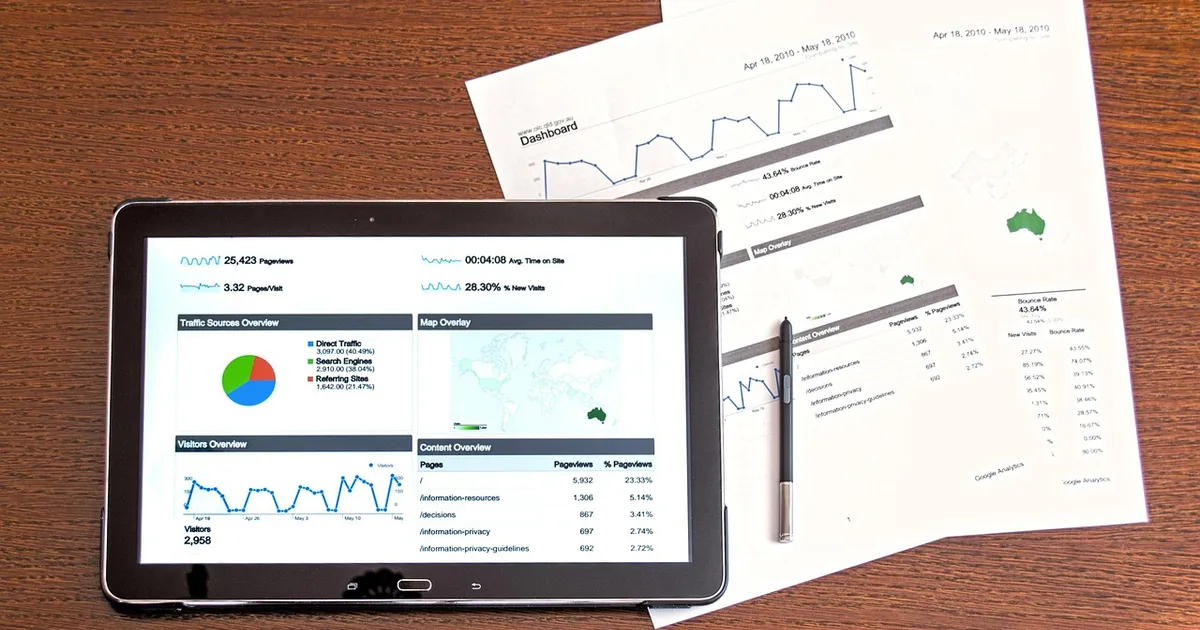
Photo: Pexels, Pixabay Content License, via Pixabay (https://pixabay.com/photos/analysis-analytics-business-charts-1841158/)