Fazlur Rahman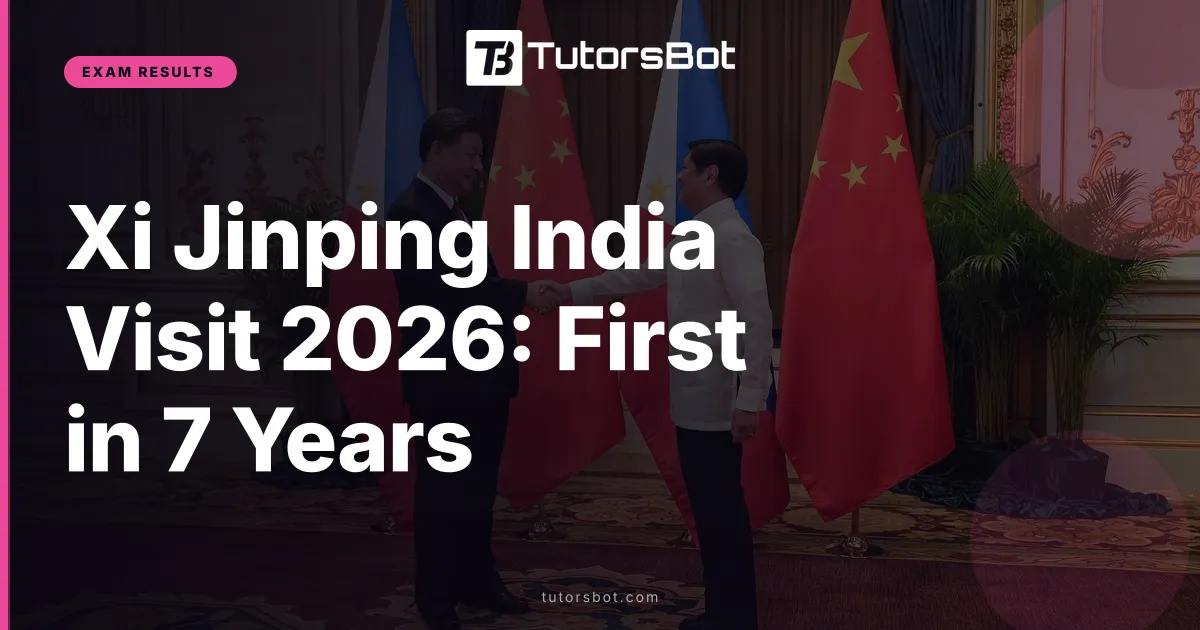
Published September 13, 2026 - New Delhi, India. Chinese President Xi Jinping arrived in the Indian capital on the morning of September 12, 2026 for the BRICS summit, his first visit to the country in seven years, and held a high-stakes bilateral with Prime Minister Narendra Modi in which both sides agreed that differences should not convert into disputes (WION, The Straits Times, September 2026).
Visit data last verified September 13, 2026 from The Straits Times, Reuters reporting via Al-Monitor, WION, and Al Jazeera coverage of the New Delhi summit.
Xi Jinping's September 12-13, 2026 visit to New Delhi for the BRICS summit is his first trip to India since 2019. In the Modi-Xi bilateral, both leaders agreed differences between the two countries should not convert to disputes, and India's foreign ministry said they expressed commitment to a fair, reasonable, and mutually acceptable resolution of the boundary question. Xi used the summit stage to announce a China-led BRICS AI Open Source Zone and other economic initiatives before departing Delhi on September 13 (The Straits Times, WION, September 2026).
A Seven-Year Gap Ends
The visit matters mostly for the gap it ends. Xi had not set foot in India since 2019, a period that covered the 2020 border standoff and the deepest chill in bilateral ties in decades. The Straits Times described his participation as the biggest step yet in a cautious thaw between the nuclear-armed rivals, one pursued even as mistrust persists and Tibetan exile groups protested in Delhi during the summit (The Straits Times, September 2026).
BRICS gave both governments multilateral cover for the reset: Xi could visit without the framing of a standalone state visit, and Modi could host without appearing to concede. The choreography was pointed, from the joint walk-in of leaders at Bharat Mandapam to the placement of the bilateral on the summit's opening day (WION, The Straits Times, September 2026).
What Modi and Xi Discussed
India's foreign ministry statement after the meeting said the two leaders expressed commitment to a fair, reasonable, and mutually acceptable resolution of the boundary question, the standard formula that signals continuation of the established negotiation process rather than a new settlement (The Straits Times, September 2026).
Xi's emphasis was economic. He called for both sides to work hand-in-hand to promote high-quality major financial cooperation, advocate an equal and sustainable global order, and foster an economic globalisation that is open and inclusive. Modi, for his part, told the summit that the Global South must transition from being rule-takers to becoming rule-shapers, a framing that dovetails with Beijing's multipolar-order language (The Straits Times, WION, September 2026).
Modi-Xi Meeting Outcomes
| Track | Outcome language |
|---|---|
| Political | Differences should not convert into disputes |
| Boundary | Fair, reasonable, mutually acceptable resolution of the boundary question |
| Financial | High-quality major financial cooperation, hand-in-hand |
| Global order | Equal and sustainable global order, open and inclusive globalisation |
Xi's Summit Announcements
The bilateral was only half of Xi's New Delhi program. At the closing session he unveiled the Greater BRICS economic package: China will lead the establishment of a BRICS AI Open Source Zone covering large language models, AI training, and an open AI ecosystem; a BRICS Special Economic Zone partnership was proposed; and China committed to hosting a BRICS Service Trade Forum in 2027 as it takes the bloc chairship from India (Reuters via Al-Monitor, September 2026).
He also urged Greater BRICS nations to maintain the stability of industrial and supply chains and to cultivate an integrated market, language that aligns with the New Delhi Declaration's stress on smooth trade and energy flows (Reuters via Al-Monitor, Times of India, September 2026).
What to Watch After the Handshake
Three markers will show whether the thaw has substance. First, whether the boundary process language converts into scheduled talks or disengagement steps. Second, whether the financial-cooperation commitment produces named projects, especially as China prepares its 2027 chairship program. Third, whether the AI Open Source Zone and Special Economic Zone partnership move from announcement to signed framework under Beijing's chair year. Xi departed Delhi on September 13, with both governments keeping expectations deliberately low (The Straits Times, Reuters via Al-Monitor, WION, September 2026).
How the visit fits the larger BRICS story
Xi's presence in New Delhi was the symbolic centrepiece of the BRICS summit, and the bilateral was carefully staged to show that Asia's two largest powers can manage their differences within a multilateral setting. Indian officials pointed to four outcomes as concrete evidence of the thaw: the boundary question is back on the formal diplomatic track, the prime minister and the president met one-on-one for the first time since 2019, both sides endorsed a financial-cooperation agenda that has practical deliverables, and the public readouts avoided the heated rhetoric that has characterised recent years. Critics argue that the language on the boundary question remains vague, and that the visit produced no concrete disengagement steps on the Line of Actual Control. Supporters counter that the gap between India and China is now being bridged through the back channel, and that the BRICS setting gave both leaders a politically face-saving way to meet (The Straits Times, Reuters, WION, September 2026).
What Tibetans and human-rights groups said
The visit was accompanied by protests from Tibetan exile groups, who gathered in central Delhi and in Dharamsala to mark the visit and to call attention to the situation in Tibet. The Indian government did not publicly engage with the protests, although security was tightened around the embassy district and around the routes used by the Chinese delegation. Human-rights groups also raised concerns about the use of Pegasus-style surveillance technology during the visit, and asked the Indian government to publish a list of foreign dignitaries whose devices were monitored under national-security warrants (The Straits Times, Reuters, September 2026).
Photo: 𝗢𝗣𝗦-𝗢𝗜𝗖 𝗨𝗻𝗱𝗲𝗿𝘀𝗲𝗰𝗿𝗲𝘁𝗮𝗿𝘆 𝗖𝗵𝗲𝗹𝗼𝘆 𝗩𝗲𝗹𝗶𝗰𝗮𝗿𝗶𝗮-𝗚𝗮𝗿𝗮𝗳𝗶𝗹, PUBLIC DOMAIN, via Wikimedia Commons (https://upload.wikimedia.org/wikipedia/commons/0/02/Bongbong_Marcos_and_Xi_Jinping_3.jpg?utm_source=commons.wikimedia.org&utm_campaign=imageinfo&utm_content=original)