Two different SPAD counts for 2025
| Measure | 2025 | 2024 | What it counts |
|---|
| SPADs on the Irish network | 15 | about 11 (implied by the 37% rise reported by the Irish Examiner, November 2026) | All SPADs recorded nationally |
| Iarnrod Eireann bulk notifications, category 2.03 | 6 | 9 | SPADs with no risk of conflicting movements, so it excludes Mallow |
The RAIU Annual Report 2025 lists the monthly returns. Category 2.03 covers SPADs with no risk of conflicting movements. The Mallow case sits outside that group because it did carry that risk. RTE reports that 15 is the highest annual SPAD total in a decade.
What has changed since the incident
Iarnrod Eireann, the State-owned rail operator, has taken three steps, according to RTE. It issued a SPAD safety alert to all drivers and a notice to signalmen on making emergency calls. It also began a review of SPAD incidents from the past five years.
The RAIU made three safety recommendations:
- 2026004-01 - ill-health guidance for drivers in the Professional Drivers Handbook.
- 2026004-02 - Rail Emergency Call simulation and competency assessment for signalmen.
- 2026004-03 - a proportionate risk assessment of SPAD risk at individual junctions.
The RAIU made no recommendations on train protection, radio systems or driver non-technical skills. It says Iarnrod Eireann is already putting measures in place.
What is a SPAD and how the risk score works
A SPAD is a signal passed at danger. The RAIU ranks each one on a scale from 0 to 28, and a higher score means more risk. A score of 17 or above is a High Risk SPAD. This incident scored 23 because the train went beyond the overlap, the safety distance past the signal.
The Tralee-Mallow service is the one involved here. Points MW564 were out of commission for 27.5 hours, and 19 services were replaced by bus. For timetables and disruption notices, see live departure train times.
What to check next
Commuters on the Tralee line can check live departure times before travelling. One overrun put the points out of use for over a day. Recommendation 2026004-02 asks for simulation facilities so signalmen can practise Rail Emergency Calls and be assessed on them. Recommendation 2026004-01 asks for clearer guidance for drivers who feel unwell.
The RAIU says no functional train protection system existed at the site or on the train. That left the outcome to the driver responding to signals and CAWS. Its three recommendations cover ill-health guidance, emergency-call practice and junction risk.
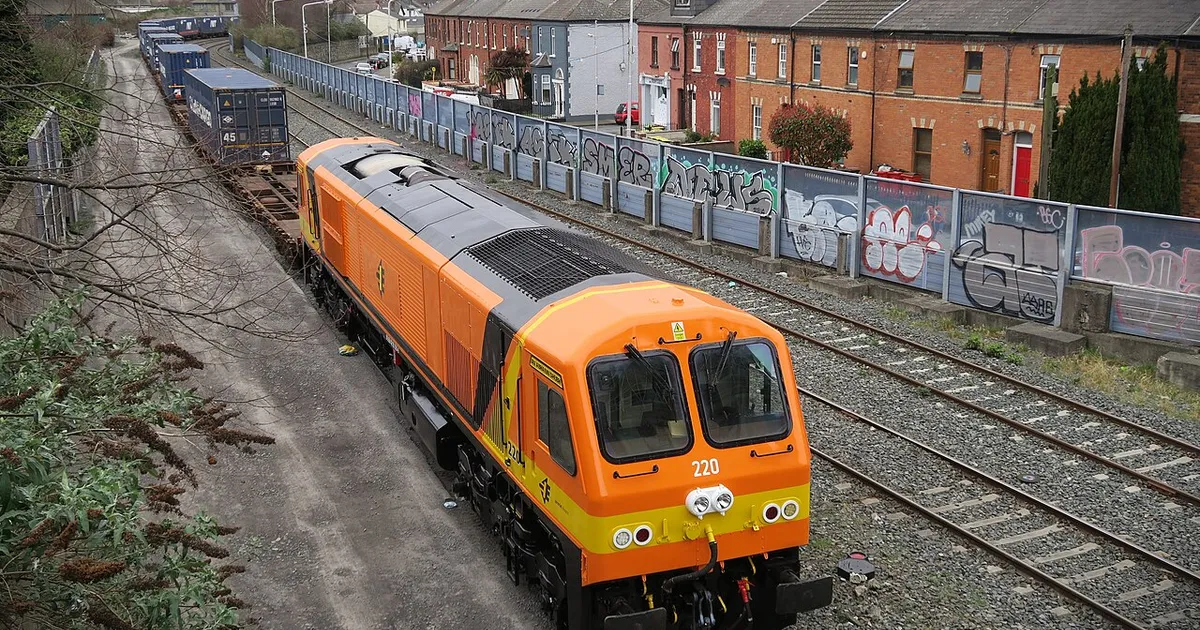
Photo: Cityswift, CC BY 2.0, via Wikimedia Commons (https://commons.wikimedia.org/wiki/File:Irish_Rail_201_Class_220.jpg)

 Fazlur Rahman