 Fazlur Rahman
Which free certificate you should use in 2026 depends on who renews it for you. The spread runs from no cost to about $180 a year for a paid certificate.
Below I compare the free routes on renewal automation, limits and real cost per year, then show the install steps. Pick a route and know its renewal date first.
Disclosure: the Hostinger links and the coupon code below are part of Hostinger's affiliate programme. Tutorsbot may earn a commission if you buy, at no extra cost to you.

Which provider gives you the best free ssl certificate in 2026?
The best free ssl certificate for most sites is the one an automated client renews without asking you. Let's Encrypt runs that pattern, costs nothing, and works on any server you control. The certificate is rarely the deciding part. The renewal around it is.
If you run the server yourself on cheap VPS hosting, the certificate lives there. If a host runs it, the plan often bundles and renews one.
Three terms decide which row fits.
- ACME - automates certificate requests and renewal
- DV - a check that you control the domain name
- ARI - a certificate field that tells a client when to renew
| Option | Cost | Certificate life | Free tier gives | Limit to watch | Source |
|---|---|---|---|---|---|
| Let's Encrypt | $0 | 90 days; 64 from 2027-02-10 | Free issuance, up to 100 identifiers | 50 per domain per 7 days; 300 orders per account per 3 hours | letsencrypt.org |
| ZeroSSL | $0 | 90 days | 3 certificates, no credit card | 3 free certificates per account | zerossl.com |
| Cloudflare Universal SSL | $0 | Renewed by Cloudflare | Free unshared, publicly trusted certificates | Domain validation only; apex plus first-level subdomains; no custom ciphers | developers.cloudflare.com |
| Hostinger hosting with SSL | Included in the plan | Auto-renewed at no charge | Domain validated, 256-bit, auto-installed | You still pay for hosting; custom install available | hostinger.com |
Checked November 2026 on the Let's Encrypt, ZeroSSL, Cloudflare and Hostinger pages.

What does a paid SSL certificate really cost per year?
Paid certificates from ZeroSSL start at $14.99 per month billed yearly, or $179.88 for 12 months. The Premium tier with Protect costs $68.99 per month, or $827.88 for 12 months.
Hostinger Premium shared hosting costs $1.99 per month on a 48-month term. That is $95.52 upfront, or $23.88 per year across four years.
| Route | Sticker price | Term | Paid upfront | Per-year equivalent | Source |
|---|---|---|---|---|---|
| Let's Encrypt | $0 | n/a | $0 | $0 | letsencrypt.org |
| ZeroSSL free plan | $0 | 90 days, 3 per account | $0 | $0 | zerossl.com |
| ZeroSSL Basic + Protect | $14.99 per month, billed yearly | 12 months | $179.88 | $179.88 | zerossl.com |
| ZeroSSL Premium + Protect | $68.99 per month, billed yearly | 12 months | $827.88 | $827.88 | zerossl.com |
| Hostinger Premium hosting | $1.99 per month | 48 months | $95.52 | $23.88 | hostinger.com |
| Hostinger Unlimited hosting | $2.79 per month | 48 months | $133.92 | $33.48 | hostinger.com |
Checked November 2026 on Hostinger web hosting and ZeroSSL pricing. Hostinger prices were a Black Friday sale at that time.
What changes on 10 February 2027 when Let's Encrypt certificates drop to 64 days?
Let's Encrypt has issued 90-day certificates for years. From 10 February 2027, every new or renewed certificate gets 64 days instead. The 64-day profile was available in staging from 14 October 2026.
The Let's Encrypt announcement sets the next step. A 45-day default is planned for 2028. The renewal point moves from about day 60 of a 90-day certificate to about day 30 of a 45-day one.
| Date | Default life | What changes for you | Source |
|---|---|---|---|
| 2026-02-24 | 90 days | Lifetimes move 90 to 64 to 45 days; renewal shifts from day 60 to day 30 | letsencrypt.org |
| 2026-10-14 | 90 days | 64-day profile available in staging to test the shorter cycle | letsencrypt.org |
| 2027-02-10 | 64 days | New and renewed certificates get 64 days; renew at about two-thirds of the lifetime | letsencrypt.org |
| 2028 (planned) | 45 days | 45-day profile intended as the default; authorization reuse drops to seven hours | letsencrypt.org |
Search cron jobs and scripts for hard-coded 60, 80 or 83 day timers. Move them to two-thirds of the lifetime.
What are the Let's Encrypt rate limits that break multi-site setups?
Shorter lifetimes mean more renewals, and renewals run into the limits that Let's Encrypt rate limits set.
| Limit | Value | Refill and scope | Who hits it | Source |
|---|---|---|---|---|
| New orders per account | 300 every 3 hours | Refills at 1 order every 36 seconds | Agencies issuing for many domains | letsencrypt.org |
| Certificates per registered domain | 50 every 7 days | Counted globally across accounts | Multi-site setups on one domain | letsencrypt.org |
| Failed authorisations per identifier | 5 every hour | Refills 1 failure every 12 minutes; max 1,152 consecutive | Misconfigured DNS or a blocked challenge | letsencrypt.org |
| Identifiers per certificate | Up to 100 | Depends on the profile | Bundling dozens of hostnames | letsencrypt.org |
| ARI-coordinated renewals | Exempt from all rate limits | Order must reference the replaced certificate | ARI-aware ACME clients | letsencrypt.org |
IPv4 addresses count one at a time. IPv6 addresses count by the /64 range that holds them. Renewals with the same identifier set still count against 5 certificates with an exact set every 7 days.
Which free SSL route fits your setup: VPS, WordPress or Cloudflare?
On a self-managed VPS, Let's Encrypt through a client such as acme.sh is the usual choice. The client installs on the server and adds a renewal job.
Cloudflare Universal SSL gives free, unshared, publicly trusted certificates on every plan. A full setup covers the apex domain plus first-level subdomains. A partial CNAME setup gives each proxied subdomain its own certificate.
Two limits matter. The certificates are domain validated, so they do not confirm the organization behind the domain. Custom cipher suites need an Advanced or Custom certificate.
Free SSL certificate for WordPress
For WordPress on shared hosting, the least work is the certificate your host installs and renews. Hostinger installs domain-validated certificates with 256-bit encryption and renews them free.
Where the host does not, the Really Simple Security plugin handles it inside WordPress. It has more than 3 million active installations. It adds one-click HTTPS migration, 301 redirects and secure cookies.
It installs a Let's Encrypt certificate where the host allows manual setup. The best free ssl certificate for WordPress is the one your host renews.
Free SSL certificate price
Three of the four routes cost nothing per year, though hosting that bundles one still charges the hosting price. The ZeroSSL free plan covers 3 certificates of 90 days each with no credit card.
How do you install free SSL yourself and keep it renewing without downtime?
acme.sh is a script-based ACME client that installs into your own home directory. Replace the example domain and email with your own.
Run the installer with your email address:
curl https://get.acme.sh | sh -s [email protected]Then request a certificate and point the client at the web root:
acme.sh --issue -d example.com -w /home/wwwroot/example.comThe acme.sh repository keeps the full command list, including wildcard domains. What breaks in February 2027 is the schedule, not the command. Renew at two-thirds of the lifetime, so a 64-day certificate renews near day 43.
Where Hostinger fits
Hostinger bundles free SSL with its shared hosting plans, and the certificate renews on its own. Premium costs $1.99 per month on a 48-month term, $95.52 paid upfront, and renews at $10.99 per month. Unlimited costs $2.79 per month, $133.92 upfront, and renews at $16.99 per month.
The renewal price is higher than the sale price, so check it before you buy. The bundled certificates are domain validated with 256-bit encryption, and the company calls them PCI DSS compliant.
Hostinger web hosting plans include the certificate with the plan.
Disclosure: this link is an affiliate link. Tutorsbot may earn a commission if you buy, at no extra cost to you.
When Hostinger is the wrong choice
The bundled certificate is domain validated, so it does not confirm the organization behind the domain. Hostinger's page describes only a domain-validated certificate and lists no wildcard option. ZeroSSL sells wildcard certificates on its paid plans.
Free SSL comes with the hosting plan. If you move to your own server, you need a new certificate, such as Let's Encrypt through acme.sh. The renewal price on Premium rises from $1.99 to $10.99 per month when the term ends.
What are the next steps?
Pick the route that matches who renews the certificate for you. Then check the lifetime, renewal date and renewal price. The best free ssl certificate is the one that renews without you. HTTPS is one layer of a wider setup, as business cybersecurity for small companies shows.
- On shared hosting, confirm your plan renews the certificate
- On your own server, install an ACME client and renew at two-thirds of the lifetime
- Before 10 February 2027, replace any renewal timer set to 60 days
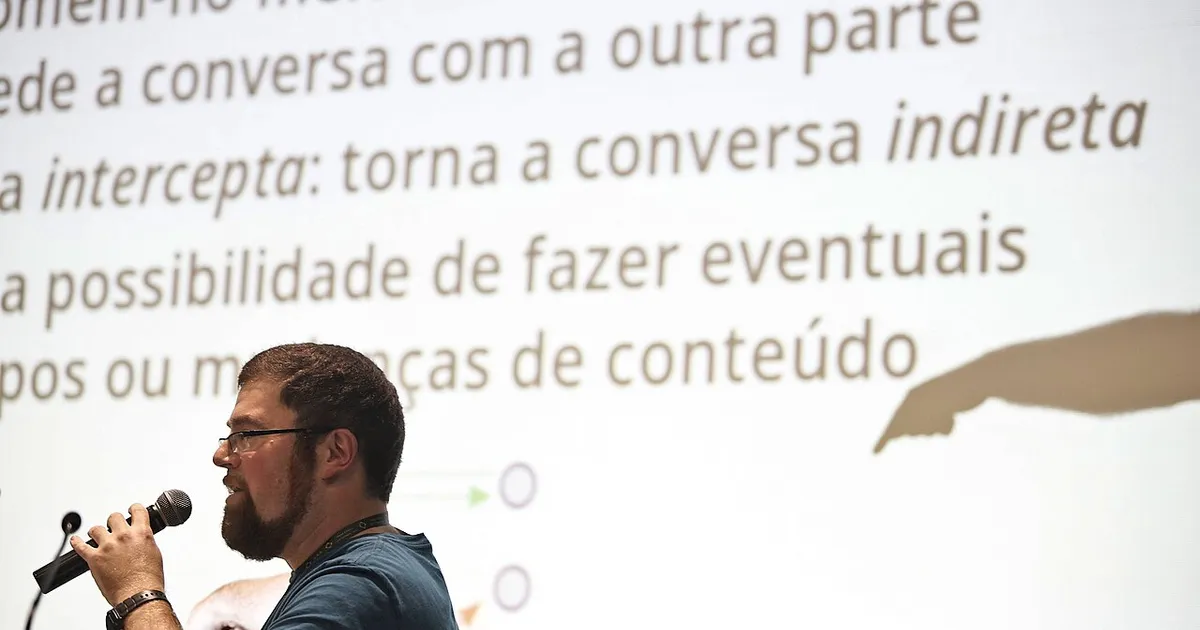
Photo: Fórum Internacional Software Livre, CC BY-SA 2.0, via Wikimedia Commons (https://commons.wikimedia.org/wiki/File:Let%27s_Encrypt-_Uma_Autoridade_Certificadora_Gratuita_e_Automatizada,_com_Schoen_-_Foto_Cristiano_Sant%27Anna_(19527566862).jpg)