A home blood pressure monitor is one of the most useful health devices you can own. The American Heart Association and the American Medical Association both recommend home monitoring for anyone with diagnosed hypertension, recent medication changes, or a family history of cardiovascular disease. The five monitors below are among the most-purchased on Amazon, and we ranked them on real-world accuracy, app quality, cuff fit, on-device memory, and overall value. Here is how each one actually performs, and which to pick for which situation.
The quick verdict
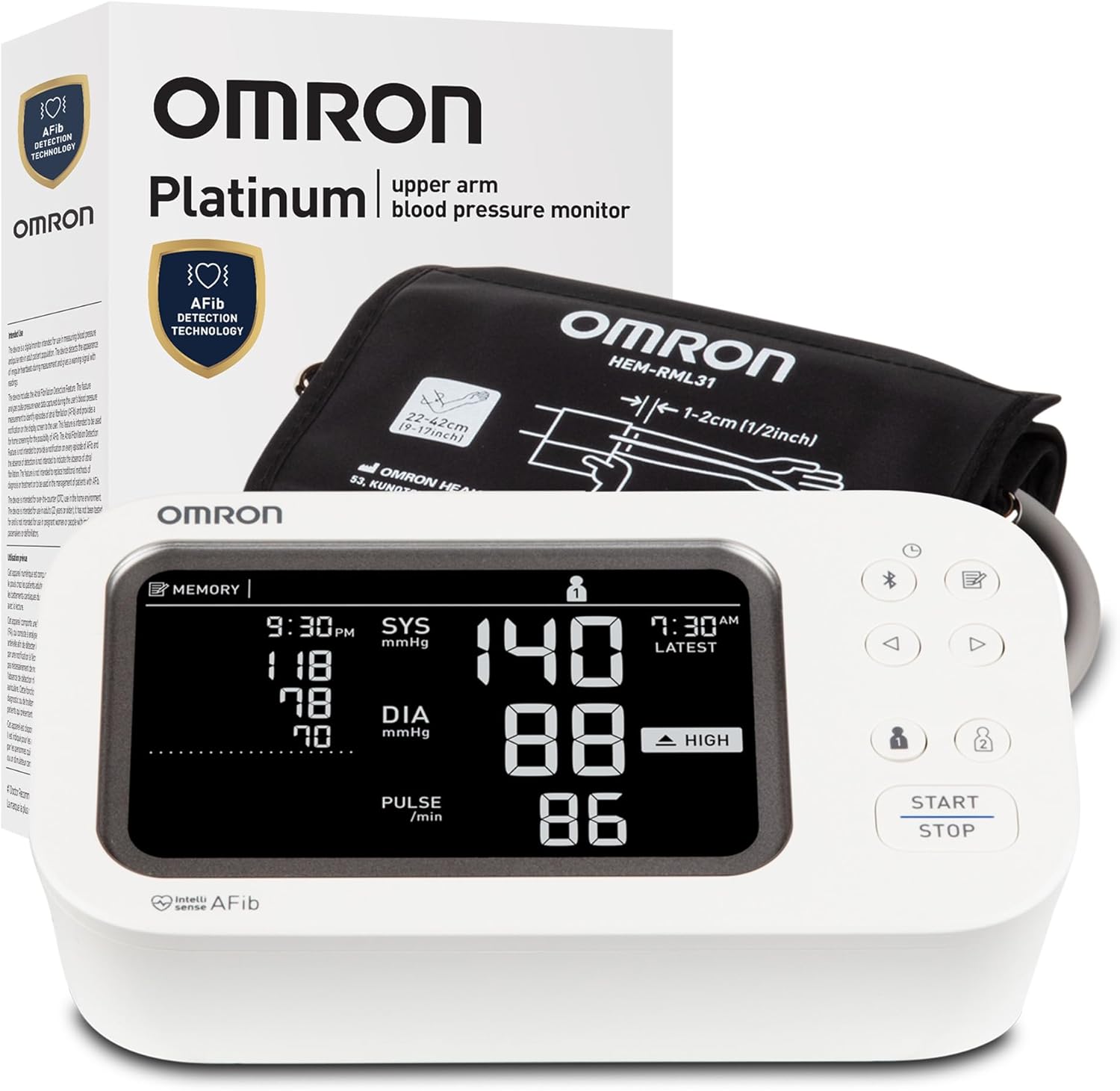
OMRON's Platinum BP5450 is the best overall pick for clinical validation, TruRead averaging, the American Heart Association color indicator, and Bluetooth sync to the OMRON Connect app. The OMRON 10 Series BP7450 is the best connected pick, adding WiFi to the same formula. The Withings BPM Connect is the best choice when app polish and a compact all-in-one cuff matter most. The OMRON Evolv is the cleanest wireless setup, with no separate monitor unit or hose. The Beurer BM67 ships with an extra-large cuff and supports two users. All five are upper-arm cuffs, clinically validated to within three mmHg of an in-office reading.
Get more product guides & reviews reads in your inbox
One email a day — only posts tagged Product Guides & Reviews. No spam, unsubscribe anytime.
Accuracy. Upper-arm cuffs from OMRON, Withings, and Beurer are clinically validated. Wrist cuffs are not, because readings depend heavily on wrist position relative to the heart.
App and connectivity. Bluetooth-only, WiFi plus Bluetooth, or app-only changes how automatic your logging is. WiFi models sync without your phone nearby.
Cuff fit. Standard cuffs fit arms from nine to seventeen inches. Large and XL cuffs go up to twenty-three and a half inches. The wrong size reads artificially high.
On-device memory. Matters when two users share one monitor, or when you travel without your phone.
Value. Cost amortized over three to five years of daily use is the fair comparison, since a good monitor should last that long.
The Platinum is the model most pharmacists point to when asked for a recommendation. It carries a multi-color indicator that turns red, yellow, or green based on the American Heart Association blood pressure thresholds, syncs over Bluetooth to the OMRON Connect app, and uses TruRead to average three consecutive readings taken a minute apart. On-device storage holds 200 readings per user, and the app stores unlimited readings in the cloud. The cuff fits arms from nine to seventeen inches, which covers most adults.
Pros
Top doctor-recommended brand, TruRead averaging, AHA color indicator, unlimited cloud storage, two-user memory.
Cons
Bluetooth only with no WiFi option, the monitor and cuff are separate pieces rather than all-in-one, and the OMRON Connect app is functional but not as pretty as Withings.
Buy if: you want the safest pick with clinical validation and clear trend data, and you do not need WiFi sync.
The 10 Series takes the Platinum formula and adds WiFi. Readings push to the OMRON Connect app over your home WiFi without needing your phone nearby, which matters if your spouse or a parent is the one taking the reading. It still carries TruRead averaging, the AHA color indicator, two-user memory, and unlimited cloud storage. Setup requires connecting it to your WiFi network once, which most people do through the app in under two minutes.
Pros
WiFi plus Bluetooth, TruRead averaging, AHA color indicator, unlimited cloud storage, automatic sync without phone pairing.
Cons
The most expensive monitor on this list, requires one-time WiFi setup, and still uses the separate monitor plus cuff form factor.
Buy if: you want readings to land on your phone automatically, without opening the OMRON app or re-pairing Bluetooth each time.
Withings BPM Connect — best app and compact design
Withings' Health Mate app is the best in this category for trend visualization, multi-user support, and integration with Apple Health and Google Fit. The cuff itself is an all-in-one design with no separate monitor unit, which makes it the most compact option on this list. WiFi sync means readings appear on your phone without manual Bluetooth pairing. It is FDA-cleared and clinically validated to the same protocols as the OMRON models.
Pros
Best-in-class app, compact all-in-one cuff, WiFi plus Bluetooth, Apple Health and Google Fit integration, FDA-cleared.
Cons
Higher price than the OMRON models, smaller on-device display, and no TruRead averaging so it gives a single reading per press.
Buy if: app quality and a clean design matter more to you than on-device memory or multi-reading averages.
The Evolv is an all-in-one cuff with no separate monitor and no hose, so it is the cleanest option for a desk or nightstand. It syncs over Bluetooth to the OMRON Connect app and stores 100 readings per user on the device. The 2026 refresh added a heart-rate display alongside systolic and diastolic numbers. The cuff fits arms from nine to seventeen inches, the same range as the Platinum.
Pros
All-in-one design with no tube, OMRON-grade clinical accuracy, 100-reading on-device memory, Bluetooth sync, heart-rate display.
Cons
Bluetooth only with no WiFi option, no TruRead averaging, and the on-cuff display is smaller than the Platinum.
Buy if: you want the cleanest desk setup and OMRON-grade readings without the wired hose.
Beurer BM67 — best for large arms and two-user households
The BM67 is the only monitor on this list that ships with an extra-large cuff, which fits arms from sixteen and a half to twenty-three and a half inches. It holds 60 readings per user on the device, supports two users, and carries the largest LCD screen here, with a colored risk indicator that mirrors the AHA thresholds. Beurer backs the device with a five-year warranty, which is the longest on this list.
Pros
Ships with XL cuff that fits up to twenty-three and a half inches, XL LCD display, two-user memory of 60 readings each, five-year warranty, colored risk indicator.
Cons
The Beurer Connect app is functional but less polished than OMRON Connect or Withings Health Mate, and the unit is Bluetooth only.
Buy if: you have a large arm, want two-user memory on the device, and value the longest warranty on this list.
How to pick the right one
Get the OMRON Platinum if you want the safest pick from the most-trusted brand. Get the OMRON 10 Series if you want automatic WiFi sync without manual Bluetooth pairing. Get the Withings BPM Connect if app quality and a compact all-in-one design matter most. Get the OMRON Evolv if you want the cleanest desk setup with OMRON-grade accuracy. Get the Beurer BM67 if you have a large arm over sixteen and a half inches or want two-user memory on the device.
Before you buy, measure your arm circumference with a soft tape at the midpoint of your upper arm. A cuff that is too small will read artificially high by anywhere from ten to forty mmHg, according to the American Heart Association's measurement guidance. After each reading, take two to three measurements one minute apart and average them. Bring the trend chart from the app to your next doctor visit so they can see your real baseline, not a single nervous reading in the office.
For more on proper home technique, the American Heart Association's guide at heart.org and the American Medical Association's measurement page linked in the resources below are the two sources worth reading end-to-end.
As an Amazon Associate, Tutorsbot earns from qualifying purchases. Disclosure.
Fazlur Rahman is the founder of Tutorsbot, building AI-powered tools for learning and career growth. He writes about applying AI in real products and the practi… Read moreShow less
Fazlur Rahman is the founder of Tutorsbot, building AI-powered tools for learning and career growth. He writes about applying AI in real products and the practical side of building an ed-tech startup.

 Fazlur Rahman