Industry write-ups describe the result as a benefits-heavy package, with base pay and raises that skew conservative. That is the trade-off: the cash number is rarely the highest in the industry, and the retirement and time-off value is higher than most.
Tuition assistance is the other quiet benefit. Merck reimburses approved tuition expenses up to the annual cap, with the first $5,250 tax-free under IRS Section 127, and a separate education assistance layer can extend to family members under specific conditions.
About 30 percent of chemical technicians work in chemical manufacturing, 18 percent in testing laboratories and services, and 8 percent in research and development, which is why the occupation median sits below the plant industry figure.
The Merck chemical manufacturing technician pay therefore compares best against the chemical manufacturing industry line of $34.18 an hour rather than the occupation median of $29.03, and the posted band clears that figure across most of its width.
BLS wage percentiles for chemical technicians, May 2025| Percentile | Annual wage | Hourly wage |
|---|
| 10th percentile | $41,740 | $20.07 |
| 25th percentile | $48,530 | $23.33 |
| Median | $60,390 | $29.03 |
| 75th percentile | $75,900 | $36.49 |
| 90th percentile | $92,040 | $44.25 |
| Mean | $63,900 | $30.72 |
How does Merck pay compare with the BLS chemical technician data?
The closest national benchmark is the BLS occupation for chemical technicians, whose median wage was $60,390 a year in May 2025, or $29.03 an hour. The posted Merck floor of $26.88 sits just below that line, and the ceiling reaches well past the 75th percentile.
The industry breakdown is the more useful comparison. Chemical technicians working in chemical manufacturing averaged $34.18 an hour, the highest figure in the industry table, against $26.60 for specialty chemical manufacturing and $28.33 for pharmaceutical and medicine manufacturing.
The occupation itself runs from $18.39 an hour at the 10th percentile to $44.88 at the 90th, so the Merck senior band reaches the top of the occupation and the shared services band sits in the upper half.
The defence primes anchor the lower end of this market. A Raytheon mechanical assembler band opens at $20.24 an hour, an L3Harris manufacturing technician band at $17.75 in New York, and a BAE Systems operations associate at $23.
Those sites carry different extras, such as tuition reimbursement and shift premiums, so a lower rate there can still produce a comparable package. Merck competes with them for the same mobile technicians and for the same graduates.
Hourly pay published for comparable technician roles| Employer | Published rate | Unit used |
|---|
| Merck, technician shared services | $26.88 to $42.36 an hour | Annual range of $55,900 to $88,100 converted |
| Merck, senior filling set-up | $32.69 to $51.44 an hour | Annual range of $68,000 to $107,000 converted |
| Pfizer | $28.76 to $47.93 an hour | Hourly band on a bioprocess posting |
| AbbVie | $23.10 to $41.60 an hour | Hourly band on a manufacturing posting |
| Moderna | $25.72 to $41.15 an hour | Annual range of $53,500 to $85,600 converted |
| Johnson and Johnson | $26 to $37 an hour | Tracker range across two titles |
| Raytheon | $20.24 to $37.84 an hour | Hourly band on a mechanical assembler posting |
| L3Harris | $17.75 to $30.52 an hour | Hourly band in New York |
| BLS chemical technician median | $29.03 an hour | National median, May 2025 |
How does Merck pay compare with other employers in this cluster?
Converted to hourly rates, Merck sits at the upper end of the pharmaceutical group and above the defence primes, with the pension as the real differentiator. Pfizer's senior bioprocess band runs $28.76 to $47.93 an hour and AbbVie's manufacturing band runs $23.10 to $41.60.
Moderna publishes an annual range of $53,500 to $85,600, which converts to $25.72 to $41.15 an hour, and the Johnson and Johnson laboratory roles report $26 to $37 an hour.
Set the rates side by side and Merck lands near the top of that list. Then compare the retirement packages, and the order barely changes, because the pension is something almost nobody in the group still offers.
The direction of travel favours the base pay. Hiring for sterile and fill-finish capacity pulls on the same pool of technicians, and the published bands are where that pressure shows up first.
Watch the floor rather than the ceiling, because a company that raises its entry band across every site changes what an entry offer is worth without moving the top of the range.
What happens to Merck pay next?
Expect the annual ranges to keep widening as the company standardises posting formats across every US site and division. The salary-range policy arrived recently, so new divisions and new sites publish under the same format from the start.
The direction of travel favours the base pay rather than the extras. Hiring for sterile and fill-finish capacity pulls on the same pool of technicians, and the published bands are where that pressure shows first.
For applicants the practical move is simple. Take the band from the posting for your site, convert it to an hourly rate, and compare it with the same figure from Pfizer or AbbVie on one page.
Next steps
Convert the annual band on the posting to an hourly rate, then compare it with Pfizer and AbbVie on the same scale.
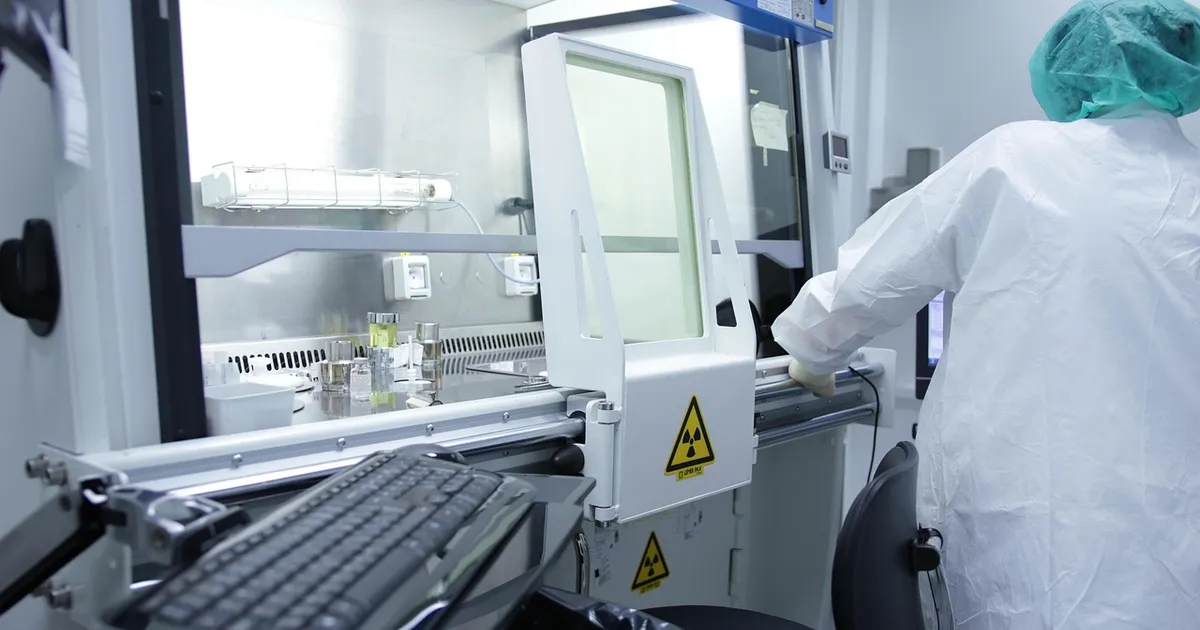
Photo: OsloMetX, Pixabay Content License, via Pixabay (https://pixabay.com/photos/hospital-indoors-medicine-3089884/)

 Fazlur Rahman