That is why the shift schedule belongs in the comparison before the rate does, and why a higher band at fewer hours can lose to a lower band at full coverage.
What do trackers say about Moderna manufacturing pay?
Trackers cluster around $32 to $34 an hour for a Moderna manufacturing associate, with Boston the strongest market. Indeed lists a Boston average of $33.99 an hour, which it puts 82 percent above the national average for the title.
That Boston figure sits above the top of the hourly equivalent for the posted range in some cases, which tells you the tracker data leans toward higher-paid sites and more senior titles rather than a random sample of new hires.
The national picture is steadier. Across the title, Indeed averages $68,415 a year, 18 percent above the national average for similar roles, and Zippia puts the whole company at $81,825 a year once salaried staff are included.
Long shifts normally come with premium pay for hours worked beyond the standard week, and differentials for nights or weekends.
Ask which of those apply to the schedule you are being offered. The posting range covers the base rate, so every premium on top is money the published figure does not show you.
Rotating patterns also affect planning off the line. A twelve hour shift leaves very little of a day, and a rotating start time changes your family logistics as well as your earnings. Colleagues who stay on a stable pattern tend to hold onto their rate longer for that reason.
How much does a Moderna manufacturing associate earn per week and per year?
At the $25.72 floor, a 48 hour schedule built from 12 hour shifts brings about $1,235 gross a week and $64,250 a year. At the $41.15 ceiling on the same schedule, the annual figure reaches $102,700.
Those annual numbers exclude the discretionary bonus and any overtime premiums, so they sit below what the top of the range can deliver in a strong year.
The scheduling detail matters more at Moderna than at a plant running eight hour days. A schedule of four 12 hour shifts delivers 48 hours, and adding a fifth shift changes the year by roughly $13,000 at the floor of the band.
The leave package is unusual for an hourly role because it is generous rather than token.
Sixteen to eighteen weeks of paid parental leave at full pay for either parent is longer than the statutory minimum, and it applies to production colleagues on twelve hour shifts, rather than office staff alone.
Caregiver leave of sixteen weeks and medical leave of up to twenty weeks at full pay sit alongside it. Together those three programs are worth more to a five year colleague than the difference between the floor and the ceiling of the pay band over a single year.
What are the 12-hour shifts like at Moderna?
The posting is explicit that the position requires working 12 hour shifts, and Moderna's lines run continuous production. That is a rotating pattern rather than a fixed start time, and it is the single biggest factor in how the pay adds up across a year.
Long shifts usually come with premium pay for the hours beyond the standard week, and shift differentials for nights or weekends. Ask which of those apply to the schedule you are being offered rather than assuming the band covers it.
For anyone comparing a 12 hour schedule with a standard eight hour job, the hourly rate is only half the question. Weekly hours and the number of scheduled shifts decide the annual total.
The BLS occupation for biological technicians shows a median of $57,510 a year in May 2025, which is $27.65 an hour. Moderna's posted floor converts to $25.72, just under that median, and the ceiling converts to $41.15, which is above the 90th percentile for the same occupation.
Chemical technicians sit slightly higher at $60,390 a year and clinical laboratory technologists at $62,930. Those medians describe laboratory work rather than production work, so treat them as a yardstick for the skill level rather than a direct rival to a plant posting.
What benefits do Moderna employees get?
The leave package is the standout: 16 to 18 weeks of paid parental leave at 100 percent of pay for either parent. Caregiver leave runs 16 weeks, and medical leave can reach 20 weeks at 100 percent of pay.
That is a long paid absence compared with most US hourly employers, and it applies to the colleagues working the production schedule rather than only to office staff.
The rest of the package follows a familiar large-pharma pattern: a 401(k) match, vacation and paid time off, sick leave, paid holidays, and medical, dental and vision coverage.
What a Moderna manufacturing role includes| Benefit | What it covers | Notes |
|---|
| Paid parental leave | 16 to 18 weeks at 100 percent of pay | For either parent |
| Caregiver leave | 16 weeks paid | Applies on top of parental leave rules |
| Medical leave | Up to 20 weeks at 100 percent of pay | Own or family medical need |
| 401(k) match | Company contribution on contributions | Percent varies by plan |
| Vacation, sick leave, holidays | Paid time away from the line | Accrual based |
The Moderna manufacturing associate salary range converts to a band that starts above most retail pharmacy roles and above the posted entry rates at the defence primes, where a Raytheon mechanical assembler opens at $20.24 an hour and an L3Harris manufacturing technician at $17.75 in New York.
Pfizer is the closer comparison because it publishes hourly bands directly, with a senior bioprocess technician posting at $28.76 to $47.93 an hour. On entry rates Pfizer opens higher, but Moderna's paid leave and retirement contribution are the parts of the package that move the total.
Hourly pay compared across employers for technician and associate roles| Employer | Published rate | Unit used |
|---|
| Moderna | $25.72 to $41.15 an hour | Annual range converted |
| Pfizer | $28.76 to $47.93 an hour | Hourly band |
| Raytheon | $20.24 to $37.84 an hour | Hourly band |
| L3Harris, New York | $17.75 to $30.52 an hour | Hourly band |
| BAE Systems | $23 an hour | Hourly rate |
| BLS biological technicians | $27.65 an hour median | National median, May 2025 |
How does Moderna pay compare with the BLS technician medians?
The closest national benchmark is the BLS occupation for biological technicians, whose median wage was $57,510 a year in May 2025, or $27.65 an hour. Moderna's posted range starts just below that median and reaches well above it.
Chemical technicians sit slightly higher at $60,390 a year, and clinical laboratory technologists and technicians at $62,930. Those medians describe laboratory work rather than production work, which is worth remembering when a tracker mixes the two.
On the hourly equivalent, a Moderna manufacturing associate at $25.72 starts a little under the biological technician median, while the $41.15 ceiling would put the same role above the 90th percentile for that occupation.
Expect the ceiling to keep climbing rather than the floor to move. The band already stretches $32,100 a year for a single title, and sites hiring for new capacity or seasonal campaign volumes tend to reach for premium pay and overtime before they raise the published range.
For anyone comparing two offers, convert both to the same units: the same weekly hours, the same shift pattern, and bonus treated as bonus rather than income. A wider band is not automatically a better offer, and the leave package is rarely part of the number either employer prints.
How does Moderna pay compare with other employers in this cluster?
Converted to hourly rates, Moderna's band sits between Pfizer's and the defence primes, and above most retail pharmacy roles. Pfizer publishes hourly bands directly, with a senior bioprocess technician posting at $28.76 to $47.93 an hour.
Among defence manufacturers the comparison is closer to Pfizer than to Moderna. A Raytheon mechanical assembler band opens at $20.24 an hour, an L3Harris manufacturing technician band at $17.75 in New York, and a BAE Systems operations associate at $23 an hour.
The real difference is the unit. Pfizer and the defence primes publish hourly ranges you can compare on the spot, while Moderna's annual band needs converting before it means anything next to another posting.
What happens to Moderna pay next?
Expect the annual range to keep widening at the top rather than the floor to move much. The range already spans $32,100 a year from floor to ceiling, which is a wide spread for an entry role.
Two forces push the top of that band. Hiring for new mRNA production capacity and seasonal campaign volumes pulls on the same technician pool, and premium pay for the extra hours is the tool most sites reach for first.
For anyone comparing offers, the useful move is to convert both to the same units: the same weekly hours, the same shift pattern, and bonus treated as bonus. A wider band is not automatically a better offer.
Next steps
Convert the annual range to an hourly rate, then compare it against the schedule and the premiums the site actually pays.
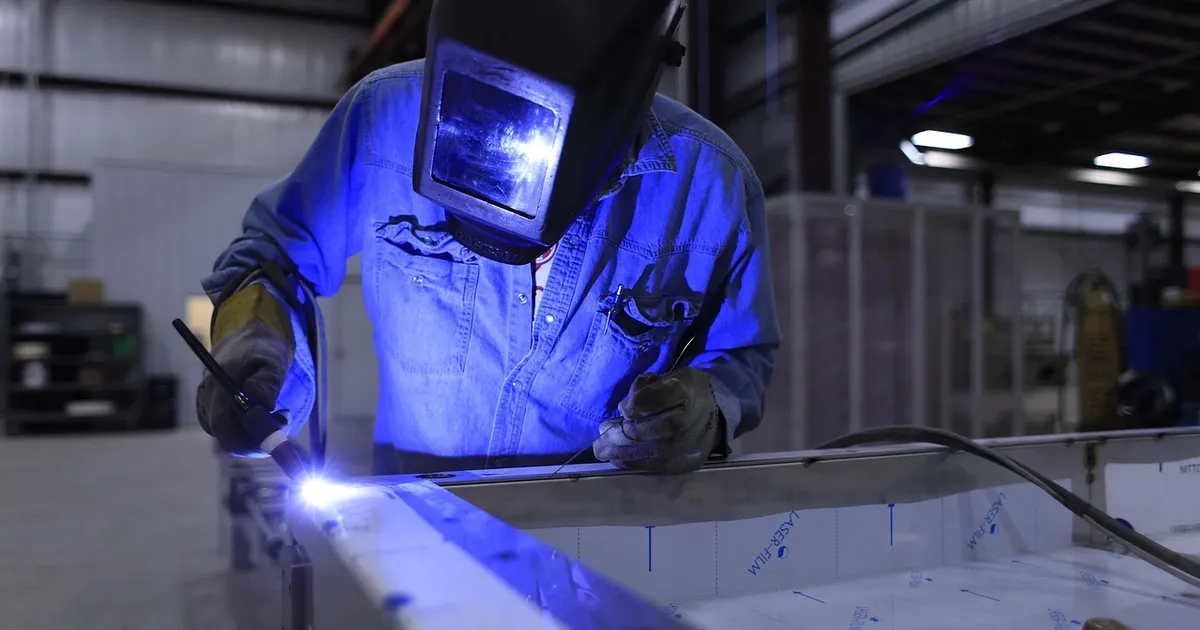
Photo: jannonivergall, Pixabay Content License, via Pixabay (https://pixabay.com/photos/worker-grinder-factory-workplace-5736096/)

 Fazlur Rahman