What would the Greens' income tax changes do to your take-home pay?
The Greens paired the wealth tax with changes to income tax. RNZ reported the June 2026 scale as 10.5% up to NZ$15,600, then 17.5%, 30% and 33%. The top rate is 39% above NZ$180,000. The Greens' proposed scale is:
- 0% - up to NZ$9,999
- 10% - NZ$10,000 to NZ$19,999
- 17.5% - NZ$20,000 to NZ$39,999
- 25.5% - NZ$40,000 to NZ$59,999
- 30.5% - NZ$60,000 to NZ$79,999
- 33.5% - NZ$80,000 to NZ$159,999
- 45% - above NZ$160,000
RNZ reported the income tax changes costing NZ$2.3 billion in 2027/28, rising to NZ$2.7 billion by 2030/31. The party claims 96% of New Zealanders would pay less tax. Green co-leader Chloe Swarbrick said multi-millionaires pay NZ$9 in tax per NZ$100 earned, while a teacher pays NZ$22. That is a party claim, not an audited figure.
For a salary example, the NZ teacher salary scale for 2026 shows a typical pay range.
What is a wealth tax, and why is the debate back?
A wealth tax is a yearly charge on what you own, not what you earn. It applies only above a set threshold. The group's report considers rates of 1% to 2%, with example exemption thresholds of NZ$2 million, NZ$5 million or NZ$10 million.
Tax Justice Aotearoa, an advocacy group, cites Treasury analysis. It says the wealthiest 1% of New Zealanders hold 26% of all assets, while the poorest 50% own 2%. It also cites 2023 Inland Revenue research. That found the wealthiest 311 families paid an effective rate of 9%, the share of income actually paid in tax. People earning from work or welfare paid 20% on average.
The debate is back because the Greens costed a version. The election also produced a one-seat majority, so any wealth tax New Zealand ends up with depends on negotiation.
What a capital gains tax in New Zealand in 2026 would mean
New Zealand has no capital gains tax. Westpac chief economist Kelly Eckhold told RNZ that New Zealand's favourable tax treatment of property is unusual compared with most countries. A capital gains tax is charged on the profit from selling an asset, not on the sale price. Labour's proposal was narrow, at 28% on property, with the family home and farms excluded. The Greens would restore the bright-line test to 10 years. That test sets how long you must own a home before a sale gain escapes tax.
Next steps
Official results were scheduled for 27 November 2026, and 399,365 special votes were still to be counted. Until a government is formed, treat every rate here as a proposal. Watch Inland Revenue's work programme for a wealth tax appearing in a workstream. If your net assets sit near NZ$10 million, or an inheritance above NZ$1 million is likely, get advice on your own position.
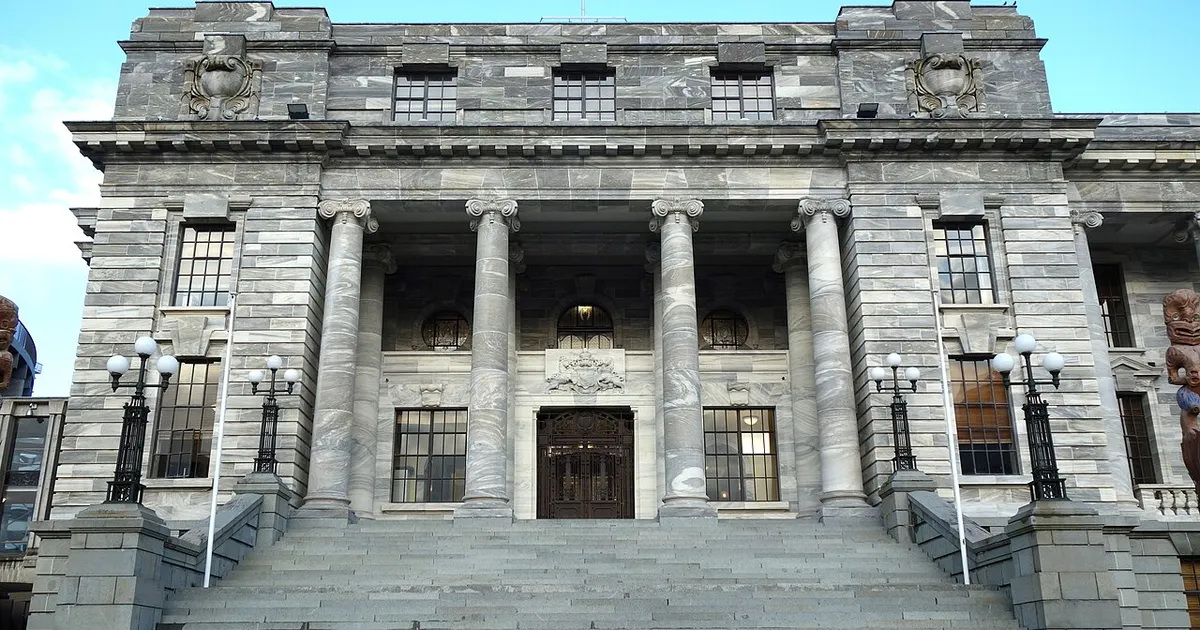
Photo: Daderot, CC0, via Wikimedia Commons (https://commons.wikimedia.org/wiki/File:Parliament_House_-_Wellington_-_New_Zealand_-_DSC00153.jpg)

 Fazlur Rahman