What this means for shipping, insurance, and environmental policy
The RIESCO spill has three downstream effects beyond the immediate environmental and shipping impact. First, marine insurance market disruption: war-risk insurance premiums for Gulf shipping have risen 50-100% in the past week, adding $2-$5 per barrel to tanker freight costs. Several major ship operators (Maersk, MSC, CMA CGM) have begun re-routing Gulf shipments via longer routes (around Africa via the Cape of Good Hope), adding 10-15 days to delivery and $8-$15 per barrel to landed costs.
The P&I clubs (International Group of P&I Clubs) are reviewing coverage terms for Gulf transits; some have suspended war-risk coverage entirely for Iranian-flagged vessels. Second, environmental policy response: the IMO is convening an emergency session to coordinate spill response, and the regional Organisation for the Protection of the Marine Environment of the Gulf (ROPME) is coordinating with Iran and Oman on containment.
Third, the Iran-US escalation path: the spill adds evidence to the US case that Iran is escalating; expect additional sanctions designations in the next 2-4 weeks and possibly a military response (targeted strike on the missile-launch facility). The September 14 Oman meeting is the last diplomatic off-ramp (Reuters, Lloyd's List, September 2026).
Response operations and salvage timeline
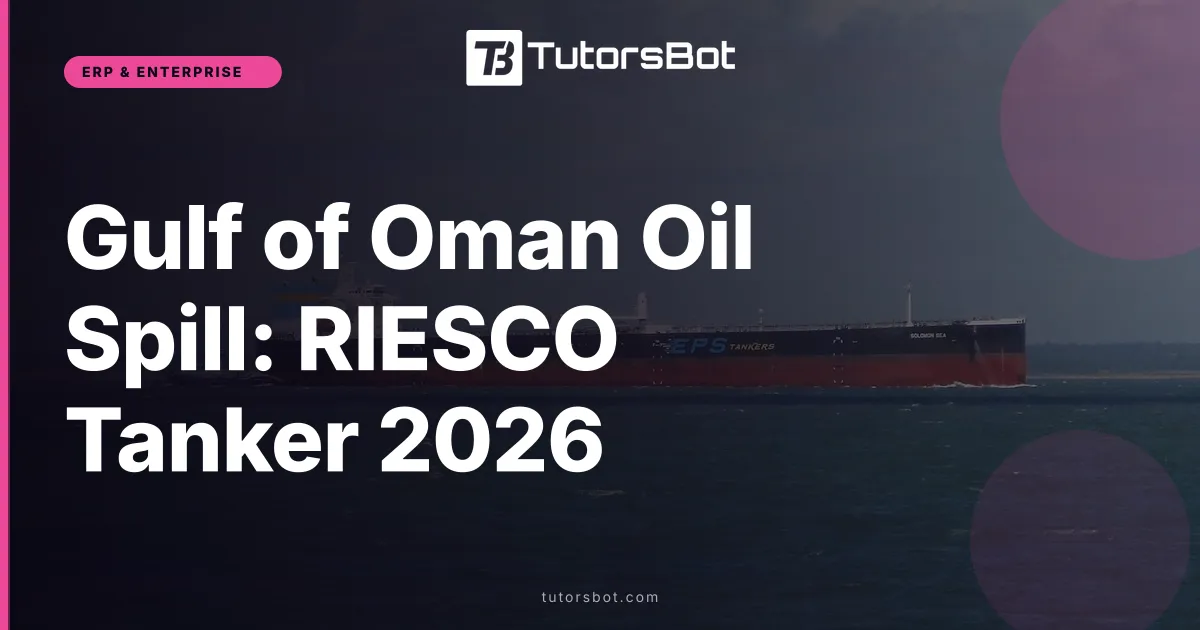
The RIESCO salvage operation is the most complex maritime spill response since the 2018 Sanchi. The vessel is structurally compromised (fire damage to engine room, flooding in cargo tanks, list of 12 degrees). Salvage teams from Smit Salvage and Resolve Marine are on-site, led by ITOPF.
Phase 1 (days 1-7): stabilisation — fire suppression, hull integrity, oil transfer to barge (3M gallons by day 5). Phase 2 (weeks 1-4): containment — 12km of boom, 3 skimmers, 8,000-12,000 barrels/day recovery. Phase 3 (months 1-6): shoreline cleanup — Musandam Peninsula (45km rocky coastline).
Phase 4 (months 6-24): habitat restoration. Total cleanup cost: -, funded by insurer and ITOPF collective fund.
The salvage and environmental response is being coordinated by the Regional Organisation for the Protection of the Marine Environment (ROPME) with ITOPF technical leadership. Iran and Oman have agreed to a 60-day joint response window, despite the broader tanker-war hostilities.

 Fazlur Rahman